Follow Us on Google Discover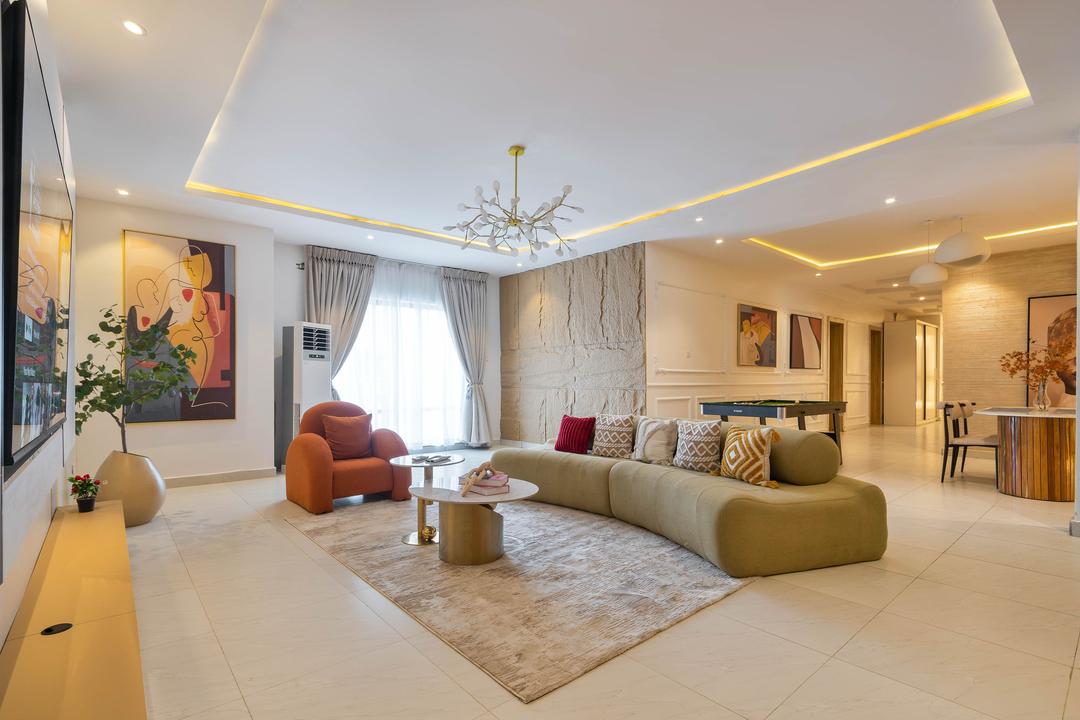
Lagos’s shortlet market has grown into a structured segment of the city’s real estate economy, with pricing increasingly shaped by location, demand patterns, and rising operating costs, according to findings from Nairametrics interviews with operators and developers across the state.
The market has moved beyond informal rental arrangements into a more organised hospitality-driven system, where apartments are priced based on their ability to maintain occupancy, cover escalating utility and furnishing expenses, and meet shifting guest expectations.
In most cases, shortlet units vary by size and configuration, with studios, one-bedroom, and larger apartments serving different categories of guests depending on budget and purpose of stay.
However, shortlet operators say two-bedroom apartments sit at the centre of demand in Lagos, as they offer a balance between affordability and flexibility while accommodating solo travelers, small groups, and families across both business and leisure trips.
Also Read
What they are saying
Operators and developers in Lagos’s short-let market who spoke with Nairametrics said the sector is increasingly shaped by a revenue model anchored on occupancy efficiency, cost structure realities, and location-driven pricing rather than fixed rental benchmarks.
Chief Operating Officer of Deity Homes Int’l Limited, Moyosore Badejo, who operates several short-let apartments across Lagos in areas such as Ikeja, Gbagada, and Lekki, said short-let economics is driven by a cash-flow model where pricing and occupancy determine how much each unit earns over time.
He explained that operators structure their targets around recovering multiple times the cost of acquiring and running a property within a year.
- “For every unit I manage, I target to make two to three times the cost of the annual rent in revenue in a year,” Badejo said, adding that this is based on maintaining about 10 booked days per month per unit.
- “The shortlet business model is heavily shaped by running costs, particularly power supply, which can cost about N20,000 daily on public electricity and up to N30,000 when relying on diesel. Recurring expenses such as internet services, subscriptions, and housekeeping salaries also feed into pricing decisions,”
Badejo also noted that while short stays dominate bookings, some guests remain for extended periods of three to six months, often attracting negotiated discounts that help stabilize occupancy and revenue.
Co-founders of Edala Development, Temidayo Oloyede and Samuel Olatunde, who develop and manage short-let apartments across Lagos, said beyond nightly pricing and operating costs, the economics of the sector also reflect how efficiently a property generates and sustains returns over time when professionally run.
Oloyede said investor decisions in the segment are shaped by both income potential and the speed of capital recovery.
- “When an apartment is acquired in the right location and managed professionally, investors can realistically recover their capital within about eight years,” he told Nairametrics.
Olatunde said performance in the short-let market depends on treating each unit as a structured operating business, where returns are driven more by disciplined management than by ownership alone.
He explained that consistent occupancy, pricing discipline, and tight cost control are central to achieving stable returns, noting that focusing only on high nightly rates can be counterproductive if it leads to unstable bookings and weaker overall performance.
Market dynamics and demand structure
Findings from operators and developers in Lagos’s short-let market show that demand is increasingly shaped by a mix of diaspora travel, corporate stays, and short-term leisure visits, with location remaining the strongest determinant of pricing and occupancy levels.
Operators said the influx of investors into the segment has significantly expanded supply across key parts of Lagos, as more developers and property owners position short-let apartments as income-generating assets rather than traditional housing.
This growing supply has intensified competition, particularly in high-demand corridors, where multiple units now compete for the same pool of guests.
They also noted that demand is no longer uniform across the city, as guest preferences are increasingly influenced by proximity to business districts, lifestyle hubs, and security considerations. In response, operators are placing greater emphasis on furnishing quality, interior design, and in-unit amenities such as entertainment systems, air conditioning, backup power solutions, and well-fitted living spaces, which now play a key role in attracting bookings and sustaining occupancy.
Badejo, the COO of Deity Homes Int’l Limited, noted that furnishing alone represents a major cost driver in the market. He explained that a basic furnishing setup for a two-bedroom apartment can cost up to N6 million, while a more standard, higher-quality setup can reach about N10 million, depending on the level of interior finishing and appliances used.
- He explained that furnishing typically includes sofas, semi-orthopedic beds, wardrobes, kitchen appliances such as microwaves and washing machines, large-screen televisions, air conditioning units, wall cladding, décor elements, and lifestyle-focused amenities such as gaming consoles like PS5 and, in some premium units, features like snooker tables, all designed to create a more competitive hospitality-style guest experience.
- Badejo further noted that costs rise significantly when alternative power infrastructure is added, as a 20KV lithium inverter can cost about N12 million per unit, with operators often requiring multiple units to improve reliability, even without guaranteeing uninterrupted power supply.
At the same time, the rise of professionally managed apartments is reshaping competition in the market, with operators relying more on structured pricing, consistent service delivery, and standardised unit quality to remain competitive in an increasingly crowded space.
- Developers further explained that while expansion has intensified competition in some locations, the market is also undergoing self-correction, as poorly located or weakly managed units struggle to maintain occupancy and are sometimes converted back into long-term residential use.
Operators said the market is gradually evolving into a more structured ecosystem where demand strength, operational efficiency, furnishing quality, and location increasingly determine pricing power and performance across different parts of Lagos.
What hosts charge per night in different Lagos neighborhoods
Across Lagos, short-let pricing is largely shaped by location strength, demand patterns, and furnishing quality, with two-bedroom apartments often used as the standard reference point for comparison across the market.
- In Mainland areas such as Ikeja, Surulere, Yaba, and Gbagada, nightly rates for short-let apartments typically range between N100,000 and N150,000, depending on estate quality, interior finishing, and demand levels in each micro-location.
- In lower-demand Mainland corridors such as Festac and Ikorodu, prices are generally more affordable, with similar units going for about N55,000 to N85,000 per night, reflecting more budget-driven demand and lower competition for premium short-let inventory.
- On the Island axis, including Lekki, Victoria Island, and adjoining high-demand corridors, prices typically range between N120,000 and N200,000 per night, driven by stronger corporate demand, lifestyle bookings, and proximity to commercial hubs.
- At the upper end of the market, Ikoyi, Banana Island, and Eko Atlantic City command significantly higher rates, with nightly prices often ranging from N230,000 to above N300,000, supported by exclusivity, security, and luxury positioning.
It is noteworthy to point out that in February 2026, the Banana Island Property Owners and Residents Association banned all short-let and Airbnb-style rentals within the estate, citing security concerns and the need to restore privacy and prevent misuse of residential apartments.