
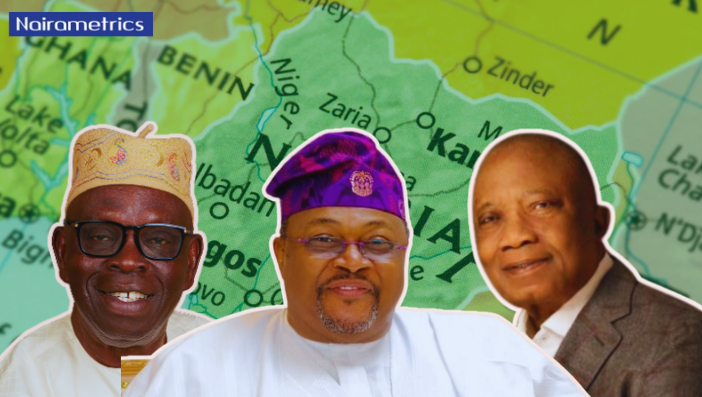
South West Nigeria remains the country’s most concentrated hub of private wealth creation, accounting for a significant share of Nigeria’s high-net-worth individuals, diversified conglomerates, and listed corporate leadership.
In 2026, the region continues to anchor key sectors of the economy, particularly energy, banking, manufacturing, logistics, and infrastructure, through a network of billionaire business leaders whose companies collectively generate tens of trillions of naira in annual economic activity.
According to aggregated industry estimates frequently cited by Nairametrics, Lagos alone contributes over 30% of Nigeria’s GDP, while the broader South West region accounts for more than 40% of formal corporate headquarters in the country.

This concentration of capital has helped produce some of Nigeria’s most influential privately held and publicly listed businesses, with combined valuations running into multiple trillions of naira across banking, power generation, and industrial services.
From legacy conglomerates that began in the 1970s and 1980s to newer wealth built through telecommunications, fintech, and infrastructure, South West–based billionaires have become central to Nigeria’s economic architecture.
In the power sector alone, privately controlled generation assets linked to South West business leaders contribute several gigawatts of installed capacity, supporting Nigeria’s fragmented national grid.
Meanwhile, banking and financial services groups headquartered in Lagos continue to dominate tier-1 capitalisation on the Nigerian Exchange, often accounting for a large share of total market turnover.
This article spotlights the most influential business owners from Southwest Nigeria, adjudged by their dominance in their respective sectors of the economy where they operate.
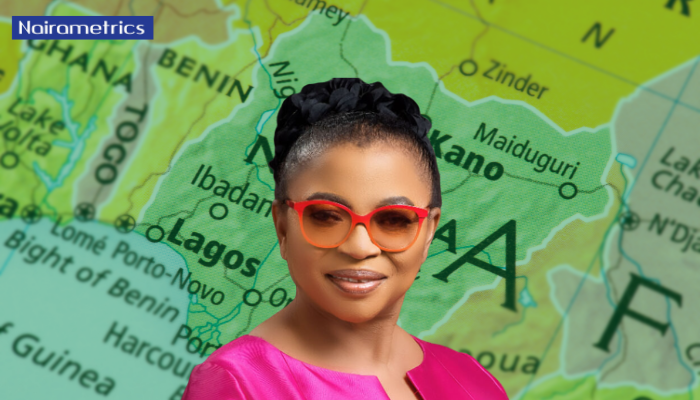
- CEO Famfa Oil
Folorunsho Alakija built her fortune across fashion and oil, emerging as one of Africa’s most prominent female entrepreneurs. Born July 15, 1951, she began her career in banking before pivoting to fashion, founding a label that catered to Nigeria’s elite, including clients connected to the administration of former president Ibrahim Babangida.
Her trajectory shifted in 1993 when her company secured an oil prospecting license for a block offshore Nigeria. That asset, which developed into the Agbami field, became the cornerstone of Famfa Oil, where she serves as vice chair. The field, operated in partnership with majors including Chevron and Petrobras, ranks among Nigeria’s most prolific deepwater projects.
Alakija successfully defended her stake in a protracted legal battle with the federal government, culminating in a 2012 Supreme Court ruling that affirmed her ownership rights. Alongside oil, she oversees the Rose of Sharon Group, with interests spanning fashion and philanthropy.