Follow Us on Google Discover
The estimated US$3 trillion infrastructure gap in Nigeria presents a significant national challenge; nonetheless, within this concerning reality lies one of the country’s most compelling investment opportunities.
Across the world, institutional investors are increasing allocations to infrastructure. This comes as no surprise, because infrastructure investments have the ability to deliver stable, inflation-protected returns over extended periods.
In Nigeria, where the demand for development financing is vast and persistent, infrastructure investments may be that special investment vehicle that can serve the nation while also rewarding investors with sustainable growth.
Why Are Infrastructure Investments So Appealing?
Infrastructure investing refers to the deliberate process of deploying capital into large-scale infrastructural projects and facilities that support the functioning of an economy. These include essential assets like roads, bridges, power plants, ports, railways, telecommunications networks, and even social infrastructure such as hospitals and schools.
Also Read
In essence, infrastructure investments are long-term, capital-intensive projects that provide stable and predictable cash flows, often backed by government contracts, long-termsales agreements, or user fees (like tolls or other forms of payments). Because they typically serve as public utilities, they tend to perform steadily across economic cycles, which is why institutional investors such as pension funds and sovereign wealth funds find them attractive.
Infrastructure investing may take two primary forms:
- Direct Investment:
Investors or institutions finance and own part of a specific infrastructure project or company. For example, buying equity in a toll road or a renewable energy plant.
2. Indirect Investment:
Through infrastructure funds, investors pool capital that professionals manage to invest in multiple infrastructure assets and then distribute returns proportionally among the investors.
More Investors Are Paying Attention Globally
Little wonder global pension funds and sovereign wealth institutions have steadily increased their allocations to infrastructure, not merely as a diversification play, but as a hedge against volatility and inflation.
According to Preqin, total private infrastructure assets under management stood at US$1.27 trillion in 2023 and are projected to nearly double to US$2.35 trillion by 2029. This, of course, will be driven by more substantial fundraising efforts and improved performance. The numbers tell their own story: while investors would naturally seek good returns, they now also seek durability as a valuable addition. Infrastructure, in many ways, is becoming the new go-to investment vehicle for long-term wealth preservation.
Lower Volatility, Built to Withstand Inflation
Over the past decade, infrastructure has quietly outperformed many traditional long-term investments as an asset class.
Data from MSCI suggests that globally, infrastructure funds have delivered annualised returns of around 8–10%, often with lower volatility than listed equities and real estate.
What does this mean? When we say “lower volatility than listed equities and real estate,” it means infrastructure investments tend to experience fewer sharp ups and downs in value. Stock prices and property markets may swing widely with changes in interest rates, investor sentiment, or global events. Infrastructure, on the other hand, is steadier because it is built around essential services that people continue to use roads, power, water, etc., no matter what the market is doing.
Such resilience becomes even more pronounced in inflationary environments. Since many infrastructure projects have revenue models indexed to inflation, such as tariff adjustments or government-backed contracts, returns tend to rise in tandem with prices. In effect, the asset class offers a natural hedge, in that they are tied to tangible assets that generate real income.
When inflation erodes the value of bonds and compresses equity returns, infrastructure continues to generate returns protected from inflation.
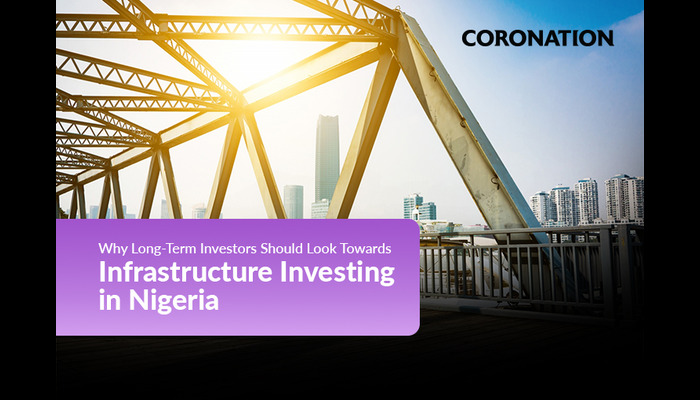
Nigeria Presents Such a Distinct Opportunity for Infrastructure Investing
Few markets hold as much untapped potential as Nigeria. The country’s infrastructure deficit, estimated at over US$3 trillion, is a loud call to action. With Nigeria’s infrastructure story entering a new chapter, one defined by reforms, ambition, and demographic urgency, the government has begun to remove long-standing barriers that once discouraged private capital, thereby creating a clearer and more credible investment environment.
Policy Shifts and Government Action
Nigeria has begun to reshape the environment for long-term infrastructure financing in deliberate, practical ways. A clear example is the recent decentralisation of Public-Private Partnership (PPP) approvals, which gives ministries and agencies more autonomy to approve projects directly. While this this may sound like a mere may sound like a mere procedural adjustment, the impact is, however, significant: it means fewer bureaucratic hurdles, faster decision-making, and a smoother route for investors.
Regulators are also aligning incentives: for example, the Securities and Exchange Commission (SEC) has introduced guidelines on Infrastructure Fund management. These coordinated moves are gradually turning infrastructure from a public burden into an attractive asset class.
The benefits are clear: better policies, clearer frameworks, reduced risk, and higher investor confidence. What was once a high-risk, opaque market is now one where serious capital can flow with greater clarity, security and predictability.
Demographics and Economic Demand
Nigeria’s population, now above 220 million, is set on a steep upward path, with the United Nations Population Fund (UNFPA) projecting that it will rise beyond 400 million by 2050. This surge brings enormous demand for housing, energy, transportation, and other amenities. Urban centres like Lagos, Abuja, and Port Harcourt are expanding rapidly, with this growth comes a pressing need for new roads, mass transit systems, and reliable power supply.
This demographic momentum, combined with government policy reforms, creates a rare convergence: a young, growing market that needs infrastructure, and a policy environment that is increasingly open to private capital. In simpler terms, it means there is both an urgent need for infrastructure and a pathway for investors to meet that need profitably.
Case Study: Lekki Deep Sea Port
The Lekki Deep Sea Port is a prime example of infrastructure investment. Built along the coast of Lagos, this modern port is one of the largest in West Africa and a clear illustration of what can happen when public ambition meets private capital.
With an estimated US$1.3 billion invested, the port was developed through a partnership between the Nigerian government and private investors. Rather than relying solely on public funds, the project employed a Public-Private Partnership (PPP) model, where private investors financed, built, and now operate the facility for a set number of years, after which (when the pre-set period elapses) they may transfer it to the government.
The beauty of this model lies in its balance: investors earn steady, long-term returns through port operations, while Nigeria gains a world-class infrastructure asset that drives trade and fosters job creation. The port is expected to handle over 1.2 million containers annually and generate as much as US$360 billion in revenue over its lifetime. It is also projected to create more than 170,000 jobs, directly and indirectly, by boosting logistics, manufacturing, and exports.
This is what makes infrastructure investments so appealing to investors. Returns are not tied to the daily swings of the stock market but to real economic activity, in this case, ships docking, goods moving, and industries expanding. The Lekki Deep Sea Port is proof that when the right policies, partners, and projects align, infrastructure investing can deliver both financial rewards and lasting national impact.
Introducing the Coronation Infrastructure Fund
Big projects like the Lekki Deep Sea Port demonstrate how infrastructure investments can shape economies and generate long-term, stable returns. Traditionally, participation in such projects would require significant capital and access reserved for governments or large institutions; however, the Coronation Infrastructure Fund (CIF) gives everyday investors a way in.
The Fund, managed by Coronation Asset Management Limited, a registered Fund/Portfolio Manager regulated by the SEC, is designed to finance infrastructure projects that drive economic growth and create lasting value for communities. It pools capital from investors and channels it into viable infrastructure projects that generate stable, long-term income.
Unlike short-term investments that rise and fall with the market, the CIF focuses on stability. It aims to deliver returns that outpace others while protecting against inflation. Simply put, it allows investors to grow their money through assets that hold their worth over time.
More interestingly, with its listing on the Nigerian Exchange (NGX), everyday investors can join in. What was once open mainly to large institutions and high- to ultra-high-net-worth individuals is now within reach of individuals who just want their money to make an impact and still earn real returns.
Invest in the Future You Can See
Nigeria’s infrastructure needs are immense, and for long-term investors, they are a rare opportunity to earn steady, inflation-protected returns while participating in the country’s growth. The Coronation Infrastructure Fund, now listed on the Nigerian Exchange (NGX), opens the door for both retail and institutional investors to take part in such revenue-generating and transformative infrastructure projects.
Click here to learn more about the Fund.
Take action now. To invest or learn more, contact our dedicated team via email [email protected]