Follow Us on Google Discover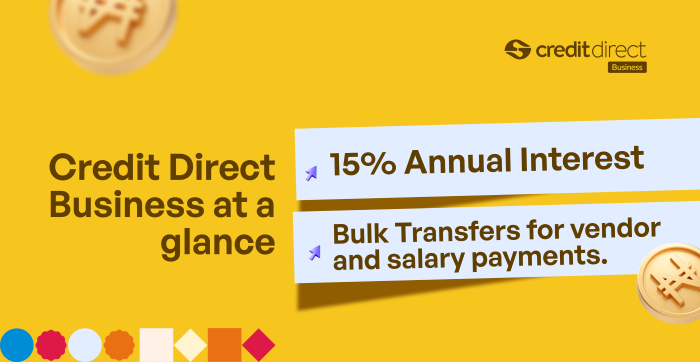
If you run a business in Nigeria, there is a good chance that money is sitting in your business account right now, earning absolutely nothing. It landed after a payment from a client, a merchant settlement, or a product sale. It is waiting to be used for the next payroll, the next supplier invoice, or the next restocking cycle. And in the time it sits there, it is generating zero returns.
This is not unusual. It is, in fact, the default experience for the vast majority of Nigerian SME owners. Traditional business accounts were not designed to reward idle balances. They were designed to hold and move money. Earning returns on those balances was, until recently, something that required a separate conversation with a relationship manager, a minimum ticket size, and a fixed deposit product that locked your funds away when you might need them most.
That landscape is changing. Here is what you need to understand about how Nigerian business owners can now put their operational funds to work.
Why idle business balances cost you money
Nigeria’s inflation rate has remained elevated above 20% for a sustained period. What this means practically is that one million naira sitting idle in a zero-interest business account loses real purchasing power every single month.
Also Read
By the end of a year, the same cash buys meaningfully less than it did at the start. For businesses with regular operating balances in the range of two to ten million naira, this is not a trivial erosion.
The informal economy has always understood this. Petty traders use Ajo and Esusu to keep money circulating and growing. Larger businesses with treasury departments use money market funds, commercial paper, and overnight placements. The average SME owner, managing everything alone from a mobile device, has typically had no equivalent tool.
What options exist for earning returns on business funds in Nigeria
There are several product categories available to Nigerian business owners looking to grow their operating capital.
Money market mutual funds offer relatively liquid investment in short-duration instruments. They are regulated by the SEC, accessible through fund managers and some fintech platforms, and typically yield between 15% and 22% per annum depending on market conditions. The limitation is that they require a deliberate investment action and carry a slight redemption delay.
Fixed deposits through commercial banks offer higher yields for longer commitments, often ranging from 12% to 18% per annum. They are stable and familiar, but they lock your funds for a defined term, which creates cash flow risk for businesses with unpredictable expenditure timing.
Business wallets with embedded yield are an emerging category. These combine payment functionality with automatic returns on operating balances, removing the need for a separate investment decision entirely. This is where products like Credit Direct Business operate.
How Credit Direct Business works
Credit Direct Business is a business wallet built specifically for Nigerian SMEs. It handles the standard business account functions: receiving payments, making single and bulk transfers. What separates it from a conventional business account is the yield layer.
Every naira held in the wallet earns 15% per annum, accrued daily, from the moment it arrives. There is no lock-in period, no investment setup, and no minimum balance requirement to activate the returns. For business owners who want to earn even more on reserve funds they do not need immediately, the fixed term option pays up to 20% per annum.
To understand the practical impact: a business maintaining an average balance of five million naira would generate approximately two hundred thousand naira in returns over ninety days, simply by holding its operating funds in the account. That is cash generated without any additional revenue activity.
Who it is designed for
Credit Direct Business works for any business that carries a regular operating balance. Growing SMEs that receive regular payments. Merchants using buy now, pay later platforms who receive regular settlement payouts. Any business owner who is tired of watching working capital sit idle between cycles.
The account scales regardless of transaction volume, whether the business processes ten transactions or ten thousand monthly.
How to open a Credit Direct Business account
Registration is done entirely online and takes a matter of minutes. You will need the email address of the business owner or director, the NIN of the business owner or director, the BVN of the business owner or director, and a valid CAC registration document.
Credit Direct Finance Company Limited operates with a CBN License, which provides regulatory assurance for businesses that require it.
Your business is doing the work of generating revenue. The operating balance that results from that work is capital. Capital that earns nothing is capital that is shrinking in real terms, every day that it sits idle.
The infrastructure to change that now exists and is accessible on the Credit Direct website from any device in under ten minutes. The question is simply whether you know it is there.