Follow Us on Google Discover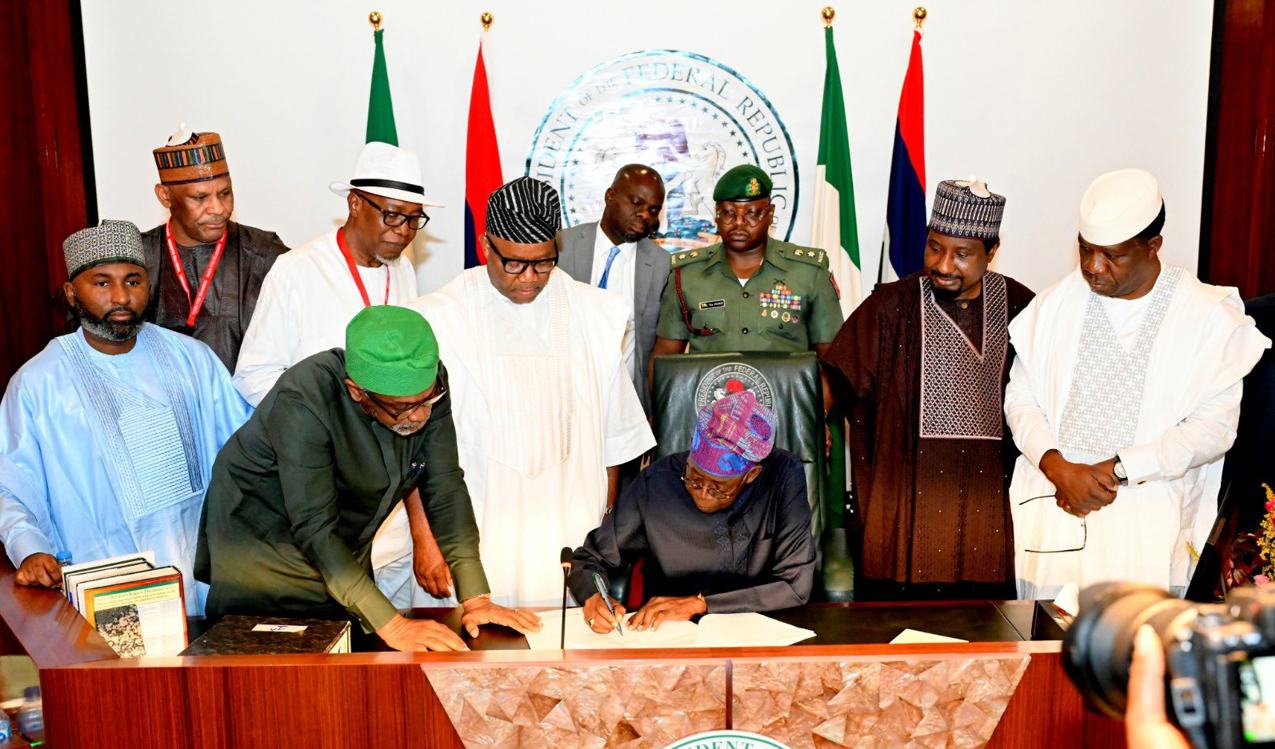
President Bola Tinubu has signed the 2026 Appropriation Bill into law, approving a total expenditure of N68.32 trillion for the fiscal year.
The President also assented to a separate bill extending the implementation period of the capital component of the 2025 budget from March 31, 2026, to June 30, 2026, according to a State House statement issued on Friday.
The newly signed budget allocates N4.799 trillion for statutory transfers and N15.8 trillion for debt servicing.
It also provides N15.4 trillion for recurrent expenditure, while N32.2 trillion has been earmarked for the Development Fund for capital expenditure.
Also Read
What they are saying
According to the Presidency, capital spending accounts for about 50% of the total budget, reflecting the administration’s focus on economic stability, national security, infrastructure development and inclusive growth.
The government said the spending plan seeks to balance statutory obligations, debt servicing, personnel and overhead costs, as well as investments aimed at boosting productivity and improving living standards.
- “Additionally, the President has assented to the Appropriation (Repeal and Enactment) (Amendment) Bill, 2026, which extends the implementation period of the capital component of the 2025 Appropriation Act from March 31, 2026, to June 30, 2026,” the Presidency said in the statement.
It added that the extension is intended to ensure full utilisation of previously approved funds, especially for infrastructure and development projects already at advanced stages of implementation nationwide.
The move, the Presidency said, would allow Ministries, Departments, and Agencies to consolidate ongoing works, improve project completion rates, and maximise value for public spending.
Get up to speed
Earlier in March, President Tinubu requested the Senate’s approval to increase the 2026 Appropriation Bill by N9 trillion, raising the total budget from N58.4 trillion to N67.4 trillion.
The request was conveyed in a letter addressed to the Senate President, Godswill Akpabio, and read at plenary on Tuesday.
The move, the president said, “aims to strengthen fiscal transparency and ensure the effective implementation of priority national programmes.”
The Presidency, however, did not specify if this addition will be backed by new revenue sources or added to the record budget deficit of N23.85 trillion captured in the N58.4 trillion budget.
More insights
With the 2026 Appropriation Act taking effect from April 1, the Federal Government is expected to begin full implementation of the budget in line with the administration’s Renewed Hope Agenda.
- The President directed all Ministries, Departments and Agencies to ensure disciplined, transparent and efficient use of allocated funds, with emphasis on value for money and timely delivery of projects.
- Tinubu commended the leadership and members of the National Assembly of Nigeria for what he described as their diligence and cooperation in the speedy consideration and passage of the budget.
- He also reaffirmed the need for continued collaboration between the executive and legislative arms of government to advance national development priorities.
The President further assured Nigerians of his administration’s commitment to deepen fiscal reforms, improve revenue generation and prioritise investments that can stimulate growth, create jobs and strengthen social protection programmes.
What you should know
In December 2025, President Tinubu presented the 2026 budget to the National Assembly with a N23.85 trillion deficit.
- Tinubu noted that the expected total revenue for 2026 is projected at N34.33 trillion.
- He said the total expenditure is estimated at N58.18 trillion, including N15.52 trillion earmarked for debt servicing.
- The budget also included a record deficit of N23.85 trillion, meaning this will be largely financed by fresh debt.
The 2026 budget prioritises security, infrastructure, and human capital, allocating N5.41 trillion to defence, N3.56 trillion to infrastructure, N3.52 trillion to education, and N2.48 trillion to health.
He said the budget’s assumptions are conservative, with a $64.85 oil price, 1.84 million bpd production, and N1,400/$ exchange rate.