Follow Us on Google Discover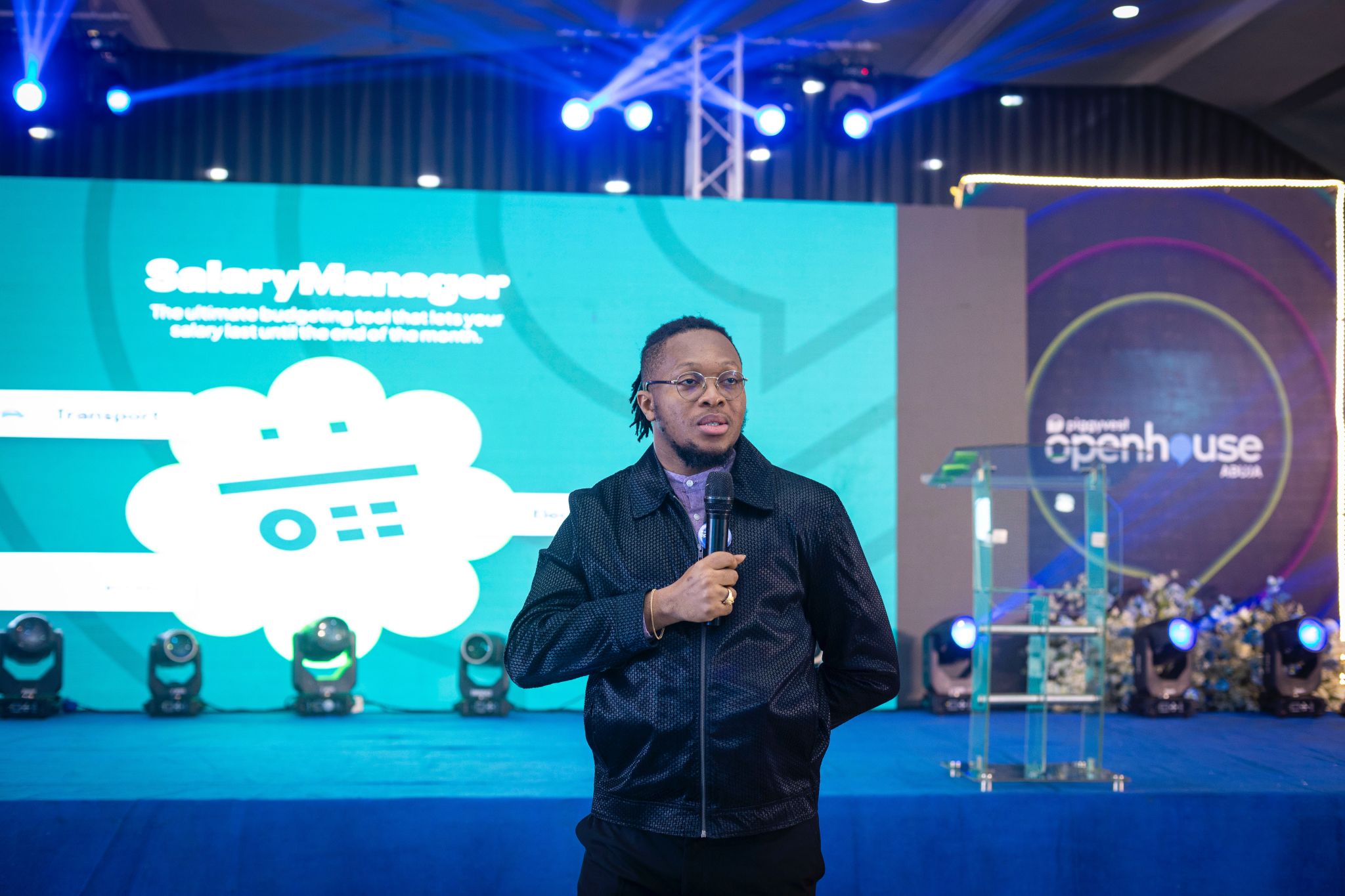
At a time when investor confidence is gradually returning to the fintech sector, the Chief Executive Officer of Piggyvest, Somtochukwu Ifezue, has ruled out any possibility of investing in retail-focused fintech companies.
The global fintech market witnessed a rebound in 2025 after three years of declining investment, with increased deal sizes and renewed interest, particularly in digital assets.
According to KPMG’s Pulse of Fintech H2 2025 report, total global fintech investment rose from $95.5 billion in 2024 to $116 billion in 2025.
Despite this recovery, deal volume dropped to an eight-year low of 4,719 in 2025, even as investment remained relatively stable between the first and second halves of the year.
Also Read
Data from Nairametrics Research shows that Nigeria’s startup ecosystem began 2026 on a slower but resilient note, raising $45.9 million across eight deals in January. This represents 22.17% of the $207.1 million raised by startups across Africa during the period.
However, this marks a 43.47% year-on-year decline from the $81.2 million raised by Nigerian startups across seven deals in January 2025, even though the number of deals increased slightly from seven to eight.
While capital appears to be returning to the sector, there is a noticeable shift in funding structure. Investors are increasingly favouring venture debt and capital market instruments over traditional equity rounds, signalling a preference for discipline, repayment obligations, and reduced speculative investments.
In this exclusive interview with Nairametrics, Ifezue discusses Piggyvest’s growth, the evolving fintech landscape, and why he would personally avoid investing in retail fintech startups.
Nairametrics: Piggyvest disbursed N1.3 trillion in payouts to users in 2025. What do you attribute this surge to?
Somtochukwu Ifezue: It’s not a surge. I think in terms of growth rate, we’ve had a way steeper growth rate than this. So I think it’s just normal growth, and that is based more on the Naira stability.
So, if you think about it from the Naira perspective, it could be a surge, but from a dollar perspective, it might just be the same thing.
Nairametrics: Looking at the fintech industry today, compared to 10 years ago, what’s your assessment of the growth?
Somtochukwu Ifezue: Well, Piggyvest itself is 10 years this month of April. We literally pioneered savings and investments for millennials in this market. So, we started everything.
Automated savings, fractional investments in Nigeria, to be honest. And when we started, there was nothing. There were just payment gateways. There was no retail app for savings or investments.
So, we looked at the market and saw a big opportunity. And we said that we had to do a lot of training and teaching. We have over seven different programs that help different types of people. So, the industry has grown.
There are companies that have started doing similar things. In fact, everybody’s doing similar aspects of what we started. And it’s something that also proves that there’s a very big problem, so it’s actually grown. I think there’s still a lot of room for improvement.
I think people now need more tools and more services to help them manage their money. Piggyvest is at the forefront of it, but it has matured generally.
Nairametrics: Reports suggest a moderate rebound in fintech funding in 2025 after years of decline, but with a shift toward venture debt and capital market raises. Does this mean the era of high-valuation equity rounds is over for Nigerian fintechs?
Somtochukwu Ifezue: So, again, maybe presently, yes. But just for maybe retail, deposit-taking Fintechs, but I won’t say it’s completely out of the way, the way we are valued is a bit different from the way payment companies are valued or the way other companies are valued.
So, the valuation of a typical company that holds assets is valued at the X of that asset, so, are you valued at 1X the AUM, 2X the AUM? But you look at it from the companies in the stock market or the big companies, what’s their value compared to their assets? So, I think those things play a role.
If you want to start a retail fintech today, because there’s more knowledge from a regulatory perspective, I think it’s easier to say, ” Oh, I want to get a license. I know what I’m going to do to get regulated or structured to start.
And it’s easy to raise money for that. In our time, it did not exist. We were figuring out what to do and those things can be expensive. So, I think it’s now a lot cheaper and easier to start.
It might be harder for you to get customers, maybe except you do more risky things, like giving extreme rates and stuff like that. But I think I would personally not invest in any retail fintech-facing company because I think it’s a bit saturated now.
Because even the big players and the banks are coming to play in that space, all the banks are fintechs now. So, imagine you start competing with GT Bank.
Nairametrics: Do you think banks coming to the fintech space to play is also good for SMEs?
Somtochukwu Ifezue: I would just say the market is a bit maturing. So, I would say it’s helping the normal infrastructure, like the other SMEs in Nigeria, like the food business, and the other businesses. Because if people like the big guys are playing in this space, there are just more options for those SMEs to access proper financial services.
Before now, they were not doing it. Piggyvest came, opened this market, and now everybody is coming. Banks are taking it more seriously. It’s good for Nigeria. It’s good for the economy generally.
Because now, it’s easier to get N10 million from your normal commercial banking app. Before now, they were not doing so. But because of the likes of maybe Moniepoint or Fairmoney, they are taking it more seriously.
Is it good for the everyday business person trying to grow their actual business? 100%. So, I’m not focused on the people trying to come into the market to compete. I’m focused on the people who are benefiting from this competition.
Nairametrics: Piggyvest is 10 years old already. What big things should people look out for? An IPO, maybe?
Somtochukwu Ifezue: No, not after 10 years. So, maybe in the next three years, we hopefully intend to get big enough to list, to make Nigeria proud.
Nairametrics: You recently reported that assets under management grew by 110% last year. As the company has now reached 10 years in the industry, why has Piggyvest chosen not to disclose the absolute AUM?
Somtochukwu Ifezue: So, we’re a private company, but then we want to have a hint of our growth, about one of the biggest in terms of asset management that is non-bank in Nigeria, say easily the top five.
Nairametrics: Pigivest has announced plans to release an API allowing developers to build on its infrastructure. Does this signal a shift from being a consumer-facing app to becoming a fintech-as-a-service?
Somtochukwu Ifezue: No, no, no.
So, there’s no shift; we’re focused on consumers, but we’re also focused on giving other people tools to reach out to those consumers. So, the focus is still on the end consumer, but how can we give other people tools to actually reach people that we might not be able to reach nationwide or around Africa?
An example of that is Bumpa, a semi-focused tool for businesses. Piggyvest is more of a generalized tool for individuals. So, with our partnership, Bumpa is providing financial services now to their business customers far better than we would have ever done. Because they have other services, aside from just the savings, investment, and interest, that their customers really use them for.
So, imagine a business does not have to now use, for example, a Piggyvest business banking and a Bumpa product. They can just use Bumpa and access everything they would access from Piggyvest. It’s more of a channel distribution.
Nairametrics: Sometimes people are looking at inflation rates, and sometimes they feel that inflation rates can affect their savings and their returns. So why should someone still save if they’re affected by what’s going on in the economy and inflation?
Somtochukwu Ifezue: There might be inflation rates, but you must pay for your house. And in Nigeria, we don’t have monthly rent-out payments, so it’s annual.
So you actually don’t have a choice but to gradually put your house rent together, no matter the inflation rate. Because you can’t say, okay, you’re going to use your house rent to start a business or make a heavy investment. So you can go both ways.
But there’s something that is fixed. You must pay for your rent. So I think because of the nature of the economy, there are certain things that you just must save up for.
Because we’re not a credit-led economy. So most of the things we have here, you have to get it. You have to pay up front for it.
If you just got a new job today and you want to move out of your parents’ house, you probably need to pay two years upfront or a year upfront. So, because of that, saving in this part of the world is not an option. It’s actually a need because we’re a developing economy.
There are a few things that you don’t need to save for. In a very high-inflation economy, there are things that you must save for. So saving is constant.
It just depends on what you’re going to be saving for at that time
Nairametrics: Stablecoins are reportedly moving into the core of finance for B2B payments and treasury management. Given the SEC’s 2026 regulatory framework for digital assets, how should Fintechs like Piggyvest positioning itself to use stablecoins as a settlement layer?
Somtochukwu Ifezue: Well, I think that would come when there’s more clarity. Again, because we’re more focused on the benefit of this for the average development of Nigeria.
If everybody is in stablecoins, for instance, and our government has not found a way to make it work for them, they are going to be robbing Nigeria. Because these stablecoins are not credited by them. The stablecoin is USDT, that’s USD.
Where’s the USD? Is it here? No. If it’s not here, then it doesn’t help us. We’re here, but we’re banking on the U.S. banking infrastructure.
So, until we have the pure green light from regulators and we find a way to make it work, then we’ll be on board.
Nairametrics: We have seen regulatory tightening from the CBN, from the SEC. How should fintechs navigate through this regulatory tightening?
Somtochukwu Ifezue: For us, we’re doing more collaboration. We’re collaborating with the authorities, with regulators, because the motive is very clear. They want a stronger financial service. They want customers to be protected.
They want to reduce the risk of loss or loss of value. So, it’s the same thing we believe. So, it’s more of collaborating with them.
So, they have the motives. We know the pain points from the customer side. We know the pain points from the business side.
So, we can just tell them and share, ” Oh, this is what customers want. This is what companies like us need to serve those customers, and they make better decisions based on that.
So, because of our size and our position in the market, we are part of that conversation. They actually call us to have these conversations.