Follow Us on Google Discover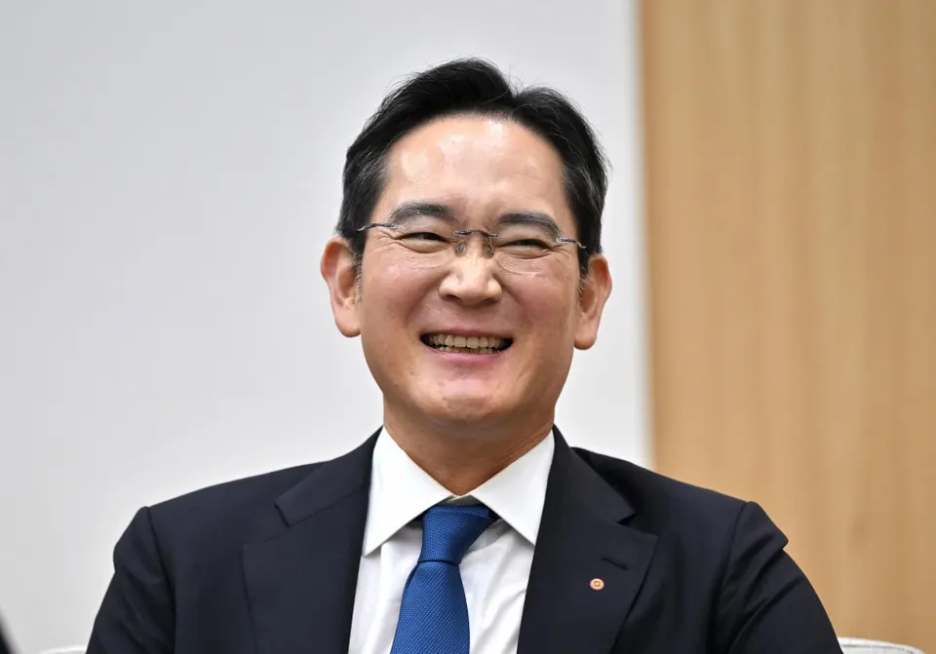
Samsung’s Executive Chairman, Jay Y. Lee, now has a real-time net worth of $25.4 billion as of April 15, 2026, ranking him among the world’s top 100 richest individuals and highlighting his position as South Korea’s richest person.
Lee reclaimed the top spot after briefly losing it in 2025 to Michael Kim of MBK Partners, restoring a title long associated with his late father, Lee Kun-hee, who held it for over a decade until his death in 2020.
Lee is also among the biggest dollar gainers globally this year, with his fortune surging sharply on the back of a rebound in Samsung’s semiconductor business, according to Forbes.
What the data is saying
At one point, his net worth nearly tripled to a record $21.6 billion, driven largely by renewed investor confidence in the group’s positioning within the artificial intelligence supply chain.
The turnaround has been underpinned by a boom in demand for advanced memory chips amid a global semiconductor shortage. In July 2025, Samsung secured a $16.5 billion multiyear agreement with Tesla to manufacture AI chips, marking a significant expansion of its foundry business.
Momentum strengthened in February 2026 when the company began mass production of its High Bandwidth Memory 4 (HBM4) chips, critical components for next-generation AI accelerators supplied to firms like Nvidia.
The HBM4 rollout helped Samsung regain ground in the fast-growing AI memory segment after losing early leadership to domestic rival SK Hynix. Despite the competition, Samsung remains the world’s largest producer of memory chips by capacity outside the high-bandwidth segment.
Details of financial earnings
Financially, the recovery has been reflected in strong earnings. Samsung Electronics reported a 31% increase in net profit to 45 trillion won (about $30 billion) for 2025, alongside an 11% rise in revenue to 334 trillion won, highlighting improved chip pricing and robust demand from AI-driven applications.
Lee was appointed executive chairman in 2022, formally stepping into leadership after years of transition following his father’s death. His tenure has been marked by both strategic repositioning and legal challenges.
In 2017, he was jailed over bribery charges involving a confidante of former president Park Geun-hye, before being released in 2018.
A retrial in 2021 led to another prison sentence, but he received a presidential pardon in 2022, enabling his return to corporate leadership.
- In 2024, Lee was acquitted of stock manipulation charges tied to a 2015 merger between Samsung affiliates, removing a major legal overhang on the group.
- Meanwhile, he and his family continue to manage a 12 trillion won (approximately $8.5 billion) inheritance tax bill following the death of Lee Kun-hee, one of the largest such obligations globally.
What you should know
Educated at Seoul National University and Keio University, Lee also attended Harvard Business School but did not complete the programme after being called back to South Korea. Known for maintaining a low public profile, he nonetheless has longstanding ties to global tech leaders, including Steve Jobs, whose memorial service he attended in 2011.
At 57, Lee remains central to Samsung’s next phase of growth as it doubles down on semiconductors, artificial intelligence and advanced manufacturing, while navigating governance reforms tied to one of Asia’s most powerful family-controlled conglomerates.