

Africa is currently grappling with a housing deficit of over 50 million units, a gap that could surge to 130 million by 2030 if urgent interventions are not implemented.
The estimate was disclosed by Festus Adebayo, Convener of the Africa International Housing Show (AIHS), in a press release issued ahead of the event’s 20th edition.
Rapid population growth, accelerating urbanisation, and persistent structural challenges in housing delivery across the continent are driving the widening shortfall.
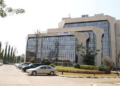
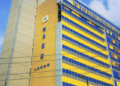
The deficit affects more than just shelter, with implications for jobs, urban productivity, public health, and social stability, as over 200 million Africans live in informal settlements.
What they are saying
Adebayo warned that without structural reforms, Africa’s housing deficit could rise sharply to 130 million units by 2030. He emphasised that the crisis is driven by limited access to finance, high construction costs, and weak land administration systems.
- “Africa today stands at a critical crossroads. With a rapidly growing population, accelerating urbanisation, and rising economic pressures, the continent is grappling with one of the most pressing development challenges of our time, a housing deficit estimated at over 50 million units.”
- “Across Africa, the housing deficit continues to widen due to population growth, rural-urban migration, and weak housing finance systems. Experts warn that if urgent action is not taken, the deficit could rise to 130 million units by 2030, making the crisis even more severe.”
The shortfall is most acute in Nigeria, with an estimated deficit of 17–28 million units, followed by the Democratic Republic of Congo at 3.9 million and South Africa at 2.8–3.7 million units. Other affected countries include Kenya, Ghana, Tanzania, Uganda, Egypt, and Madagascar.
More insights
Adebayo highlighted that Africa faces a housing finance gap exceeding $1.4 trillion, restricting large-scale development.
- Limited long-term funding and high interest rates continue to constrain both public and private sector efforts to close the supply gap.
- Addressing the deficit requires policy reforms, stronger private sector participation, and the adoption of cost-effective building technologies to improve affordability.
- The AIHS, in partnership with World Expo, aims to bring stakeholders together to unlock financing for housing delivery.
The housing deficit, while a major challenge, also presents an opportunity to drive economic growth, create jobs, and build more inclusive cities.
Closing the gap will require coordinated investment, innovation, and regulatory alignment across African nations.
Get up to speed
Nigeria’s Federal Government is addressing the country’s housing challenges through the Renewed Hope Estates and Cities programme, with projects spanning all geopolitical zones and the Federal Capital Territory (FCT).
- Renewed Hope Cities are large-scale developments delivered via public-private partnerships, where private developers provide financing, land, and infrastructure.
- Renewed Hope Estates are smaller clusters of approximately 250 units, fully funded by the Federal Government and are priced between N8 million and N9 million for a one-bedroom housing unit.
- Despite these initiatives, none of the Renewed Hope Estates or Cities has been fully completed, although several are at advanced stages of construction.
State governments, ministries, departments, agencies (MDAs), and private developers also contribute to housing supply. However, the overall gap between demand and supply remains substantial. With Nigeria’s population growth and rapid urban expansion, demand continues to outpace the available housing stock.
What you should know
Nigeria’s Minister of Housing and Urban Development, Arc. Ahmed Musa Dangiwa stated that the country needs 550,000 housing units built annually for N5.5 trillion over the next decade to address the shortage.
Nigeria’s population of 200 million is growing at 2.5% annually, exacerbating the deficit.
- Approximately 15.2 million housing units nationwide are structurally inadequate, failing to meet standards for safety, habitability, durability, and essential services.
- The Ministry applied internationally recognised methodologies, including the Household Crowding Index and Adequate Housing Index, using data from NPC, NBS, and CBN, aligned with World Bank standards.
- Solutions must extend beyond new construction to include upgrading existing housing, regenerating deteriorated neighbourhoods, and improving infrastructure and services, the Housing Minister noted.
Dangiwa emphasised that addressing housing inadequacy also requires tackling affordability gaps, limited land access, housing finance constraints, and regional disparities.