Follow Us on Google Discover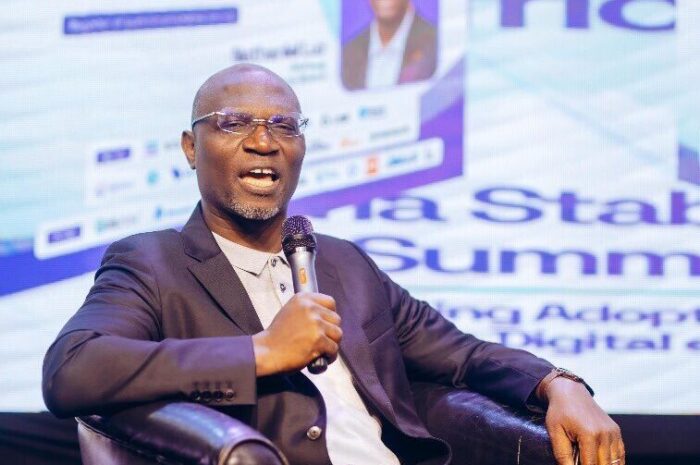
Nigeria is repositioning its capital market as the primary engine for economic growth and infrastructure financing drive, targeting an estimated $100 billion funding gap.
This was disclosed by the Director General of the Securities and Exchange Commission (SEC), Emomotimi Agama, during his keynote address at the Emerging Africa Capital Limited Investor Summit & Awards.
He explained that the move comes amid global economic disruptions that have triggered over $80 billion in portfolio outflows from emerging markets between 2022 and 2024, creating both risks and opportunities for economies like Nigeria.
The SEC boss noted that Nigeria is seeking to unlock long-term funding through its capital market, reduce dependence on traditional bank financing, and channel idle liquidity into productive sectors.
Also Read
What SEC DG is saying
Agama stated that the global economy is undergoing a structural transformation driven by overlapping shocks that are reshaping investment flows and economic stability. He stressed that while these shifts present challenges, they also open new opportunities for emerging markets like Nigeria.
- “The global economy is not simply adjusting — it is undergoing a fundamental structural reconfiguration,”
- “The old certainties — of stable dollar flows, of predictable commodity cycles, of aligned Western institutional priorities — can no longer be assumed.”
- “For emerging markets, this is simultaneously a moment of acute vulnerability and extraordinary opportunity.”
- For Nigeria — with a population of over 220 million people, the largest economy on the African continent by nominal GDP, and an enormous infrastructure deficit estimated at over $100 billion — the capital market is not a luxury. It is an existential necessity.
He concluded that Nigeria must take advantage of this evolving landscape by strengthening its capital market, boosting investor confidence, and deploying capital strategically to unlock growth.
More insights
Agama highlighted key sectors and structural gaps that present significant investment opportunities within Nigeria’s economy. He noted that unlocking these opportunities will require innovative financial instruments and a deeper market structure.
- Nigeria’s solid minerals sector remains largely underexploited and represents a multi-billion-dollar investment opportunity.
- About 350 million adults remain unbanked, presenting a major opportunity for capital market-driven financial inclusion.
- Nigeria faces an estimated $100 billion infrastructure deficit, which requires long-term financing solutions.
- The SEC is promoting instruments such as infrastructure bonds, green bonds, sukuk, and private equity frameworks.
He added that expanding these investment vehicles will improve capital allocation and stimulate growth across critical sectors such as energy, transportation, and housing.
What you should know
The SEC is implementing a comprehensive reform agenda aimed at strengthening Nigeria’s capital market and aligning it with global standards. These reforms are designed to enhance transparency, governance, and investor protection.
- The reform agenda includes market infrastructure upgrades and product innovation.
- There is a strong focus on investor protection and increasing domestic participation.
- The SEC is also pursuing greater international integration to attract foreign capital.
- Efforts are being made to attract patient, risk-calibrated capital in a high-interest-rate global environment.
He concluded that strengthening the capital market framework is critical to attracting sustainable capital and driving inclusive growth and national development across Nigeria and other emerging markets economies.
With ongoing macroeconomic reforms and a young, growing population, Nigeria is positioning itself as a compelling destination for long-term investment, with the capital market expected to play a central role in financing sustainable economic growth.