Follow Us on Google Discover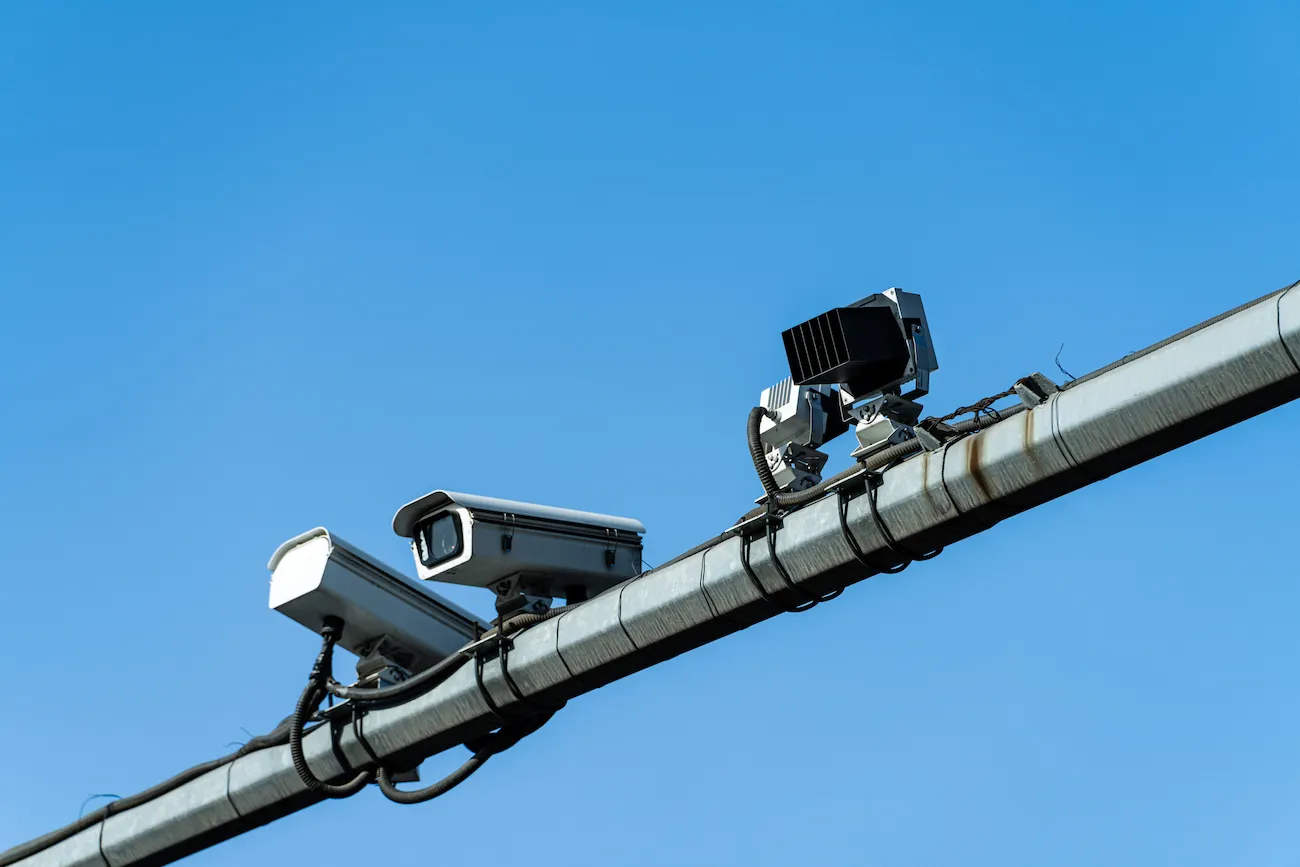
Nigeria has emerged as the largest spender on artificial intelligence-powered surveillance technologies in Africa, accounting for over $470 million out of at least $2.1 billion spent by 11 countries across the continent.
This is according to a report by the Institute of Development Studies titled “Smart City Surveillance in Africa: Mapping Chinese AI Surveillance Across 11 Countries,” released in March 2026.
The study examined surveillance deployments in Algeria, Egypt, Kenya, Mauritius, Mozambique, Nigeria, Rwanda, Senegal, Uganda, Zambia, and Zimbabwe.
What they are saying
According to the report, Nigeria’s spending focused on AI-enabled facial recognition systems and automatic number plate recognition technologies.
Also Read
- “Nigeria alone has spent over US$470 million on AI-enabled facial recognition and automatic car number plate recognition (ANPR), making it Africa’s largest buyer of smart city surveillance technologies,” they stated.
- The report noted that the actual spending across Africa is likely higher than $2.1 billion because surveillance spending is often secret, figures were unavailable for some countries, and public accounts for others were incomplete
- The study revealed that most of the surveillance infrastructure deployed across the 11 countries was supplied by Chinese technology companies, financed largely through soft loans from Chinese banks. South Korea and Russia supplied three countries each, and the United Arab Emirates supplied two. USA, Israel, France, Spain, Iran, and Japan each supplied smart city surveillance technologies to one country
As of 2025, the listed countries had a combined total of 35,542 smart cameras, excluding Zimbabwe, where the number was not specified.
Countries ranked by smart camera investment
- Nigeria: Cost – $470 million; Smart cameras – 10,000
- Mauritius: Cost – $456 million; Smart cameras – 4,143
- Kenya: Cost – $219 million; Smart cameras – 2,000
- Zambia: Cost – $210 million; Smart cameras – 1,600
- Uganda: Cost – $189 million; Smart cameras – 5,000
- Senegal: Cost – $167 million; Smart cameras – 500
- Mozambique: Cost – $147 million; Smart cameras – 450
- Egypt: Cost – $58 million; Smart cameras – 6,000
- Zimbabwe: Cost – $10 million; Smart cameras – Not specified
- Algeria: Cost – Not specified; Smart cameras – 5,000
- Rwanda: Cost – Not specified; Smart cameras – 849
More insights
Despite the scale of investment, the report found limited evidence that increased digital surveillance has reduced crime across the countries studied.
- “The countries studied have each spent an average of US$240 million on smart city surveillance with smart surveillance of public space in place for between 5 and 10 years.”
- “There is little evidence that the expansion of digital surveillance reduces overall crime. Court records did not show a significant number of prosecutions secured with surveillance footage, or any attributable reduction in terrorism or serious crime,” the report stated.
The report further noted that none of the countries has put in place a legal framework capable of balancing the state’s need to conduct warranted surveillance with its existing commitments to protect and promote fundamental human rights.
- The report called for the introduction of dedicated laws on smart surveillance, clearly defining who can collect surveillance data and under what conditions. They also recommended that surveillance activities should require a prior court warrant, allowing a judge to assess whether such actions are legal, necessary, and proportionate.
In addition, the report emphasised the need for independent oversight bodies, separate from government, police, and the judiciary, to monitor surveillance operations, provide remedies for abuse, and publish transparency reports to build public trust.
What you should know
Nigerians have questioned why existing tools such as intelligence systems, drones and tracking technologies have not translated into stronger enforcement or arrests.
- Former presidential candidate Peter Obi has criticised the government’s handling of insecurity over the continued rise in kidnappings and attacks despite the capacity to track and locate criminals through telecommunications systems and intelligence networks, saying that they are either helping criminals or failing to do their job properly as insecurity continues to spiral across the country.
- The federal government’s mandatory NIN-SIM linkage, to enhance national security and strengthen identity verification by making it harder for criminals to operate anonymously and enabling law enforcement agencies to trace mobile communications, authorities still face technical challenges in tracking SIM cards used by kidnappers.
According to the Minister of Communications, Innovation and Digital Economy, Bosun Tijani, criminals are able to evade detection by using unconventional technologies and operating outside standard telecom networks.