
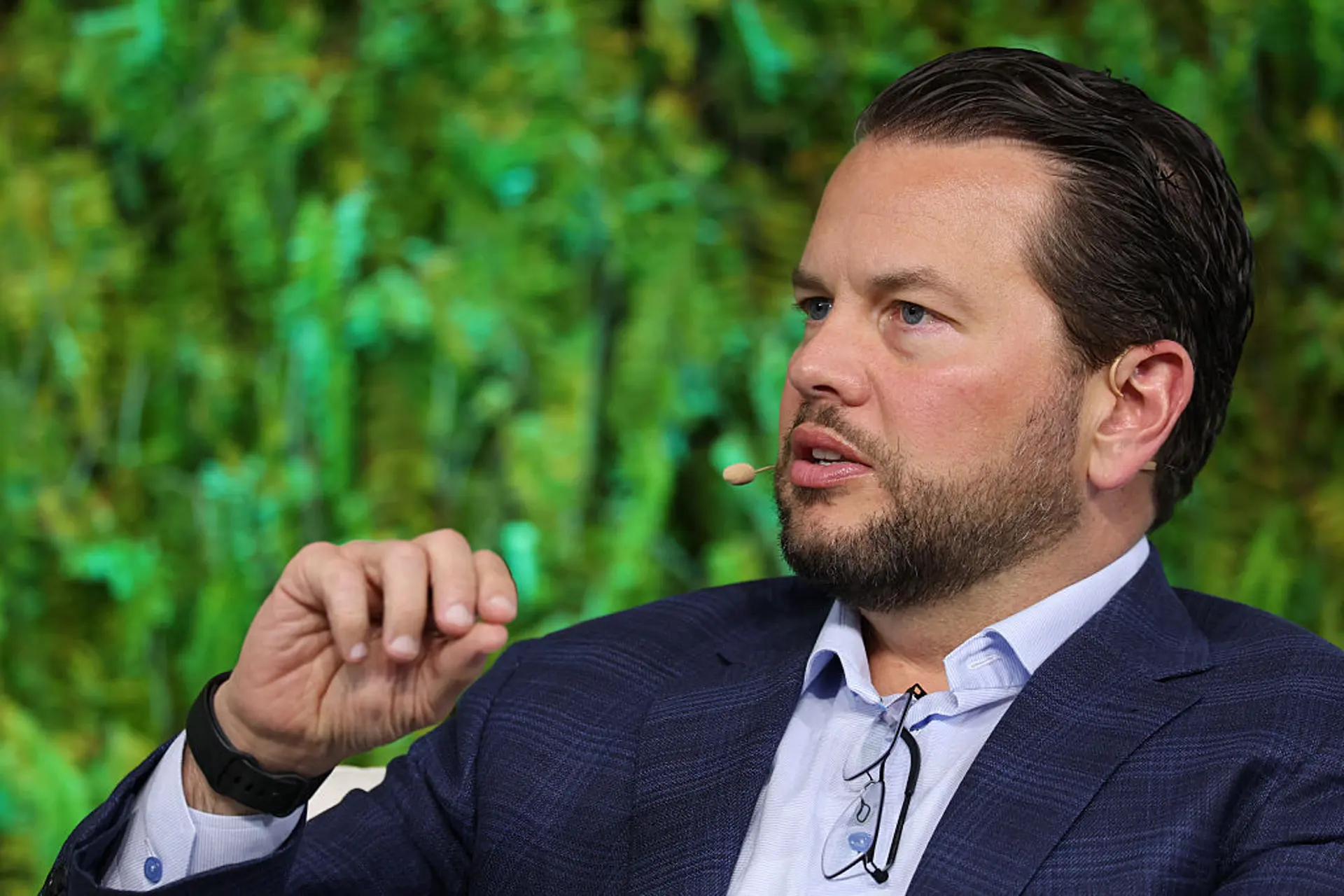
The CEO of Pinterest, Bill Ready, has called on governments worldwide to ban children under the age of 16 from accessing social media platforms, warning that existing safeguards are inadequate to protect young users.
Ready made the call in an opinion piece published in The Times, arguing that social media platforms, in their current form, are fundamentally unsafe for young people, as they are designed to maximise engagement rather than prioritise user well-being.
He noted that while companies may comply with legal requirements, compliance does not equate to safety, especially for adolescents who are still developing emotionally and psychologically.


The call comes at a time the Nigerian government has also kick-started the process of restricting the usage of social media by underage Nigerians, citing the same concerns.
What the Pinterest CEO
Ready also raised concerns over the integration of artificial intelligence into social media platforms, warning that AI-powered chatbots could further amplify risks for young users.
According to him, these tools are capable of influencing behaviour, emotions, and identity, yet are being deployed in environments where safeguards remain insufficient.
- “As both a tech CEO and parent, I know legal compliance is not the same as safety. And I understand broad restrictions come with difficult tradeoffs.
- “But social media, as it’s configured today, is not safe for young people under 16. Instead, it’s been designed to maximize view time, keeping kids glued to a screen with little regard for their well-being.
- “In courtrooms, we’ve seen how social media companies put profit over young people’s safety, sometimes with tragic outcomes,” he said.
He likened the current state of the industry to earlier regulatory failures in sectors such as tobacco, arguing that profit motives have often taken precedence over user safety, sometimes with severe consequences.
More insights
The Pinterest CEO cited growing public concern over the impact of social media on young people.
According to him, surveys by Ipsos and the Pew Research Center show widespread parental anxiety about online safety, exposure to harmful content, and excessive screen time.
- He also referenced research conducted by Jonathan Haidt, author of The Anxious Generation, which found that nearly half of Gen Z respondents wished certain social media platforms did not exist.
- These findings, he argued, underscore the need for stronger regulatory intervention rather than continued reliance on self-regulation by tech companies.
- Addressing criticisms that such bans may be impractical or overly restrictive, Ready acknowledged that no system would be perfect but insisted that partial protection is better than none.
He argued that concerns about teenagers bypassing restrictions or migrating to alternative platforms should not justify inaction, noting that social media often exposes young users to risks such as cyberbullying, harmful comparisons, and unsolicited contact from strangers.
Get up to speed
Several countries, including Nigeria, have either implemented or are about to implement age restrictions for social media.
Prominent on the list is Australia, which implemented a ban on social media for under-16s in December 2025, forcing platforms like TikTok, Instagram, and YouTube to restrict access.
Indonesia has also announced a social media ban for children under 16, following similar global trends.
Denmark is also set to ban social media platforms for children under 15. The Danish government announced in November 2025 that it had secured support for the ban from three governing coalition parties and two opposition parties in parliament.
Similarly, in late January, French lawmakers passed a bill that would ban social media for kids under 15. President Emmanuel Macron has supported the measure as a way to protect children from excessive screen time.
What you should know
Last week, the Nigerian government began consultations on plans to introduce age restrictions for social media use in Nigeria as part of efforts to strengthen online safety for children.
- To that effect, the Ministry of Communications, Innovation, and Digital Economy launched a public poll seeking input from parents, educators, young people, and digital experts on how best to regulate children’s access to social media and other digital platforms.
- According to the ministry, the initiative is aimed at developing a balanced and evidence based policy framework that protects children from online risks while preserving the educational and social benefits of internet access.