Follow Us on Google Discover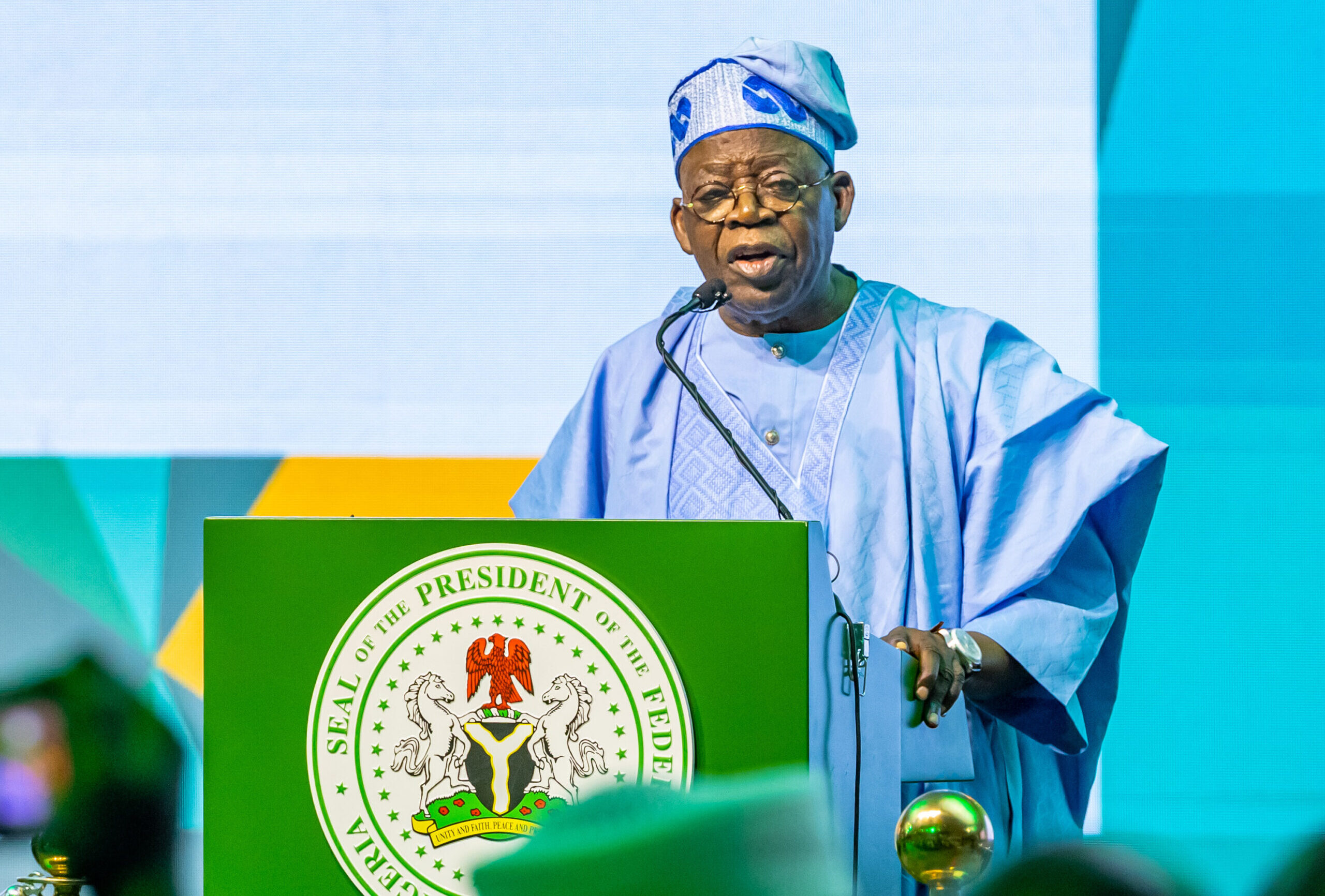
President Bola Tinubu on Friday inaugurated an 11-member committee to oversee the incorporation of the Grid Asset Management Company Limited (GAMCO).
The development was confirmed in a statement issued by the Special Adviser to the President on Information and Strategy, Bayo Onanuga.
The move follows the Federal Executive Council’s approval of GAMCO and is expected to address longstanding challenges in Nigeria’s power sector, including stranded generation, transmission bottlenecks, and grid management inefficiencies.
What they are saying
According to the statement, the committee has been tasked with ensuring the smooth establishment of GAMCO, which the government plans to deploy as a vehicle for optimising electricity generation and transmission.
Also Read
The Chief of Staff to the President, Femi Gbajabiamila, who inaugurated the committee on behalf of President Tinubu, described the initiative as a major step toward improving power reliability in the country.
- “President Bola Tinubu on Friday constituted an 11-member committee to ensure the smooth sailing incorporation of the Grid Asset Management Company Limited (GAMCO).
- “The committee’s constitution followed the Federal Executive Council’s approval of the company’s establishment at its Wednesday meeting,” the statement read in part.
The committee will conduct a comprehensive review of existing laws, policies, and regulations affecting the electricity sector, including the implications of the Electricity Reform Laws (2025) and asset ownership structures.
It will also assess the legal and operational status of the Niger Delta Power Holding Company and the National Integrated Power Project plants—Omotosho, Olorunsogo, and Ihovbor—which GAMCO plans to use in its pilot phase.
The outcome of these reviews is expected to guide the operational structure and legal framework required for the successful establishment of the new company.
More insights
GAMCO is designed to recover and optimise stranded power along the Benin–Lagos transmission corridor by mobilising private capital and implementing disciplined asset management practices to improve grid performance.
The initiative forms part of broader reforms intended to strengthen the electricity value chain.
- The pilot phase of the project aims to recover at least 1,600 megawatts of stranded power within 18 to 24 months.
- Plans also include the development of a new 330kV+ double-circuit transmission line along the Benin–Lagos corridor.
- The transmission line serves Nigeria’s largest industrial and commercial centres located in Ogun and Lagos states.
The Federal Government will fully own GAMCO through the Ministry of Finance Incorporated.
If successful, the model will be expanded to other power plants and transmission corridors, creating a stronger backbone for long-term grid stabilisation and expansion.
Backstory
The decision to establish GAMCO follows earlier proposals by President Tinubu aimed at addressing persistent challenges in Nigeria’s electricity transmission network.
- Nairametrics previously reported that the president submitted a memorandum to the Federal Executive Council on Wednesday seeking the creation of the company to strengthen the transmission segment of the power sector.
- The proposal was intended to address structural challenges in the electricity value chain, particularly within the transmission network.
- The Federal Executive Council subsequently approved the formation of an inter-ministerial committee to develop the operational framework for GAMCO.
Members of the committee include the Ministers of Power, State for Gas, Works, Finance, and Science and Technology, as well as the Chairman of the Nigerian Revenue Service and the Attorney-General of the Federation.
The committee is also expected to examine regulatory frameworks, investment models, and the role of existing players in the electricity sector.
Its recommendations may be forwarded to the National Assembly for legislative approval if required.
What you should know
Nigeria’s electricity sector continues to face persistent challenges despite large-scale financial interventions aimed at stabilising the market.
- Experts have warned that funding alone may not be sufficient to resolve the country’s longstanding power supply crisis.
- Nigeria experienced two national grid collapses in December 2025, which disrupted electricity supply across much of the country and affected economic and social activities.
- Energy experts and system operators have continued to raise concerns following fresh system failures recorded this year.
In the past two years, the Federal Government has introduced several financial interventions to stabilise the electricity market.
These include a N4 trillion bond programme designed to clear legacy debts owed to electricity generation companies and gas suppliers.
The government believes that strengthening the transmission network through initiatives such as GAMCO will play a crucial role in improving power reliability, supporting industrialisation, and boosting economic growth.