Follow Us on Google Discover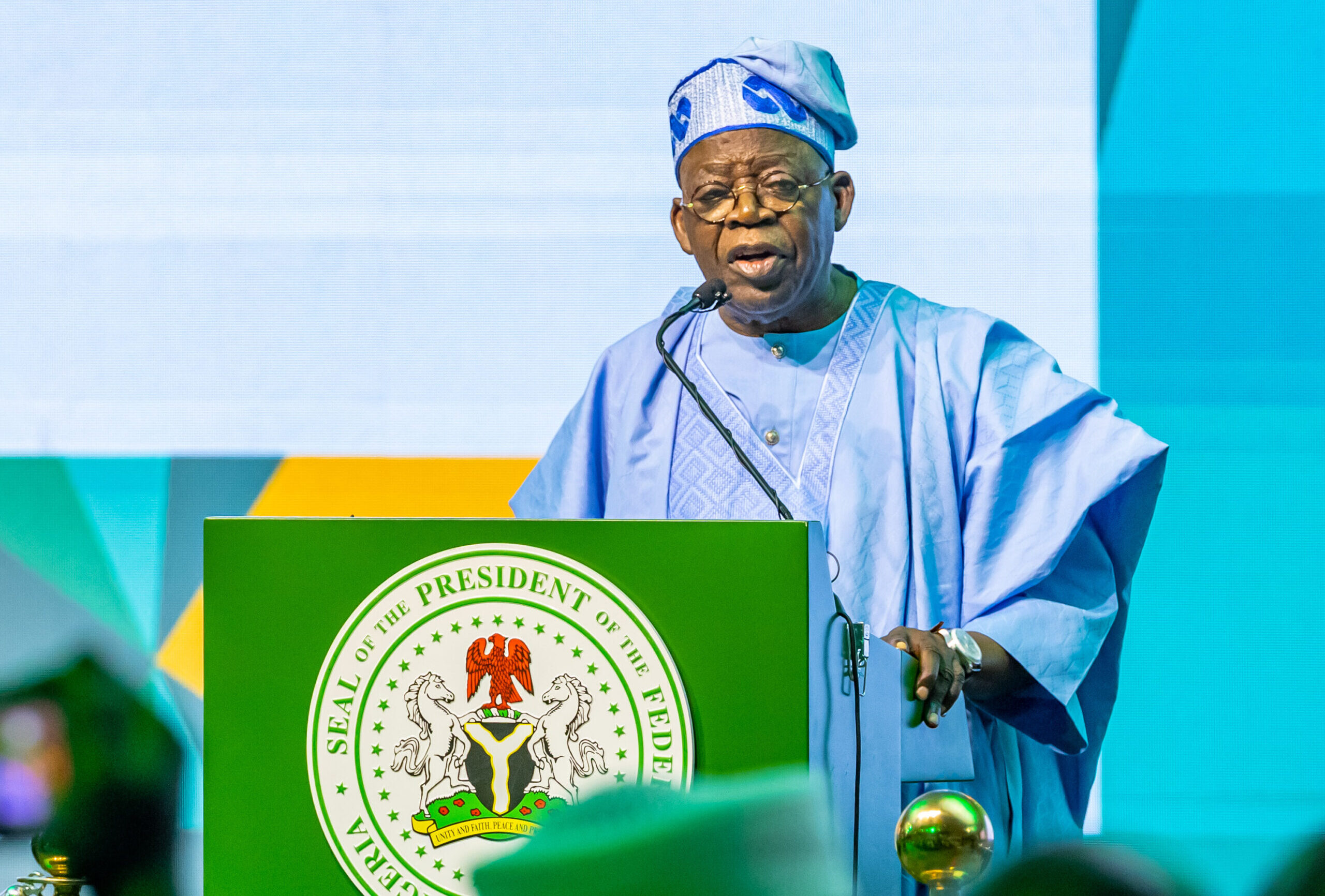
The Federal Government on Thursday announced that Nigeria has reached a settlement agreement with Eni and Nigerian Agip Exploration Limited over the long-running dispute surrounding Oil Prospecting Licence (OPL) 245.
The announcement was contained in a State House press statement issued Thursday by presidential spokesman Bayo Onanuga, following a meeting at the Presidential Villa in Abuja attended by Eni Chief Executive Officer Claudio Descalzi and other senior company executives.
According to the statement, the settlement agreement was signed in Abuja and brings to an end a dispute that has lasted for more than 15 years over one of Nigeria’s most commercially promising deepwater oil blocks.
What they are saying
Tinubu described the resolution as a major milestone for Nigeria’s energy sector and economic reform agenda, saying the agreement demonstrates the government’s commitment to addressing legacy disputes and restoring investor confidence in the country’s oil industry.
Also Read
- “This resolution sends a clear signal to global investors that Nigeria is prepared to address legacy issues transparently, uphold the rule of law, and create a stable environment for long-term capital,” the president said.
The presidential adviser on energy, Olu Arowolo-Verheijen, also said the new settlement improves on earlier arrangements and aligns with the governance and fiscal framework introduced under the Petroleum Industry Act.
- “The revised terms strike a balanced outcome providing investors with the clarity and predictability required to proceed with major deepwater investments, while ensuring stronger value accretion and safeguards for the Federation,” Arowolo-Verheijen said.
Backstory
The dispute over OPL 245, one of Nigeria’s most valuable offshore oil assets, dates back to the early 2000s and has involved multiple legal battles between oil companies and the Nigerian government over ownership and development rights.
The block, estimated to contain billions of barrels of oil, has been at the center of international investigations, arbitration proceedings, and court cases involving several parties including Malabu Oil and Gas, Royal Dutch Shell, and Eni.
- In May 2025, the Court of Appeal of Nigeria sitting in Abuja dismissed a suit filed by Malabu Oil and Gas over the disputed $1.3 billion oilfield, ruling in favour of Nigerian Agip Oil Company.
- The appellate court set aside a 2020 ruling by the Federal High Court of Nigeria, which had earlier dismissed Agip’s preliminary objection against Malabu’s claim that its rights and interests in OPL 245 remained valid and had not been revoked by the federal government.
More recently, on March 2, Nairametrics reported that the federal government had split the controversial oil block into four new assets to be operated by Eni and Shell, a move widely seen as a step toward restarting development of the long-disputed field.
What you should know
With the dispute resolved, Nigeria can now move toward a Final Investment Decision on the Zabazaba–Etan deepwater development project within the block.
- The project is expected to add around 150,000 barrels per day to Nigeria’s oil production capacity once operational, potentially strengthening the country’s long-term energy outlook and boosting government revenues.
- The settlement also removes one of the most prominent legal and investment risks in Nigeria’s upstream oil sector, which analysts say could help attract new capital into deepwater exploration at a time when global energy companies are becoming more selective about long-term fossil fuel investments.
Officials say the resolution is part of broader reforms since 2023 aimed at improving Nigeria’s competitiveness in global energy markets, with the Petroleum Industry Act serving as the regulatory foundation for new investment frameworks in the country’s oil and gas sector.