Follow Us on Google Discover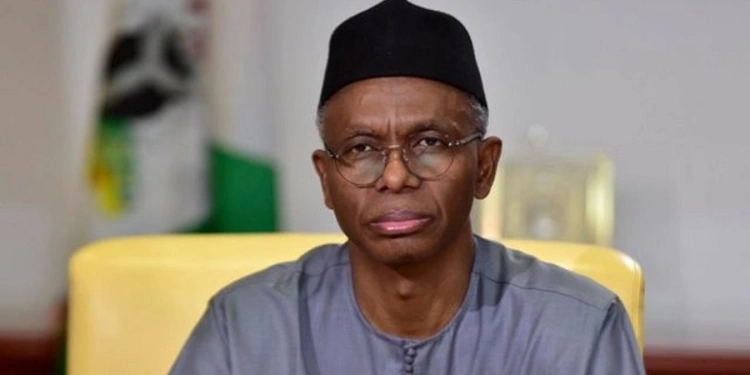
The Department of State Services’ (DSS) planned arraignment of former Kaduna State Governor, Nasir El-Rufai, on Wednesday for allegedly intercepting the phone communications of the National Security Adviser, Nuhu Ribadu, has stalled at the Federal High Court, Abuja.
El-Rufai’s arraignment could not proceed because Justice Joyce Abdulmalik was informed that the former governor was still in the custody of the Independent Corrupt Practices and Other Related Offences Commission (ICPC).
The planned arraignment was based on fresh charges filed against El-Rufai by the DSS, dated February 16, 2026.
What They Are Saying
At the resumed proceedings, counsel to the DSS, Oluwole Aladedoye, SAN, told the court that the former governor was still with the ICPC for investigative purposes by the anti-graft agency.
Also Read
- He emphasized that the DSS had no control over the “sister agency” and used the opportunity to request an adjournment.
Counsel to El-Rufai, Mr. Oluwole Iyamu, consented to the adjournment but demanded bail for his client, citing several legal authorities to persuade the court.
- However, the DSS lawyer opposed the bail application, arguing that under criminal law, formal arraignment must occur before a bail application can be made.
- After hearing from both parties, Justice Joyce Abdulmalik held that El-Rufai could only apply for bail after arraignment.
The judge subsequently fixed April 23 for the arraignment.
Backstory
The DSS legal team filed a three-count charge against the former governor.
- In Count 1, Mallam Nasir El-Rufai is accused of admitting, during an appearance on Arise TV’s Prime Time programme in Abuja on February 13, 2026, that he and his associates unlawfully intercepted the phone communications of the National Security Adviser, Nuhu Ribadu.
The DSS maintained that the alleged offence is contrary to and punishable under Section 12(1) of the Cybercrimes (Prohibition, Prevention, etc.) Amendment Act, 2024.
- In another count, El-Rufai was accused of stating during the same interview that he knew and related with certain individuals who unlawfully intercepted the phone communications of the National Security Adviser without reporting them to the relevant security agencies, thereby committing an offence under Section 27(b) of the same Act.
- In the third count, he and others still at large were accused of using technical equipment or systems that compromised public safety and national security, thereby instilling reasonable apprehension of insecurity among Nigerians by unlawfully intercepting the phone communications of the National Security Adviser. This charge was said to be contrary to and punishable under Section 131(2) of the Nigerian Communications Act, 2003.
What You Should Know
The dispute between the DSS and El-Rufai gained widespread attention after the former governor granted an interview on Arise News.
During the interview, the anchor, Charles Aniagolu, interjected, noting that phone tapping is illegal.
The presidency later accused El-Rufai of allegedly admitting on national television that someone tapped the phone of the National Security Adviser so he could listen to the conversation.