
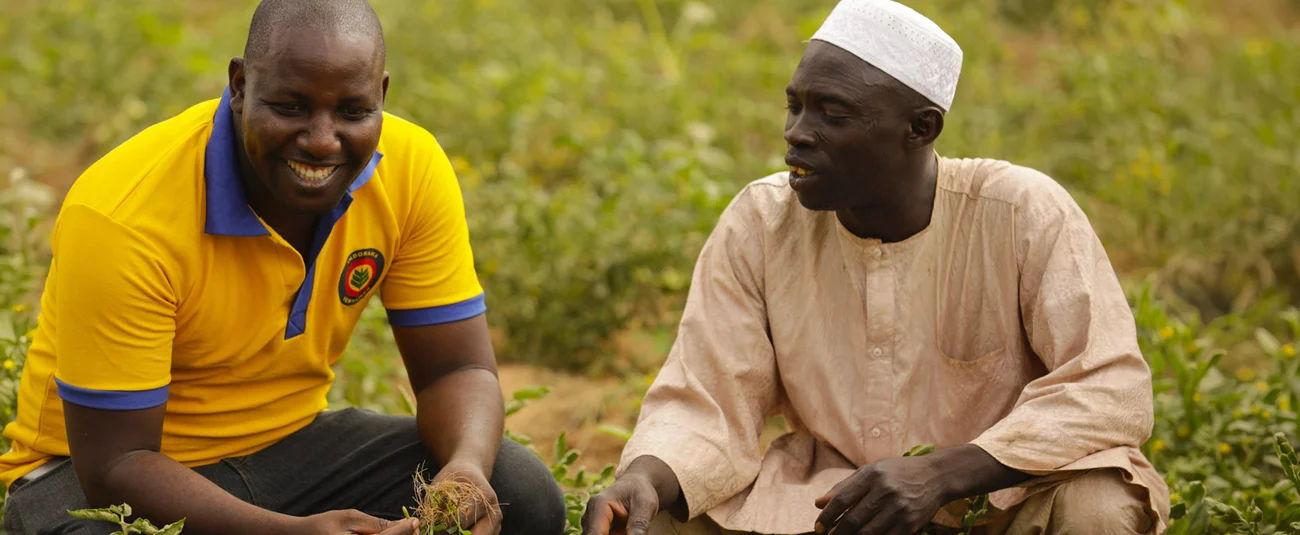
The African Development Bank Group has approved a $200 million loan to support climate-smart and technology-driven agriculture in Nigeria.
The approval was disclosed in a statement published by the Bank, outlining plans to strengthen food security, boost productivity, and improve agricultural value chains.
The financing will fund the second phase of the Federal Government’s National Agricultural Growth Scheme – Agro-Pocket (NAGS-AP), expanding access to quality inputs, modern technology, and data-driven farming practices nationwide.


The loan builds on earlier interventions under the Bank’s African Emergency Food Production Facility and is structured as Sector Budget Support.
It is designed to scale priority agricultural investments and accelerate climate-resilient farming systems across the country.
The project is expected to run for four years beginning in March 2026.
What they are saying
The Bank said the financing will help scale up agricultural investments that enhance productivity and deepen value addition across priority crops. It noted that the second phase draws on lessons from the first phase to expand impact at scale.
- “This second phase draws directly from those lessons and successes to scale up impact even further,” said Abdul Kamara, Director General for Nigeria at the African Development Bank.
- “By expanding access to quality inputs, digital tools, and climate‑smart technologies, we are supporting farmers to improve productivity and resilience,” he added.
- “This programme will continue to play a critical role in reducing food imports, boosting local production, and advancing inclusive growth across the country.”
The Bank added that the initiative will directly support five key programmes under Nigeria’s National Agricultural Technology and Innovation Policy framework, targeting improved input access, stronger value chains, revitalised extension services, digital agriculture, and enhanced data systems.
Get up to speed
The new loan builds on earlier support provided under the Bank’s African Emergency Food Production Facility, which helped Nigeria respond to rising food insecurity pressures.
Phase I of the National Agricultural Growth Scheme – Agro-Pocket delivered measurable results through an ICT-based input distribution system.
- More than 600 agro-dealers nationwide supplied certified seeds, fertilisers, and crop protection products to farmers.
- About 118,000 hectares of wheat were cultivated during the 2023/2024 dry season under the scheme.
- National wheat output tripled to an estimated 500,000 metric tons in 2024.
- Approximately 650,000 smallholder farmers producing wheat, rice, cassava, maize, sorghum, and millet benefited from the first phase.
These outcomes provided the foundation for scaling up the programme under the newly approved second phase, with a stronger emphasis on climate resilience and technology adoption.
What you should know
Agriculture remains central to Nigeria’s economy, employing roughly 38 per cent of the workforce and contributing about a quarter of gross domestic product. However, the sector continues to face structural constraints that limit productivity and competitiveness.
- Limited access to improved seeds and fertilisers has constrained yields.
- Weak land tenure systems and low irrigation coverage affect long-term investment and output stability.
- Climate stress and soil degradation continue to disrupt production cycles.
- The new project targets a fivefold increase in wheat output and a 20 per cent rise in rice production.
In November 2025, AfDB approved a $500 million loan to the Federal Government of Nigeria to finance the second phase of the Economic Governance and Energy Transition Support Programme.