Follow Us on Google Discover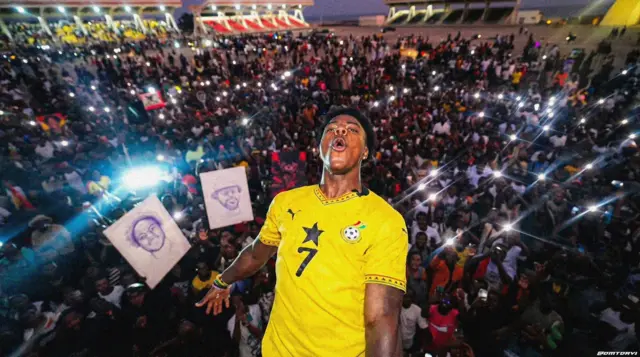
In an era shaped by digital connectivity, nation branding no longer unfolds primarily through scripted campaigns or controlled messaging.
It now takes shape in real time, across digital platforms, through culture, creators, and lived experiences that influence perception at scale.
How a country is seen increasingly affects its ability to attract tourism, investment, talent, and strategic partnerships.
At a time when global attention is increasingly fragmented and moves faster than formal messaging cycles, the ability to translate visibility into credibility has become a strategic differentiator.
The recent African tour by IShowSpeed, a 21-year-old global creator with an audience exceeding 50 million subscribers, offers a revealing case study. His presence across multiple countries generated sustained global attention, particularly among young audiences.
That attention did not remain confined to a single platform. It cascaded across social media, mainstream news coverage, blogs, and digital commentary, creating a reach and intensity that traditional campaigns often struggle to achieve.
In a matter of days, global audiences encountered African cities, institutions, and everyday interactions not through official narratives, but through unscripted moments consumed in real time. For many viewers, these impressions were not supplemental to existing knowledge—they were foundational. In an environment where attention precedes analysis, such moments often shape whether a country is later examined more closely or quietly dismissed.
This context is particularly important given Africa’s demographic and cultural trajectory. The continent is home to the world’s youngest population and is projected to account for more than a quarter of the global population by 2050. At the same time, African music, fashion, sport, and digital culture increasingly shape global trends, especially among younger audiences.
As consumption, talent, and cultural influence continue to skew younger and more digital, Africa’s relevance to global markets, media, and investment will only intensify. How the continent is perceived in moments of mass visibility will shape how it is engaged economically, culturally, and strategically in the years ahead.
What this tour demonstrated was not the absence of institutional involvement, but the value of flexibility. Compared to the resources typically required to reach a comparable global youth audience, this exposure was highly efficient.
The differentiating factor was not spend, but preparedness. In this context, preparedness refers less to formal promotion and more to the ability to coordinate experience, facilitation, and narrative across public-facing touchpoints under conditions of real-time global attention.
The ability to recognize the opportunity, support it effectively, and integrate it into a broader national story separated contexts where narrative value was readily generated from those where translation into longer-term outcomes proved more limited.
Across the continent, responses reflected differing institutional contexts, timelines, and coordination structures. In practice, outcomes varied according to how responsibilities are distributed within national systems and how quickly actors aligned during a moment of global attention.
In some cases, governments and partners recognized that hosting a global creator was not simply a cultural moment, but a strategic opportunity to reach a massive, youth-driven global audience and to tell a national story directly, in real time, through lived experience rather than formal messaging.
Where coordination was in place, logistics were supported and experiences curated to showcase cultural heritage, history, and expressions of national identity in ways that felt authentic and intentional. In some instances, this included highlighting distinctive subcultures and lived traditions that audiences could immediately connect with.
In other settings, the speed and novelty of the moment meant that engagement unfolded more organically, shaping how much of the attention could be translated into longer-term strategic outcomes. Without an early shared reading of reach, audience profile, and narrative implications, the opportunity to shape perception and sustain value evolved unevenly.
This distinction matters. In a global environment where perception increasingly shapes economic and strategic outcomes, visibility that is not strategically integrated can expose misalignments rather than reinforcing strengths.
Nation branding as capability, not a one-off campaign
Nation branding is frequently misunderstood as marketing alone. In practice, it is the strategic management of how a country is understood across multiple dimensions, including credibility, cultural relevance, institutional confidence, and future potential. It operates at the intersection of culture, tourism, investment facilitation, and storytelling.
Perception often forms before engagement, shaping which countries are taken seriously enough to warrant deeper consideration. Investors, tourists, and institutional partners make initial judgments well before reviewing detailed policy frameworks, security conditions, or economic indicators.
While fundamentals such as macroeconomic stability, regulatory clarity, and market size ultimately drive decisions, perception influences whether those fundamentals are examined at all. Stories, experiences, and repeated impressions help determine who leans in, who hesitates, and who looks elsewhere.
Creators like IShowSpeed are not traditional media outlets, yet their reach rivals that of major broadcasters. Their audiences are global, young, and highly engaged. They are not consuming polished promotional material. They are forming opinions in real time through spontaneity, curiosity, and cultural exchange.
Visibility alone is neutral. What matters, in practice, is whether a country has the internal coordination to meet attention with structure. When cultural expression, tourism experience, and on-the-ground facilitation reinforce a coherent story, perception compounds. When they do not, even extraordinary exposure dissipates quickly.
The difference is not creativity or culture. It is readiness.
Culture, credibility, and economic signal
Once attention has been secured, the question becomes what follows. In economic engagement, credibility determines whether interest matures into action. Fundamentals such as regulatory environments, market conditions, and institutional capacity continue to anchor decision-making, but credibility influences how confidently those fundamentals are interpreted and acted upon.
Countries that demonstrate coherence and execution capacity reduce friction in decision-making and are more likely to attract sustained investment, repeat engagement, and long-term partnerships.
Costa Rica is frequently cited in investment and tourism strategy circles as a practical illustration of how reputation compounds over time. In the late 1990s, Intel’s decision to locate a major semiconductor assembly and testing operation in the country, widely reported at approximately $300 million, was notable not only for its scale, but for its context.
At the time, many observers expected such an investment to go to larger economies in the region with deeper industrial bases. Costa Rica’s success reflected a different advantage: clear positioning, institutional readiness, and the ability to present a credible and coordinated value proposition. Alignment can outweigh size.
Cultural positioning can play a similar role. South Korea’s global cultural influence, driven by music, film, and television, reshaped international perceptions of the country. That shift strengthened tourism, expanded global interest, and reinforced its image as dynamic and outward-facing. Culture, when aligned with economic intent, becomes an amplifier of credibility rather than a parallel activity.
These outcomes are rarely accidental. They reflect sustained coordination across culture, tourism, and investment facilitation. The visible moment is the outcome. The system behind it is the strategy.
The capacity question for African nations
The central lesson from this moment is not about performance or comparison. It is about capacity.
In a world where millions can form impressions of a country through a single digital experience, nation branding requires more than reaction. It requires systems that allow countries to identify opportunity, respond with coherence, and reinforce a clear narrative across touchpoints.
Tourism plays a critical role within this ecosystem. It is often the most immediate and emotionally resonant interface between a country and the world. When tourism experiences, cultural storytelling, and facilitation align, attention becomes durable perception. When they do not, visibility exposes fragmentation.
For African nations, operating from very different institutional baselines, the stakes are significant. The continent is young, dynamic, and culturally influential, yet frequently narrated by others. Moments like this offer an opportunity to assert identity directly through channels global audiences already trust and engage with. The issue is not visibility itself, but whether institutions can meet attention with coherence and intent.
When moments of attention are not fully embedded into longer-term strategic frameworks, they reveal the complexity of translating visibility into durable value. The imperative is not spectacle. It is structure.
For policymakers, the implication is clear: moments of global visibility should be treated as strategic inputs, not public relations events, and managed with the same rigor as trade missions or investment roadshows.
Treat visibility as infrastructure. Treat storytelling as strategy. And treat culture as the serious economic and reputational asset it actually is. Doing so requires institutional clarity about ownership, coordination, and continuity, long after the moment of attention has passed.
Countries that do will not simply be seen. They will be understood, trusted, and taken seriously.
- Gbemisola Abudu is the Founder and Executive Director of the BMGA Foundation and a nonresident senior fellow at the Atlantic Council’s Africa Center. She has worked across commerce, culture, policy, and international engagement in the United States, the Middle East, and Africa.