Follow Us on Google Discover
- Wemy Industries expanded from 70 to over 400 employees and increased production capacity up to four times through Alitheia IDF’s investment
- Local manufacturing is replacing expensive imports, making adult diapers more affordable and consistently available nationwide
- Nigeria is becoming a regional manufacturing hub,retainingeconomic value and reducing dependence on foreign supply chains
When Mrs. Adebayo’s mother began struggling with mobility last year, the challenge went far beyond caregiving. Each day, the family searched Lagos pharmacies for adult diapers they could afford, often in vain, leading them to discover an uncomfortable truth about care in Nigeria: dignity is expensive.
Adult diapers were almost entirely imported and cost up to ₦25,000 to ₦100,000 per pack when available at all.
Also, considering factors such as shipping delays, currency volatility, and stock shortages, routine caregiving has been turned into a monthly emergency and a basic care item into a luxury.
For many families, what should be a basic healthcare product has become a stress point, revealing how deeply Nigeria’s reliance on imports shapes the everyday lives of its most vulnerable citizens.
Also Read
Mrs. Adebayo’s story and struggle is not unique. In fact, across Nigeria, thousands of families face the same quiet crisis, one that exposes the true cost of dependency in an import reliant economy.
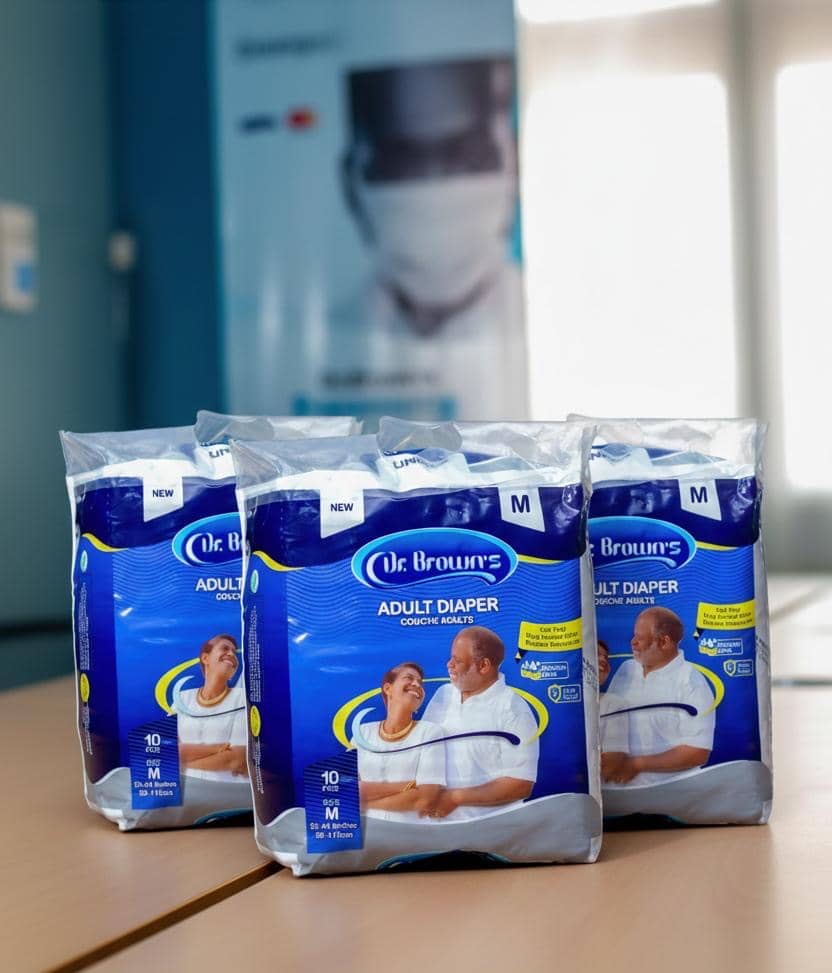
Nigerian families have spent decades waiting on container ships bearing these products from China, Turkey, and the EU for something as basic as adult hygiene products. The country spends over USD32 million annually on adult diaper imports alone. That figure is climbing 3.62% each year, even as Nigeria’s population aged 65 and above is projected to nearly triple by 2050.
But a meaningful shift is now underway
Through a strategic investment from Alitheia IDF Fund, a gender-focused private equity fund co-managed by Alitheia Capital (Nigeria) and IDF Capital (South Africa), Wemy Industries, Nigeria’s hygiene manufacturing pioneer, has procured and is commissioning a state-of-the-art adult diaper production line.
In 2021, Wemy Industries was running one production line with 70 employees and a clear understanding of the gap between what Nigeria needed and what it could produce.
Alitheia IDF encountered a business operating at the limits of its capacity with demand that far exceeded what the company, and the country, could supply. It was an opportunity to build local industrial capacity to close the gap between domestic demand and local supply, while strengthening Nigeria’s manufacturing base.
What Alitheia IDF saw was not just a factory, but a missed opportunity to scale manufacturing and improve value creation within Nigeria. Since Alitheia Capital’s initial investment in 2021, Wemy has scaled significantly. Monthly revenues have grown by over 300%, and the workforce has expanded from approximately 70 employees to more than 400, the majority of whom are women.
With the installation of the new production line, Wemy is positioned to increase output by up to four times, delivering locally manufactured adult care products faster and at a lower cost.
These investments were made possible through the strategic support of local and international development finance institutions to Alitheia IDF Fund. The Bank of Industry (BOI) and FGF Private Equity have been instrumental partners in this journey, providing the foundational and patient capital to Alitheia that was required to fuel Wemy’s next chapter. These partnerships reflect the vital role that collaborative financing plays in driving local manufacturing and fostering economic sovereignty in Nigeria.
Some other challenges that this state-of-the-art factory is bound to solve include:
1.) Closing the Supply–Demand Gap
Nigeria’s adult incontinence market has historically been dominated by premium imports, creating an accessibility gap for middle- and low-income households.
The expanded production capacity enables Wemy to:
- Improve domestic accessibility by reducing reliance on imported brands
- Ensure product availability across multiple SKUs and geographies, including all 36 Nigerian states and the wider ECOWAS region
- Strengthen market sovereignty, ensuring access to essential hygiene products without dependence on international shipping cycles
In practical terms, Nigeria no longer needs to wait for container ships to dock before meeting a basic dignity and healthcare need for its ageing population.
2.) Local Value Addition and Economic Retention
Every imported adult diaper represents a missed opportunity for domestic value creation. Localizing production fundamentally changes the economic equation.
By manufacturing locally, Wemy:
- Retains capital within Nigeria, supporting suppliers, logistics providers, and technical talent
- Reduces exposure to FX volatility, freight costs, port duties, and global supply-chain disruptions
- Provides more predictable pricing for consumers, even in volatile macroeconomic conditions
This multiplier effect strengthens the broader industrial ecosystem while insulating households from external shocks.
3.) Industrialization, Skills, and Capability Building
Beyond capacity expansion, the new production line delivers structural capability upgrades:
- Technical upskilling for local operators managing high-speed automated equipment
- Supply-chain optimization, reducing lead times from months (sea freight) to days (road distribution)
- Operational resilience, improving reliability and quality at scale
Industrialization is not only about output—it is about embedding technical know-how and operational excellence into the local economy.
4.) Affordability, Access, and Social Impact
Essential hygiene should not be a luxury.
Local manufacturing allows Wemy to eliminate many of the hidden costs embedded in imported goods, translating into:
- Lower consumer prices
- More consistent product availability
- Improved access for healthcare facilities, elder-care providers, and households
The result is dignity, affordability, and supply security—delivered at scale.
5.) Positioning Nigeria as a Regional Manufacturing Hub
With domestic supply gaps closing, Wemy is now positioned to serve West Africa under the African Continental Free Trade Area (AfCFTA) framework. The same production line that replaces imports today enables exports tomorrow—transforming Nigeria from a net importer into a regional supplier of essential hygiene products and an earner of foreign exchange.
6.) Conclusion
The commissioning of Wemy’s new adult diaper production line illustrates how targeted private capital can drive structural change. By investing in productive capacity, Nigeria reduces external dependence, strengthens its industrial base, and improves access to essential goods.
When a country stops importing what it can competitively produce—and successfully closes the gap between demand and domestic output—it takes a meaningful step toward economic resilience.
Wemy Industries, a portfolio company of the Alitheia IDF Fund, stands as a clear example of how responsible private investment can scale local manufacturing, create jobs, and deliver lasting economic and social impact.