
The Internet Exchange Point of Nigeria (IXPN) says Nigeria now keeps between 60 and 70% of its internet traffic within the country, a major shift from the early days when almost all data had to travel abroad before reaching local users.
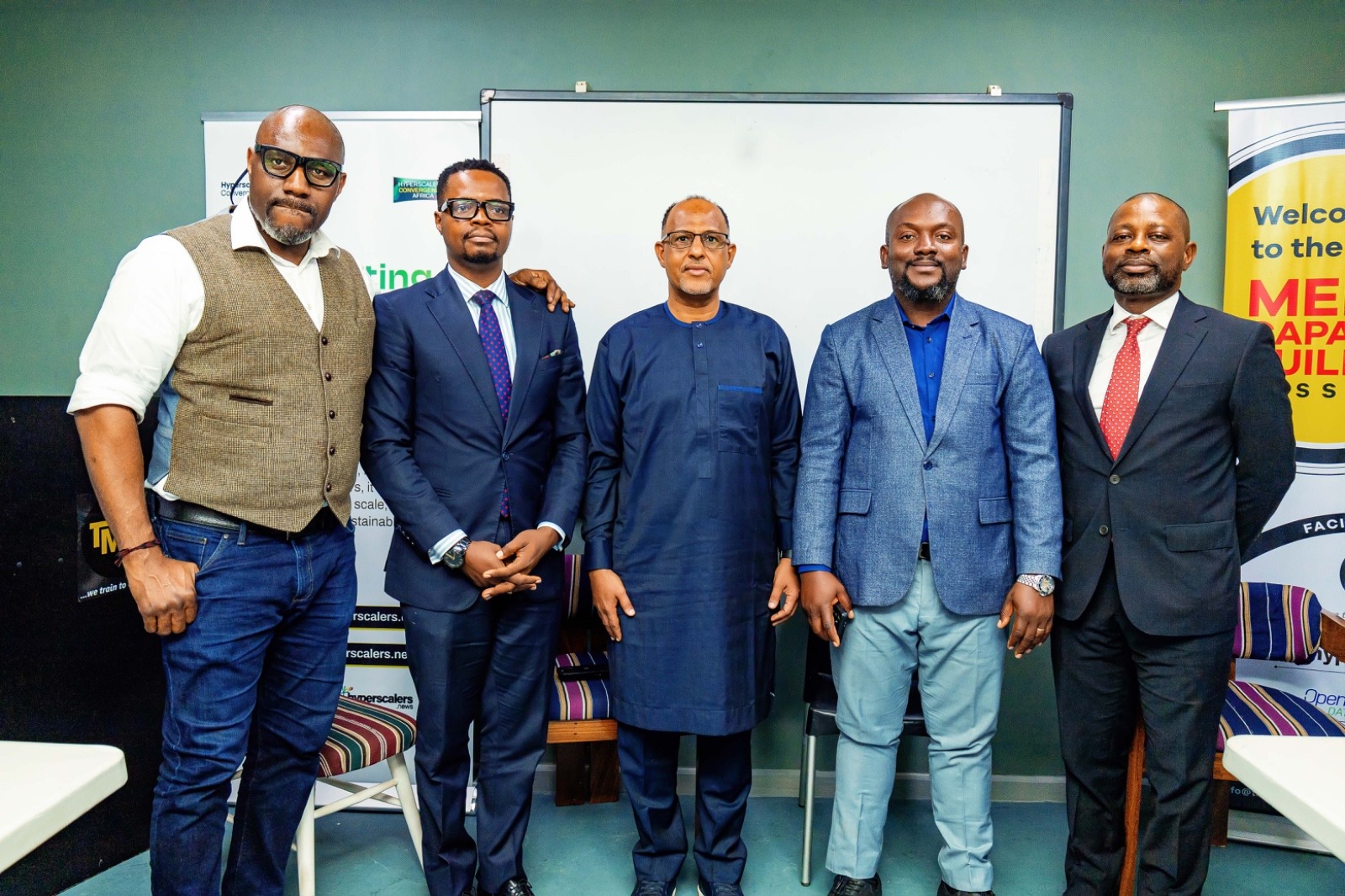
The Chief Executive Officer of IXPN, Mr. Mohammed Rudman, disclosed this in Lagos during a media capacity building training on Nigeria’s Digital Infrastructure Economy facilitated by Africa Hyperscalers and the Media Training Room.
Internet traffic domestication simply means that when Nigerians browse websites, stream videos, send emails or use apps, the data is exchanged within Nigeria instead of being routed through servers in Europe, the United States or other regions before returning.


When traffic stays local, internet speeds improve and service providers spend less on international bandwidth, which can ultimately reduce costs for consumers.
What the IXPN CEO is saying
Rudman said Nigeria’s domesticated traffic has grown from almost negligible levels at inception to two terabits per second as of December last year.
- “As of December last year, we reached two terabits of traffic, which is really, really good,” he said.
He explained that much of the progress has been driven by global content providers such as Google, Meta, TikTok, Microsoft and Amazon, which have connected their servers directly to Nigeria’s internet exchange infrastructure.
By installing equipment locally, these companies ensure that popular services such as search, social media and video streaming are delivered from within Nigeria.
- Despite this progress, Rudman said local content hosting remains weak. According to him, Nigeria hosts only 22% of the top 1,000 websites most frequently accessed by Nigerian users. This falls below Africa’s average of 34%.
- He added that even among websites using Nigerian domain names such as .ng, about 80% are not hosted on servers located in Nigeria.
Hosting refers to where a website’s files and data are physically stored. If those servers are outside the country, every visit to the site requires data to travel internationally before returning to the user in Nigeria.
Rudman said this explains why Nigeria’s traffic domestication has been driven mainly by social media and foreign-owned platforms rather than Nigerian digital services.
More insights
Beyond hosting gaps, Rudman linked the broader challenge to Nigeria’s low number of autonomous system numbers, a technical requirement that allows networks to operate independently on the global internet.
An autonomous system number can be described as a unique identification number that enables a network, such as an internet service provider, university or large enterprise, to control how its data is routed.
The more of these independent networks that exist, the stronger and more competitive a country’s internet ecosystem becomes.
- “Nigeria performs poorly on this indicator, with only one autonomous system number for every one million people, which is very low for a country of Nigeria’s size,” he said.
He noted that countries such as the United States have 91 autonomous system numbers per million people, Brazil has 43, while South Africa has 13.
- Rudman disclosed that only nine Nigerian states have up to three autonomous system numbers, with Lagos accounting for 171. Fifteen states have none at all, leaving residents almost entirely dependent on mobile network operators for internet access.
He added that about 99.5% of Nigerian internet users access the internet through mobile networks, while fixed broadband and other providers account for less than one per cent.
What you should know
The media workshop organized by Africa Hyperscalers, was designed as a capacity-building initiative to support ethical, more informed, accurate, and responsible reporting.
Sessions covered core infrastructure layers – connectivity, data centers, power, interconnection, and cloud, project bankability, and the growing role of artificial intelligence in journalism.
According to the Executive Director of Africa Hyperscalers, Temitope Osunrinde, digital infrastructure is now as critical to national development as roads, ports, and power.
He noted that if Africa is to shape credible narratives that attract long-term investment and support sustainable digital economies, the media must understand how these systems work and what it takes to deliver them.