
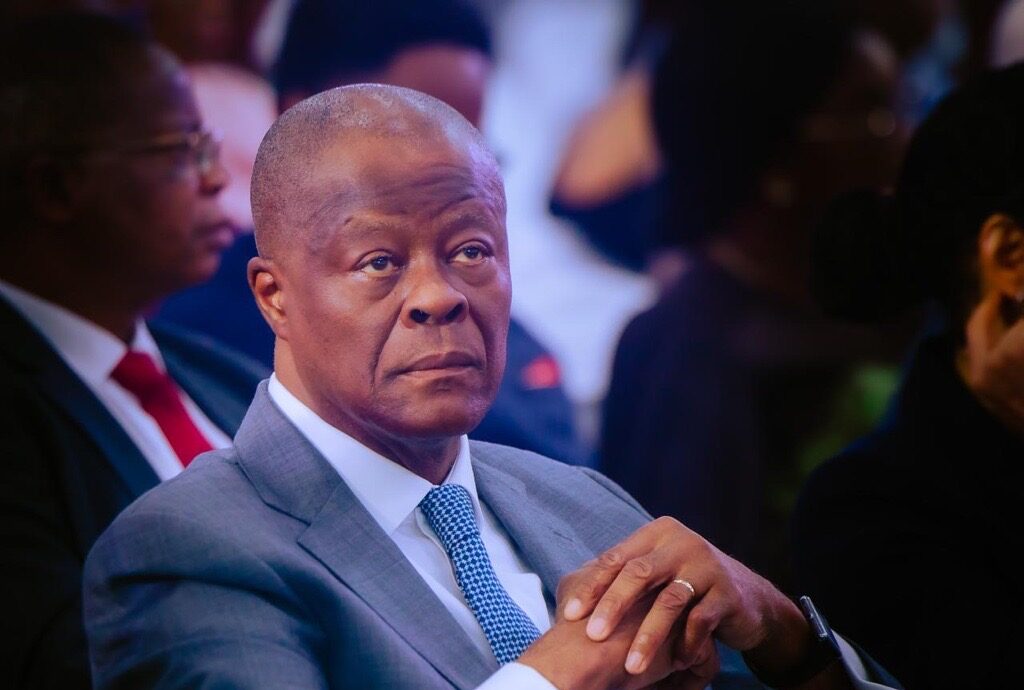
The Federal Government has announced plans to commence the sale of selected state-owned assets to private investors in 2026 as part of efforts to deepen economic reforms and attract new capital into Nigeria.
The disclosure was made by the Minister of Finance and Coordinating Minister of the Economy, Mr. Wale Edun, during an interview on the sidelines of the AlUla Conference for Emerging Market Economies held in Saudi Arabia.
According to the minister, the government is currently reviewing its portfolio of public assets to determine which ones will be offered for sale, alongside the timeline and structure for their disposal.


The proposed divestments form part of the Tinubu administration’s broader strategy to optimise government-owned assets, improve efficiency, and position Nigeria as a more competitive destination for private investment. Officials say the process will prioritise transparency and value creation to boost investor confidence ahead of the planned sales.
What they are saying
Edun said preparatory work is already underway to ensure that the asset sales are conducted in a credible and investor-friendly manner.
- “The plan is to offer some assets in 2026,” Edun said.
- “What we have put in place has made Nigeria very competitive in terms of the economic conditions and very attractive in terms of the incentives for investors. I think investors are now more comfortable to invest in Nigeria.”
- “We are interested in public-private partnerships and the optimisation of our assets by having others come in and invest.”
He added that the government’s current focus is to leverage private capital as a catalyst for economic expansion, job creation, and infrastructure development across key sectors of the economy.
Get up to speed
The planned asset sales are anchored on a series of economic reforms introduced by President Bola Ahmed Tinubu after assuming office in May 2023.
- The administration removed petrol subsidies, which had weighed heavily on public finances for decades.
- The foreign exchange market was liberalised to improve liquidity and reduce distortions in currency pricing.
- Broad-based tax reforms were introduced to strengthen revenue mobilisation and reduce fiscal deficits.
According to Edun, these measures have started yielding positive results, including moderating inflationary pressures, improving government revenues, and stabilising the naira, thereby strengthening Nigeria’s macroeconomic outlook.
More insights
Beyond asset sales, the government is also intensifying efforts to unlock value in Nigeria’s energy sector, particularly through partnerships with private investors.
- The government recently confirmed discussions with a Chinese firm and other investors to operate some state-owned refineries.
- The talks reportedly include options for investors to acquire equity stakes in the refineries.
- Many of the refineries have remained largely non-functional for decades despite billions of dollars spent on turnaround maintenance.
Edun said public-private partnerships will remain central to the government’s reform agenda, as authorities seek to reduce the fiscal burden on the state while improving operational efficiency across public assets.
What you should know
Nigeria has a long history of privatisation and asset optimisation efforts aimed at improving service delivery and reducing government liabilities.
- In 2013, the Federal Government privatised most power generation and distribution companies.
- The state-owned telecommunications firm, Nitel, was privatised in 2015 after years of operational challenges.
The International Monetary Fund projects Nigeria’s economy will grow by 4.4 per cent in 2026, up from an estimated 4.2 per cent in 2025.