
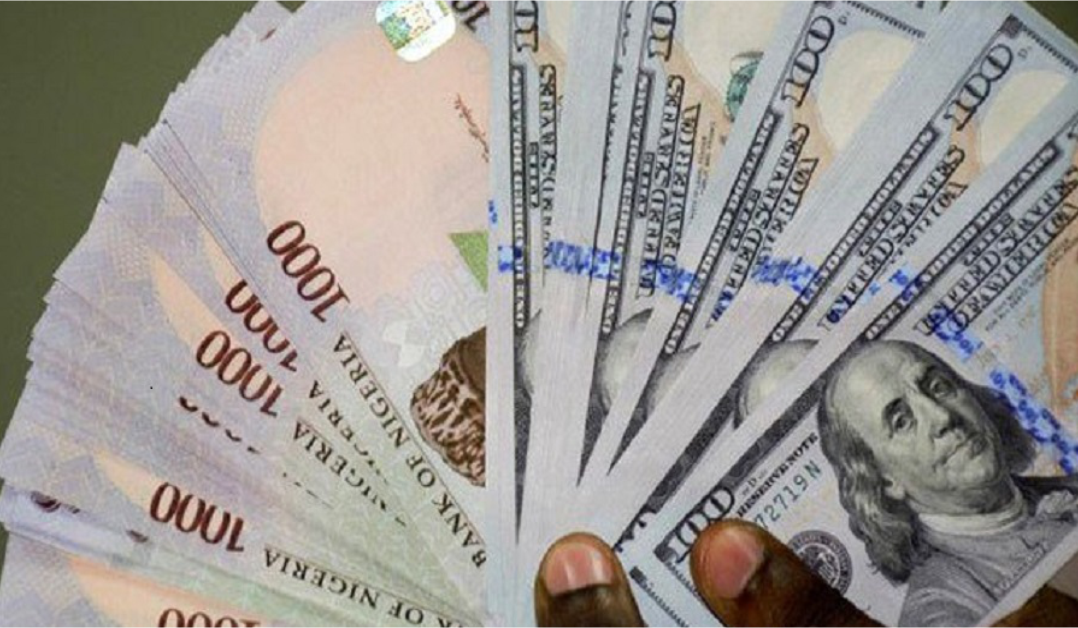
The Nigerian Naira settled at N1,364 to $1 in the official market last week.
Recent fundamental actions showed the CBN has been more aggressive, selling dollars directly to authorized dealers to prevent the rate from falling back toward January’s N1,450/$ level.
The outlook for this week remains cautiously bullish.


The Nigerian currency is expected to settle between N1,350/$1 and N1,420/$1 in the official market by the end of this week.
While the Naira has strengthened slightly over the past 7 days (about a 2% gain from the N1,390/$1 level seen earlier this month), it still faces arbitrage pressure.
Buy/sell range reported around N1,440/$1 for buy and N1,450/$1–1,460/$1 at the black market in the past week.
The Naira has strengthened notably in recent weeks or months (4.24% over the past month and about 9.15% over the last 12 months in some measures), moving away from the all-time highs near N1,717/$ in late 2024.
The Nigerian Apex Bank maintained high interest rates to absorb excess liquidity, but the actual impact on the exchange rate is somewhat muted by strong demand for imports.
The Central Bank of Nigeria is effectively “mopping up” excess Naira by keeping the Monetary Policy Rate at such level. Speculators find it more costly to borrow Naira to buy dollars, supporting the stability of the N1,364/$1 exchange rate.
The “Dangote Effect“: As of early 2026, the increased output from the Dangote Refinery—which is nearing 700,000 barrels per day—has significantly reduced the foreign exchange demand previously used for petroleum imports.
All eyes are on the NAFEM window (official market). If the Nigerian Central Bank fails to inject enough dollars this week, market participants might see the spread widen on the parallel market, putting pressure on the official rate to catch up.
The trend still leans toward minor depreciation toward the weekend as companies settle their weekly forex commitments, unless there is a major announcement about foreign reserve increases or significant loan inflows.
Overall, the Naira is strong in early 2026 and is gaining ground thanks to external inflows and policy adjustments.
Market observers stay cautiously optimistic about continued stability despite the return of increased volatility in the global forex market.
U.S dollar index begins first trading session negative
The US Dollar Index (DXY), which compares the US dollar against six major currencies, lost ground for the second consecutive session. It is currently trading around 97.50.
The dollar struggles as traders adopt a cautious stance ahead of key economic data postponed due to the partial government shutdown. The January jobs report, scheduled for Wednesday, is expected to show a stabilized labor market, with Nonfarm Payrolls forecasted to add 70,000 jobs and the unemployment rate expected to remain steady at 4.4%.
- Friday marks the rescheduled release of the January consumer price index. Meanwhile, preliminary data showed that the Michigan Consumer Sentiment Index unexpectedly rose to a six-month high on Friday, boosting market confidence.
- The index increased to 57.3 in February, exceeding the forecast of 55.0 and marking a third consecutive monthly gain. Most currency traders expect the Fed to hold current interest rates in March, with rate cuts most likely in June.
Treasury Secretary Scott Bessent dismissed the idea that he and Donald Trump have opposing views on the currency, following Trump’s recent remarks about the dollar’s decline and Bessent’s support of a “strong dollar policy.”
- When asked on CNBC, “Which is it,” between his and Trump’s comments, Bessent said, “That’s a false choice.” He explained that the US “always has a strong dollar policy” and that officials haven’t intervened to push the dollar lower against the Japanese yen.
- Asked if he was worried about the dollar’s depreciation, Trump responded, “No, I think it’s great,” which caused the currency to plunge the day before. Bessent added on Friday, “The strong dollar policy is, are we doing the things to create a strong backdrop for the dollar?” pointing to the administration’s policies on taxes, trade, deregulation, energy, and reasserting sovereignty over critical minerals.