Follow Us on Google Discover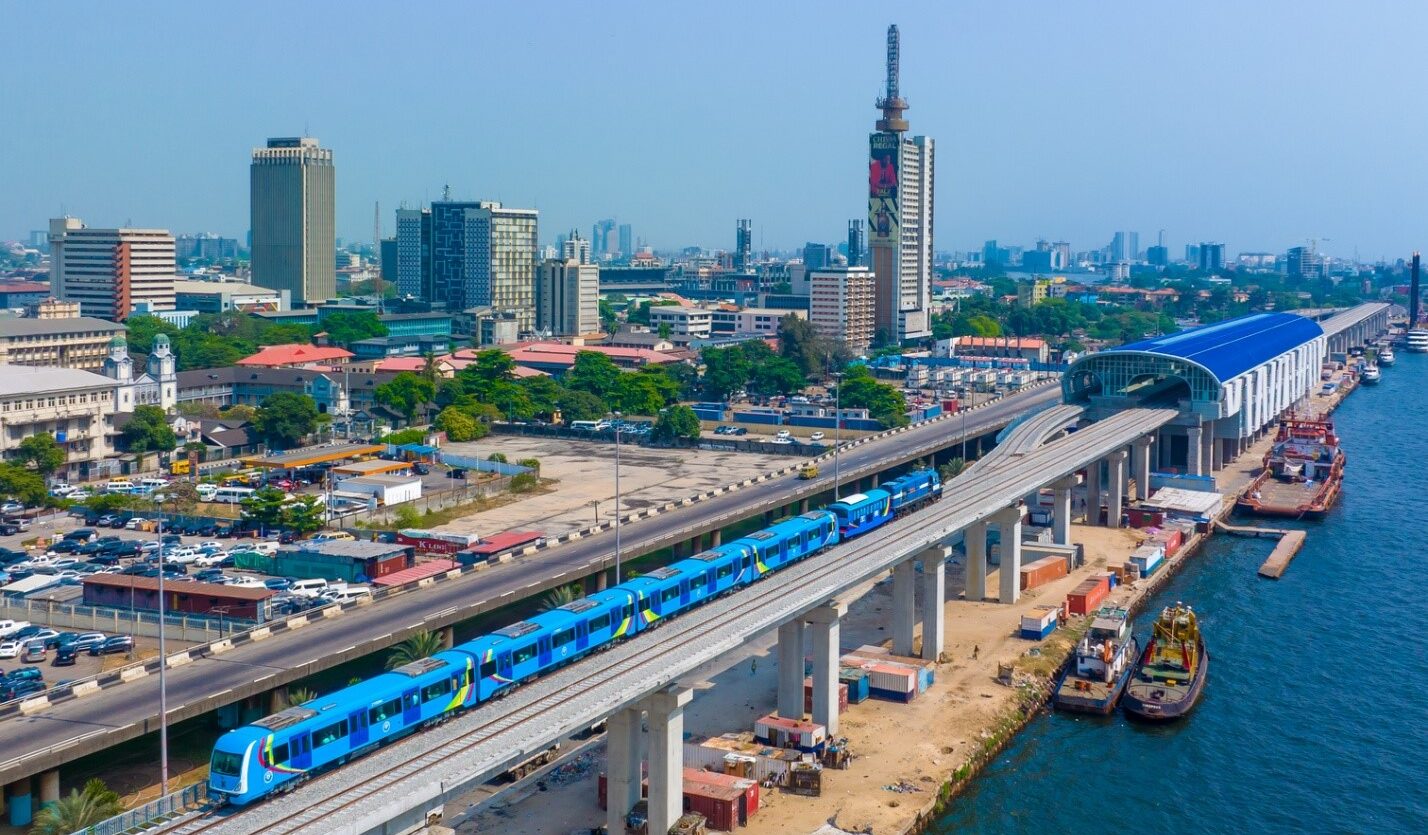
Nigeria’s top recipients of Federation Account Allocation Committee (FAAC) disbursements in 2025 were again dominated by oil-producing states and major commercial hubs, with Lagos, Delta, and Rivers leading by total gross receipts.
The figures are based on FAAC data reviewed across all 36 states, covering statutory allocations, derivation revenue, VAT, and other federally shared inflows during the year, regardless of the underlying transaction period.
Overall, the distribution pattern highlights the continued importance of oil revenue, while also underscoring the growing influence of consumption, digital transactions, and population-driven statutory formulas on state finances.
What the data is saying
FAAC allocations in 2025 were driven by a combination of five revenue components that together determined each state’s total gross and net receipts.
Also Read
These components shaped why oil-producing states and large commercial centers consistently ranked at the top of the distribution table.
- Allocations were made up of 13% derivation revenue (net), gross and net statutory allocation, Electronic Money Transfer Levy (EMTL), and net VAT allocation.
- States with crude oil production benefited disproportionately from derivation revenue, while highly urbanized states attracted stronger VAT and EMTL inflows.
- When combined, these revenue streams defined each state’s total gross amount and final net amount after deductions.
As a result, the Top 10 states accounted for a significant share of FAAC inflows in 2025, reinforcing long-standing fiscal disparities among states.
Top 10 States with the Highest FAAC Net Allocation in 2025
A closer look at the Top 10 states by Total Net FAAC allocation shows clear patterns shaped by oil production, population size, geography, and federal revenue-sharing formulas.
Ondo State – N198.42bn
Ondo ranked 10th on the FAAC allocation chart for 2025, with a total net amount of N198.42 billion. This marks a notable increase of 51.55% compared to its 2024 allocation, which stood at N130.93 billion, representing a disparity of N67.49 billion.
- Net Statutory Allocation: N95.20bn
- Net VAT Allocation: N87.17bn
- EMTL: N4.85bn
Ondo’s sharp increase was primarily influenced by higher net statutory inflows and stronger VAT performance driven by nationwide consumption growth.
The state’s improved EMTL receipts also reflected rising electronic transactions, and a boost in gross statutory revenue tied to better oil‑linked earnings and federally collected revenues
Borno State – N198.75bn
Borno’s FAAC inflow stood at N198.75 billion in 2025, rising from N127.75 billion in 2024, an increase of N71 billion or 55.58%.
- Net Statutory Allocation: N89.11bn
- Net VAT Allocation: N92.18bn
- EMTL: N5.02bn
The increase in the FAAC inflow is largely driven by stronger net statutory inflows, significantly higher VAT allocations reflecting nationwide consumption growth, and a modest improvement in EMTL receipts.
Anambra – N199.88bn
Anambra secures a strong eighth position, having received N199.88 billion in 2025, compared to N133.62 billion a year earlier, an increase of N66.26 billion or 49.59%, with a contribution of N20.74 billion in oil derivation.
- Net Statutory Allocation: N88.21bn
- Net VAT Allocation: N94.15bn
- EMTL: N5.83bn
Anambra’s 49.59% increase in FAAC allocation for 2025 was mainly driven by stronger net statutory inflows, a substantial rise in VAT revenue reflecting heightened commercial activity, improved EMTL collections, and an added boost from its N20.74bn oil derivation.
Oyo – N213.75bn
Despite not being an oil producer, Oyo benefits from its economic size and growing urban centers.
The state received N213.75 billion in 2025, compared to N132.90 billion in 2024, marking a 60.84% increase.
- Net Statutory Allocation: N49.35bn
- Net VAT Allocation: N146.06bn
- EMTL: N6.75bn
Oyo’s fiscal position was largely fueled by a significant jump in VAT receipts driven by its expanding urban economy and strong consumer activity, supported by higher net statutory inflows and improved EMTL collections.
Kano – N270.86bn
Kano is the highest-ranking non-oil, non-derivation state on this list, showcasing the power of population and trade-driven activity.
The state maintained its lead as the highest recipient in Northern Nigeria with N270.86 billion in the year under review, up from N170.29 billion in 2024, a significant increase of N100.57 billion or 59.06%.
- Net Statutory Allocation: N100.23bn
- Net VAT Allocation: N146.81bn
- EMTL: N7.89bn
Its increase in FAAC allocation for 2025 was primarily driven by its exceptionally strong VAT inflows reflecting its large consumer market, alongside higher net statutory receipts and improved EMTL collections
Bayelsa – N488.08bn
Bayelsa ranks fifth, powered heavily by derivation amounting to N320.45bn, one of the highest in the country relative to population size.
The state received N488.08 billion in FAAC allocation, compared to N320.85 billion in 2024, a growth of N167.23 billion or 52.12%.
- Net Statutory Allocation: N367.14bn
- Net VAT Allocation: N87.98bn
- EMTL: N3.82bn
Bayelsa’s dependence on derivation is more pronounced than most states, given its smaller population and limited internally generated revenue.
Akwa Ibom – N494.23bn
Akwa Ibom remains one of the top four FAAC beneficiaries due to robust oil production and strong derivation receipts of N303.86bn.
Akwa Ibom received N494.39 billion in 2025, above the N353.35 billion recorded a year earlier, an increase of N140.88 billion or 39.87% rise.
- Net Statutory Allocation: N363.35bn
- Net VAT Allocation: N95.85bn
- EMTL: N4.96bn
The state has historically used its sizable FAAC receipts to fund infrastructure and social programs, though debates persist around the sustainability and efficiency of spending.
Lagos State – N514.56bn
Lagos state received a net FAAC allocation of N514.56 billion in 2025, marking an increase of 52.45% from its 2024 allocation of N337.52 billion, reflecting a growth of N177.05 billion.
Despite receiving zero derivation revenue, Lagos still ranks third nationally—an impressive feat demonstrating its economic scale and population-driven VAT strength.
- Net Statutory Allocation: N7.43bn
- Net VAT Allocation: N459.87bn (the highest VAT share nationwide)
- EMTL: N33.74bn
Lagos’ showing highlights its role as Nigeria’s commercial engine, where economic activities—from corporate headquarters to informal markets—drive VAT allocations that rival oil-producing states.
Rivers State – N526.30bn
Rivers follow closely, posting N526.30bn in net FAAC inflows, rising from N405.86 billion in 2024, a 29.67% increase, translating to N120.44 billion.
- 13% Derivation: N269.78bn
- Net Statutory Allocation: N284.24bn
- Net VAT Allocation: N207.20bn
- EMTL: N6.31bn
Rivers maintains its ranking as one of Nigeria’s largest economic hubs, anchored by oil and gas activity, port operations, and a strong consumption base.
Delta State – N649.67bn
Delta maintained its position as Nigeria’s highest FAAC earner, receiving N649.67 billion in 2025, up from N512.57 billion in 2024.
This marks an increase of N137.1 billion or 26.75%.
This increase is driven significantly by its massive derivation inflows, totaling N458.65bn.
- Net Statutory Allocation: N504.37bn
- Net VAT Allocation: N101.42bn
- EMTL: N5.72bn
Delta’s numbers reflect the advantage of being an oil-producing powerhouse—and a reminder of how derivation strongly reshapes fiscal rankings.
Delta consistently commands the largest single-state share of FAAC due to its sizable crude output, making it financially stronger than many other states combined.
More Insights
Based on the total gross FAAC allocation, Lagos emerged as the single largest recipient, not because of oil, but due to its overwhelming dominance in VAT and digital transaction volumes.
- Lagos State recorded a total gross amount of N706.90 billion and a net amount of N514.56 billion, driven mainly by VAT inflows of N459.87 billion and strong EMTL receipts.
- Delta State followed closely with a gross allocation of N681.74 billion and a net amount of N649.67 billion, largely supported by derivation revenue of N458.65 billion.
- Rivers State received N594.47 billion gross and N526.30 billion net, reflecting a mix of oil derivation and industrial-scale VAT inflows.
- Akwa Ibom and Bayelsa also ranked high, each posting gross allocations above N509 billion, underpinned mainly by derivation revenue from oil production.
Beyond oil-producing states, Kano, Oyo, Ondo, Anambra, and Borno entered the Top 10 on the strength of statutory allocations, VAT, and population-linked economic activity, demonstrating that non-oil factors are increasingly relevant.
Why this matters
The 2025 FAAC distribution highlights structural realities in Nigeria’s fiscal federalism and raises important policy considerations for state governments.
While oil remains central to revenue sharing, consumption and commerce are playing a more visible role in shaping outcomes.
- Oil-producing states continue to depend heavily on derivation revenue, exposing their finances to crude oil price volatility.
- Lagos’ position shows that VAT and digital transaction growth can rival oil revenues in determining FAAC outcomes.
- States such as Oyo and Anambra illustrate how urbanization and commercial density can lift FAAC receipts even without oil resources.
These trends suggest that economic diversification and expansion of taxable activities are becoming increasingly important for improving states’ shares from the federation account.
What you should know
FAAC allocations remain a critical lifeline for most Nigerian states, often accounting for the bulk of their monthly revenues.
In 2025, the structure of FAAC rewarded a mix of oil production, population size, and economic activity.
- Derivation revenue continues to give oil-producing states a structural advantage in total allocations.
- VAT is emerging as a partial equalizer, allowing highly commercial states to compete with oil-rich peers.
- Statutory allocation formulas still play a stabilizing role for large northern states such as Kano and Borno.
Despite these inflows, many states remain fiscally vulnerable, reinforcing the need to grow internally generated revenue and reduce overreliance on federally shared funds.