
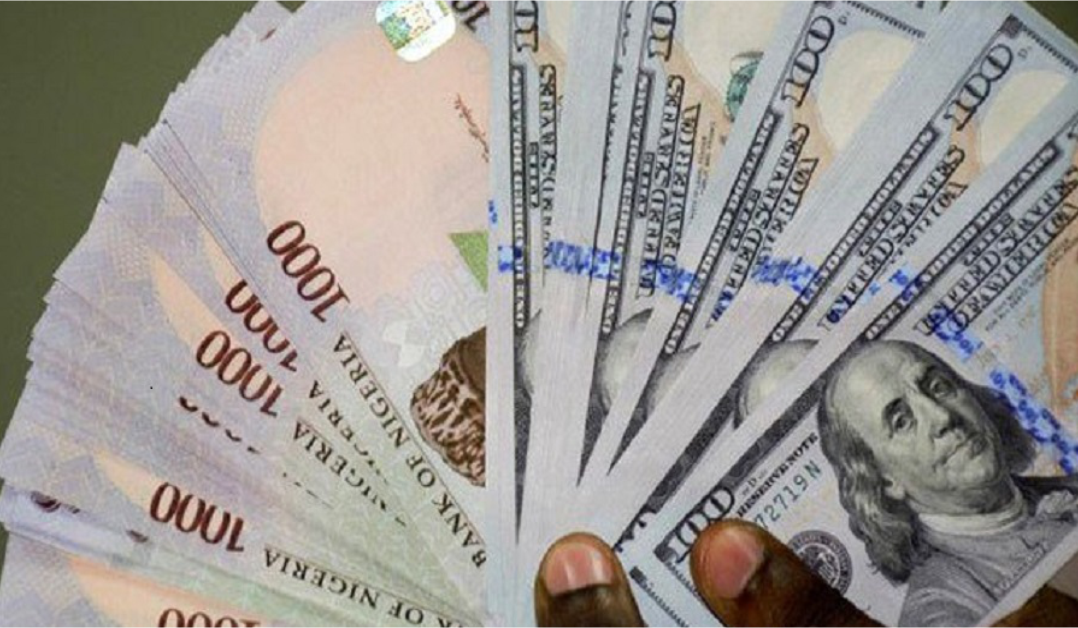
The U.S. dollar climbed to a two-week high on Friday and is heading for its strongest weekly performance since November, as renewed global risk aversion boosted demand for safe-haven assets and pressured emerging-market currencies, including Nigeria’s naira.
The move reflects heightened investor caution following a sell-off in global equities and shifting expectations around U.S. monetary policy.
The dollar’s strength comes at a time when Nigeria’s foreign exchange market continues to grapple with demand pressures and external headwinds.


The greenback has been supported by a broad retreat from risk assets, even as U.S. Treasury yields softened ahead of next week’s closely watched January payrolls report.
This global backdrop has intensified pressure on developing-market currencies, with the naira weakening at the official market despite marginal relief in the parallel segment.
What the data is saying
The dollar index rose close to its highest level in two weeks, reflecting stronger demand for the U.S. currency amid global uncertainty.
- The dollar index, which measures the greenback against six major currencies, stood at 97.961, hovering near its highest level since January 23.
- The index is on course to gain about 1 per cent for the week, marking its steepest weekly rise since mid-November.
- In Nigeria’s official foreign exchange market, the naira closed on Thursday at N1,368 per dollar, weakening from N1,359 per dollar recorded the previous day.
- Central Bank of Nigeria data showed the currency traded within a band of N1,361.8/$ to N1,370/$, with a simple average rate of N1,366.3/$.
These movements highlight how shifts in global risk sentiment and dollar demand are quickly transmitted to Nigeria’s FX market.
More insights
Global equity markets, particularly technology stocks, have come under pressure as investors reassess the sustainability of massive spending on artificial intelligence and the disruptive impact of rapidly advancing AI tools across industries.
The sell-off triggered a flight from risk assets, benefiting the dollar as investors sought safety.
- The dollar remained firm despite easing U.S. Treasury yields, suggesting that safe-haven demand outweighed concerns about a softening U.S. labour market.
- Investors are positioning ahead of the January U.S. payrolls report, which is expected to provide fresh signals on the health of the American economy.
- Expectations around U.S. monetary policy have also supported the greenback following President Donald Trump’s nomination of Kevin Warsh as the next Chairman of the Federal Reserve.
- Market participants believe Warsh is unlikely to push aggressively for interest rate cuts, easing concerns about central bank independence.
Together, these factors have reinforced the dollar’s appeal at the expense of emerging-market currencies.
The stronger dollar has continued to weigh on the naira at the official window, reflecting persistent demand pressures and cautious investor sentiment.
However, the picture was slightly different in the parallel market.
- The naira traded at N1,441.11/$ in the parallel market on Thursday, improving marginally from N1,453.13/$ on Wednesday, according to Nairametrics data.
- This narrowed the gap between the official and parallel market rates to N73.11, down from N94 a day earlier.
What you should know
Global developments are expected to remain a key driver of naira performance in the near term, especially as markets await fresh U.S. economic data and policy signals from the Federal Reserve.
In January, Nairametrics reports that the naira weakened marginally at the official foreign exchange market to the dollar as global dollar sentiment softened amid renewed concerns over U.S. economic and geopolitical risks.
Also, the U.S. dollar retreated for a second consecutive session in Asian trading, with the dollar index falling about 0.3 per cent to 98.841, its lowest level since January 12
- A sustained rise in the dollar could intensify pressure on emerging-market currencies, including the naira.
- Movements in global equities, particularly technology stocks, are increasingly influencing FX sentiment.
- The narrowing gap between official and parallel market rates may offer short-term relief, but it does not eliminate broader FX demand pressures.