
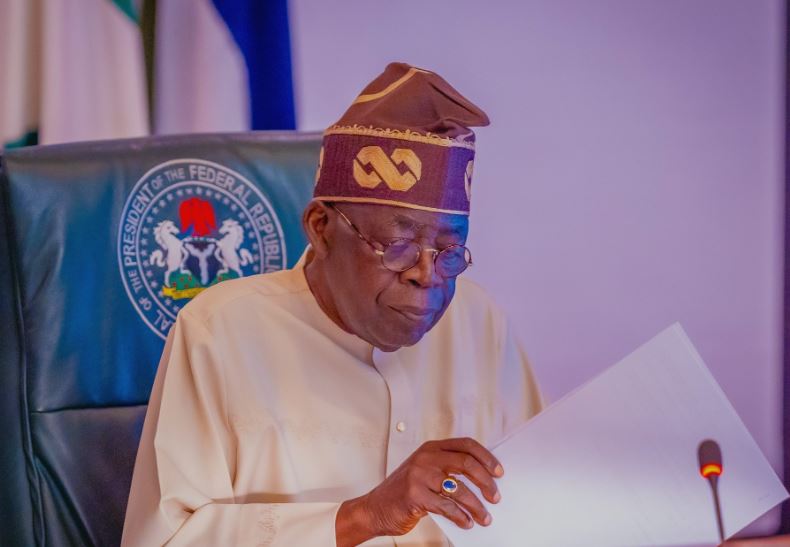
President Bola Tinubu’s approval to gazette targeted, investment-linked incentives for Shell’s Bonga South-West (BSW) deep-offshore oil project has stirred intense interest across Nigeria’s energy sector, even as the specifics of the incentives remain undisclosed weeks after the announcement.
The development was announced by the Presidency, but neither the Nigerian Upstream Petroleum Regulatory Commission (NUPRC) nor the President’s energy advisory team has released details on the nature, duration, or conditions attached to the incentives.
The silence has left investors, analysts, and policymakers parsing industry signals, with experts pointing to Nigeria’s broader struggle to revive deep-offshore investment amid declining production and heightened fiscal scrutiny.

What they are saying
Deep-offshore industry observers say the lack of immediate disclosure is consistent with the complexity of negotiating large-scale offshore oil investments, where fiscal terms are often finalised only after prolonged technical and commercial discussions.
They note that early-stage confidentiality is common, particularly for projects with high capital intensity and long payback periods.
The Chief Executive Officer of the Centre for the Promotion of Private Enterprise (CPPE), Dr. Muda Yusuf, told Nairametrics that the move is positive, noting the President’s determination to mobilise upstream investment.
- “It is a positive one. I know that the President has been very determined to mobilise investment upstream. Before now, there have been quite a number of generous incentives for those investing in deep-water projects,” he said.
- “Although I do not have details of the incentives, it is generally a step in the right direction, especially given the intense competition among international oil companies. Attracting investment into the sector is becoming very challenging, and without very attractive incentives, it is difficult,” Yusuf added.
- “Deep-water investments are extremely sensitive to costs and price assumptions, and governments typically conclude incentive structures only after detailed technical and commercial negotiations,” said a former senior engineer at NUPRC who is also familiar with offshore project financing.
He further explained that “investment-linked” incentives usually mean benefits are triggered only after measurable commitments—such as FID, production milestones or local content thresholds—are met.
- “The government is under pressure to reverse years of underinvestment in deep-water assets, and these incentives are clearly meant to reassure Shell and other investors,” said Abuja-based energy policy analyst, Dr. Abdulmumeen Kundir.
- “While commercial sensitivity matters, Nigerians will eventually need clarity on what is being given up and what the country gains in return,” he added.
Others note that the Tinubu administration is keen to signal Nigeria’s renewed openness to big-ticket energy investments without reopening public debates that could delay final investment decisions (FID).
However, some experts warn that prolonged opacity could fuel speculation and public distrust.
- “There is a balance to strike,” said a governance and extractives transparency advocate, Bunmi Awosusi.
- “While commercial sensitivity matters, Nigerians will eventually need clarity on what is being given up and what the country gains in return.”
Ultimately, analysts agree that the incentives are likely structured to balance investor confidence with Nigeria’s long-term fiscal sustainability and crude oil production objectives.
Backstory
Nigeria’s deep-offshore oil sector has struggled to attract new investments in recent years, largely due to regulatory uncertainty, rising development costs, and prolonged debates over fiscal terms.
Many existing offshore fields are maturing, leading to declining output and reduced foreign exchange earnings.
The Petroleum Industry Act (PIA) was introduced to reset the framework governing Nigeria’s oil and gas sector, including deep-water operations.
However, despite the PIA, major international oil companies have remained cautious about committing capital to new offshore developments.
Against this backdrop, the Bonga South-West project has emerged as a critical test case for the Tinubu administration’s ability to translate policy reforms into bankable investment outcomes.
More Insights
Although the official incentive package has not been disclosed, experts say existing provisions under the PIA and precedents from past offshore projects offer clues about what may be included.
Possible measures include fiscal adjustments such as modified royalty rates or tax relief linked to water depth, production thresholds, or cost recovery timelines.
Enhanced cost-recovery mechanisms could also feature prominently, given the high costs associated with subsea infrastructure and floating production, storage, and offloading units used in deep-water fields.
The analysts further point to the likelihood of contractual assurances that protect agreed fiscal terms over the life of the project, addressing long-standing investor concerns about regulatory stability.
In addition, expedited regulatory approvals—covering field development plans, permits, and export authorisations—may form part of the incentive package, alongside provisions tied to local content commitments aimed at boosting Nigerian participation across the offshore value chain.
A former regulator familiar with investment-linked incentives noted that such benefits are typically conditional on measurable milestones, including reaching a final investment decision, meeting production targets, or achieving specific local content thresholds.
NUPRC, Presidency’s responses
Despite repeated inquiries, government agencies have not provided further clarification on the incentive package approved for the Bonga South-West project.
Nairametrics reached out to the NUPRC’s Head of Media and Strategic Communication, Eniola Akinkuotu, for comments.
In response to Nairametrics’ inquiry, he stated, “I don’t have details of particular transactions but will forward your inquiries to the appropriate office, which might take some time.”
However, when pressed for an indication of how soon the information might be made available, he did not respond as of the time of filing this report.
Similarly, an email request for comment sent to the office of the Special Adviser to the President on Energy, Olu Arowolo Verheijen, had not received a response at the time of writing.
For now, the incentives remain confidential, with market participants watching closely to see whether the gazetted approval accelerates Shell’s final investment decision.
Until more information emerges, the Bonga South-West incentives stand as a strong policy signal—one that underscores Nigeria’s determination to revive deep-offshore oil production, even as questions persist about transparency and long-term fiscal trade-offs.