Follow Us on Google Discover
The World Health Organisation says it is seeking nearly one billion dollars to respond to health emergencies across the world in 2026.
This is according to a statement released by the organisation on Tuesday announcing the launch of its 2026 global emergency appeal.
The funding push comes as conflicts, climate shocks and disease outbreaks continue to drive growing humanitarian health needs while global aid financing declines.
What WHO said
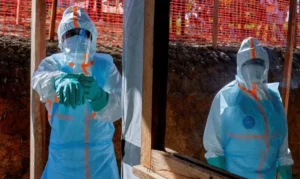
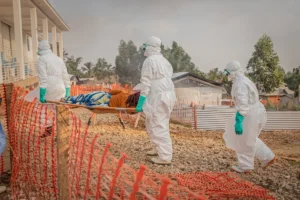
According to the World Health Organisation, the 2026 appeal is aimed at supporting health responses in 36 emergencies worldwide.
Also Read
It also said that in 2025, WHO and partners supported 30 million people, funded through its annual emergency appeal.
- ”These resources helped deliver life-saving vaccination to 5.3 million children, enabled 53 million health consultations, supported more than 8,000 health facilities, and facilitated the deployment of 1,370 mobile clinics.
- ”The 2026 appeal seeks nearly one billion dollars to respond to 36 emergencies worldwide, including 14 Grade Three emergencies requiring the highest level of organisational response.
- ”These emergencies span sudden-onset and protracted humanitarian crises where health needs are critical,” the organisation said.
- WHO Director-General, Dr Tedros Ghebreyesus, said that the appeal was a call to stand with people living through conflict, displacement and disaster to give them not just services, but the confidence that the world has not turned its back on them
- “It is not charity. It is a strategic investment in health and security. In fact, access to health care restores dignity, stabilises communities and offers a pathway toward recovery,” Ghebreyesus said.
Back story
According to WHO, global humanitarian funding reportedly fell below 2016 levels, leaving health partners able to reach only one-third of the 81 million people initially targeted for assistance.
- Nairametrics reported that the United Nations significantly scaled back its humanitarian appeal for 2026 to $23 billion, roughly half of what was sought the previous year, reflecting declining donor support amid record global crises.
- In 2025, the United Nations unveiled a scaled-back global humanitarian appeal of $29 billion to assist 114 million people, down from originally much larger targets due to funding shortfalls.
Funding gaps have also forced tough prioritisation decisions across aid efforts, leaving millions without assistance. The budget pressures led to operational changes within the UN’s humanitarian coordination body, including 20% reduction in its workforce as the agency adjusted to reduced resources.
More insights
WHO identified priority emergency response areas for 2026 to include Afghanistan, the Democratic Republic of the Congo, Haiti, Myanmar, Somalia, South Sudan, Sudan, Syria, Ukraine and Yemen, alongside ongoing cholera and mpox outbreaks.
Ghebreyesus noted that as the lead agency for health response in humanitarian settings, WHO coordinates more than 1,500 partners across 24 crisis locations globally, working with national authorities and local organisations to deliver care.
Speaking at the launch event, Ireland’s Permanent Representative to the United Nations Office in Geneva, Ambassador Noel White, said every humanitarian crisis is fundamentally a health crisis, explaining why Ireland supports WHO through flexible emergency funding.
What you should know
Nairametrics reports that health financing remains a major challenge in many developing countries, including Nigeria, where individuals still bear a large share of healthcare costs through out-of-pocket spending.
- Health-related expenses continue to push more than one million Nigerians into poverty every year, according to the World Bank’s Human Capital Public Expenditure and Institutional Review.
- It shows that Nigeria ranks near the bottom in Africa on Universal Health Coverage, with a UHC index score of 44, reflecting limited access to essential health services despite some improvement over time. The country’s health outcomes continue to lag behind those of many African peers, including slower gains in life expectancy.
The report also notes that public health spending in Nigeria remains low at about 0.5% of GDP, ranking among the lowest globally.
Out-of-pocket payments account for about 75% of Nigeria’s total health expenditure, the highest proportion in the region. This heavy reliance on personal spending places a significant financial burden on households, forcing many Nigerians to delay or forgo medical treatment and pushing large numbers into poverty annually.
The report notes that this funding structure contributes to catastrophic health expenditures, with roughly one in four Nigerians experiencing severe financial strain due to healthcare costs each year.