
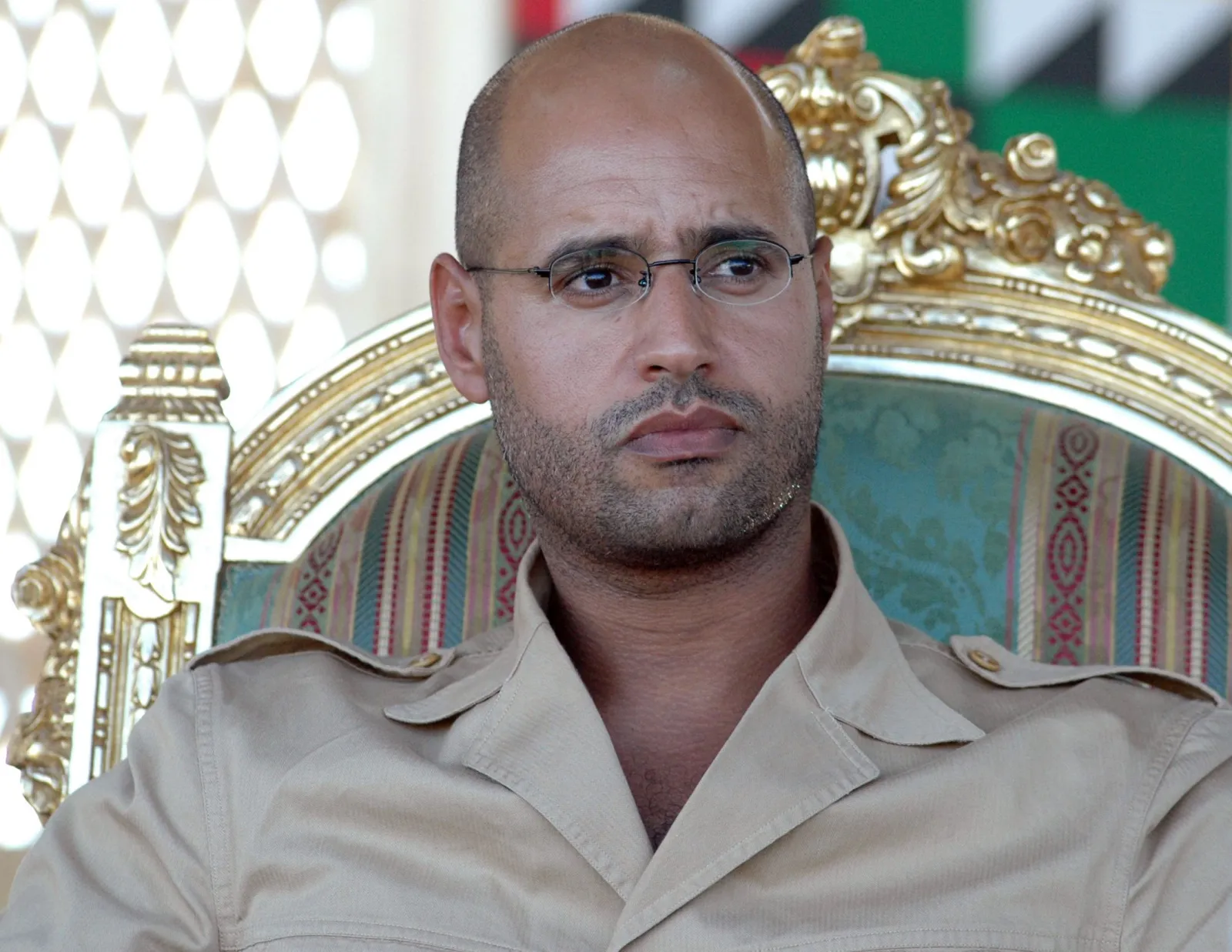
Saif al-Islam Gaddafi, the son of Libya’s late longtime ruler Muammar Gaddafi and once widely regarded as his political heir, has been killed in the northwestern city of Zintan.
This is according to family members and associates.
He was 53.

The death was confirmed on Tuesday by his adviser, Abdallah Othman Abdurrahim, in a social media post, though no official details were initially provided.
Subsequent accounts from relatives suggested that Saif al-Islam was killed inside his residence by unidentified gunmen, marking a dramatic and potentially consequential development in Libya’s long-running political crisis.
What they are saying
Speaking to Libyan broadcaster al-Ahrar, Saif al-Islam’s cousin, Hamid Gaddafi, said the family had been informed that he had “fallen as a martyr.”
Abdurrahim later told the same network that four armed men stormed Saif al-Islam’s home after disabling surveillance cameras and killed him before fleeing the scene.
The incident was reported to have taken place in Zintan, a mountainous city where Saif al-Islam had previously been held by local militias following the 2011 uprising.
Backstory
In November 2011, Saif was captured in southern Libya and later became the subject of an arrest warrant by the International Criminal Court on charges related to the violent suppression of protests.
- A Libyan court sentenced him to death in 2015 following a controversial trial, but he was later released under an amnesty law. His precise whereabouts had remained unclear for years, adding to his mystique and political relevance.
- In 2021, Saif al-Islam re-emerged on the national stage when he registered as a presidential candidate in Libya’s long-delayed elections, which were ultimately postponed indefinitely amid legal disputes and political deadlock.
Analysts say his death could have far-reaching implications. Libya expert Emadeddin Badi noted that Saif al-Islam was a deeply polarising figure whose potential return to power had been a “central point of contention” in the country’s stalled electoral process. His killing, Badi said, may both elevate him as a symbol for his supporters and alter the balance of forces ahead of any future elections.
What you should know
Saif al-Islam was one of the most prominent figures associated with Libya’s former ruling family after the fall of his father, who was overthrown and killed during the NATO-backed revolt that ended more than four decades of Gaddafi rule.
- Educated in Libya and abroad, he was long portrayed as a reform-minded figure and was seen by many observers as his father’s preferred successor before the Arab Spring.
- Although he never held a formal government position, Saif al-Islam was widely described as Libya’s de facto power broker in the years preceding the 2011 revolt. His image as a moderniser, however, collapsed during the uprising when he delivered a defiant speech warning of “rivers of blood” if protests against the regime continued.
Libya has remained mired in instability since 2011, split between a UN-backed government in Tripoli and rival authorities in the east aligned with military commander Khalifa Haftar.