
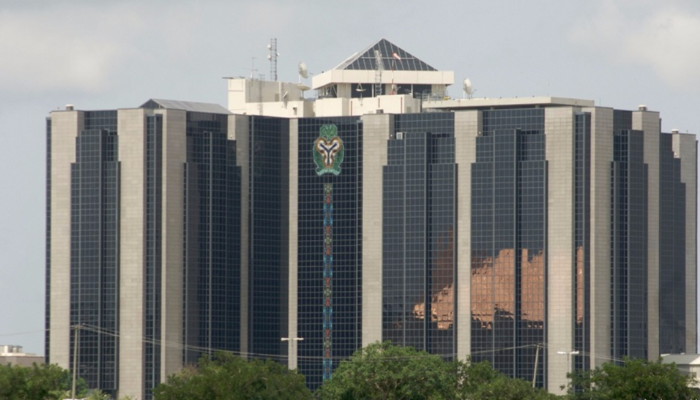
Fintech operators in Nigeria are urging the Central Bank of Nigeria (CBN) to clearly define which cryptocurrency-related activities are permitted for licensed institutions.
This call comes amid persistent regulatory uncertainty that industry players say is constraining innovation, investment, and broader institutional participation in the crypto ecosystem.
The concerns are outlined in the CBN’s newly released Fintech Report, published on Monday and based on stakeholder surveys, closed-door workshops, and roundtables held with fintech operators nationwide.


The report shows that while fintechs increasingly recognise the relevance of crypto assets to Nigeria’s financial system, ambiguity around regulation remains one of the biggest friction points limiting responsible participation in the market.
What they are saying
According to the report, fintech stakeholders believe cryptocurrencies have strong potential to support cheaper cross-border payments, expand financial inclusion, and unlock new digital asset markets.
However, they argue that the lack of regulatory clarity continues to slow adoption and restrict licensed institutions from participating meaningfully.
“Participants broadly agreed on the need for a risk-based, activity-focused regulatory framework.”
“Key recommendations included clarifying permissible activities for licensed institutions, such as custody, tokenisation, and stablecoins,” the report read in part.
- The participants noted that the absence of clear guidance on what licensed financial institutions can and cannot do in the crypto space has limited responsible engagement and discouraged innovation.
- Rather than blanket restrictions, fintech operators broadly agreed that a risk-based, activity-focused framework would allow regulators to distinguish between legitimate use cases and higher-risk activities, while still maintaining oversight of consumer and systemic risks.
- The report also highlights strong concerns around consumer protection, with stakeholders urging the CBN to issue clearer advisories on price volatility and fraud prevention.
- While participants acknowledged the risks of illicit financial flows and speculative excesses, they cautioned against treating all crypto-related activity as criminal.
According to respondents, many high-profile crypto scams originate offshore, even though Nigeria often bears the reputational fallout.
Fintechs, therefore, encouraged regulators to adopt transparent, principles-based rules that can help reset global perceptions of Nigeria’s crypto market and attract credible players.
Lessons from other jurisdictions
As Nigeria continues to refine its approach to crypto regulation, the report points to international examples that could inform local policy.
Stakeholders cited Singapore’s digital asset licensing regime and the European Union’s Markets in Crypto-Assets (MiCA) framework as models that balance regulatory clarity with innovation.
- Both frameworks clearly define permissible activities for regulated entities.
- They apply proportionate, risk-based supervision rather than outright bans.
- They provide stronger consumer protection while allowing legitimate businesses to operate.
The report suggests that adopting similar principles could help Nigeria strike a better balance between innovation, financial stability, and consumer protection.
Get up to speed
In December 2023, the CBN released guidelines on virtual assets that allowed virtual asset service providers (VASPs) to open accounts with Nigerian banks.
While the guidelines permit banks to maintain accounts for VASPs, fintech stakeholders say the absence of detailed, enforceable rules continues to create uncertainty.
Fintechs argue that this has limited the practical impact of the policy. Stakeholders also warned that ongoing efforts by the Securities and Exchange Commission (SEC) to regulate the crypto market may not succeed without stronger coordination with the CBN, particularly on policies guiding licensed financial institutions.
What you should know
As part of efforts to regulate crypto activities in Nigeria, the SEC in August 2024 granted Approval-in-Principle to two crypto exchanges, Quidax and Busha.
The approval gave the platforms legal recognition under the SEC’s Accelerated Regulatory Incubation Program (ARIP).
- The SEC noted at the time that the approved firms were not the only applicants under ARIP and the Regulatory Incubation (RI) Program.
- It stated that other applications were being assessed on a case-by-case basis. Approvals would be granted once applicants met all regulatory requirements.
However, more than one year later, the SEC has yet to grant Approval-in-Principle to another exchange, despite several applications reportedly still in the queue.