

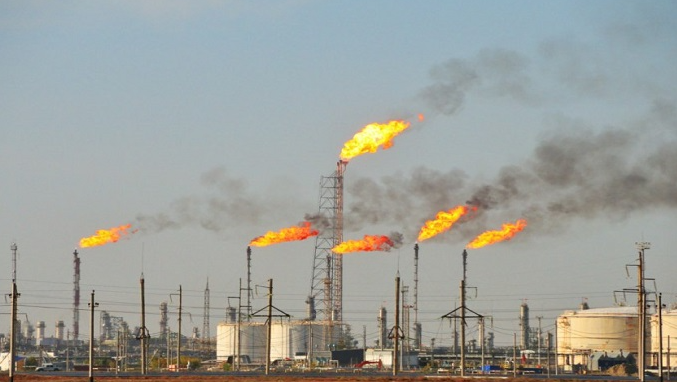
Nigeria flared more than 203.9 billion standard cubic feet of natural gas in 2025, even as overall gas utilisation remained above 92 per cent.
This is according to the latest figures released by the Nigerian Upstream Petroleum Regulatory Commission (NUPRC) in its full-year 2025 Gas Production Status Report.
The data points to a persistent contradiction in Nigeria’s gas sector, with higher production and utilisation occurring alongside elevated gas flaring.


What the data is saying
NUPRC data shows that total gas production in 2025 stood at about 2.71 trillion standard cubic feet, made up of 1.46 trillion scf of Associated Gas and 1.25 trillion scf of Non-Associated Gas. Of this volume, roughly 2.50 trillion scf was utilised across field operations, domestic supply, and exports.
- Nigeria flared 203.97 billion scf of gas in 2025, representing 7.54 per cent of total gas produced during the year.
- This marks an increase from 192.9 billion scf recorded in 2024, despite regulatory pressure and flare commercialisation initiatives.
- Monthly flaring volumes mostly ranged between 15 billion scf and 18 billion scf, peaking in January (18.7 billion scf) and July (18.3 billion scf).
- The worst performance was recorded in September, when gas utilisation fell to 90.9 per cent, pushing the flaring rate to 9.05 per cent, the highest for the year.
Overall, the data points to modest growth in gas output year-on-year, alongside a stubborn persistence of routine flaring.
More Insights
A closer look at the figures shows that gas flaring in Nigeria remains largely driven by Associated Gas, which is produced alongside crude oil. Unlike Non-Associated Gas, which is often developed with dedicated processing and evacuation infrastructure, Associated Gas is more vulnerable to flaring when facilities are unavailable or constrained.
- Associated Gas production averaged over 120 billion scf per month in 2025, but infrastructure gaps and plant downtime limited effective utilisation.
- Limited offtake capacity and transportation constraints forced operators to flare gas during periods of operational disruption.
- Although Non-Associated Gas production increased year-on-year, it contributed far less to overall flaring due to better alignment with market demand and infrastructure.
This structural imbalance continues to expose oil-linked gas production to higher flaring risks.
Why this matter
On paper, Nigeria’s 92.4 per cent gas utilisation rate suggests steady progress in reducing waste. In absolute terms, however, the volumes tell a more complex story.
- About 776.6 billion scf of gas was used for field operations.
- Roughly 780.6 billion scf was supplied to the domestic market.
- Exports accounted for 942.7 billion scf, largely through liquefied natural gas shipments.
What you should know
The flaring of more than 203 billion scf of gas in a single year carries major environmental and economic consequences for Nigeria.
- Gas flaring contributes to greenhouse gas emissions, local air pollution, and health risks in host communities.
- Nigeria remains one of the world’s leading gas-flaring countries, recording a 12 per cent increase in flared gas volumes in 2024, the second-largest rise globally.
- NUPRC reported that Nigeria achieved a rare energy milestone as gas flaring fell to 7.16% in July 2025.









