Follow Us on Google Discover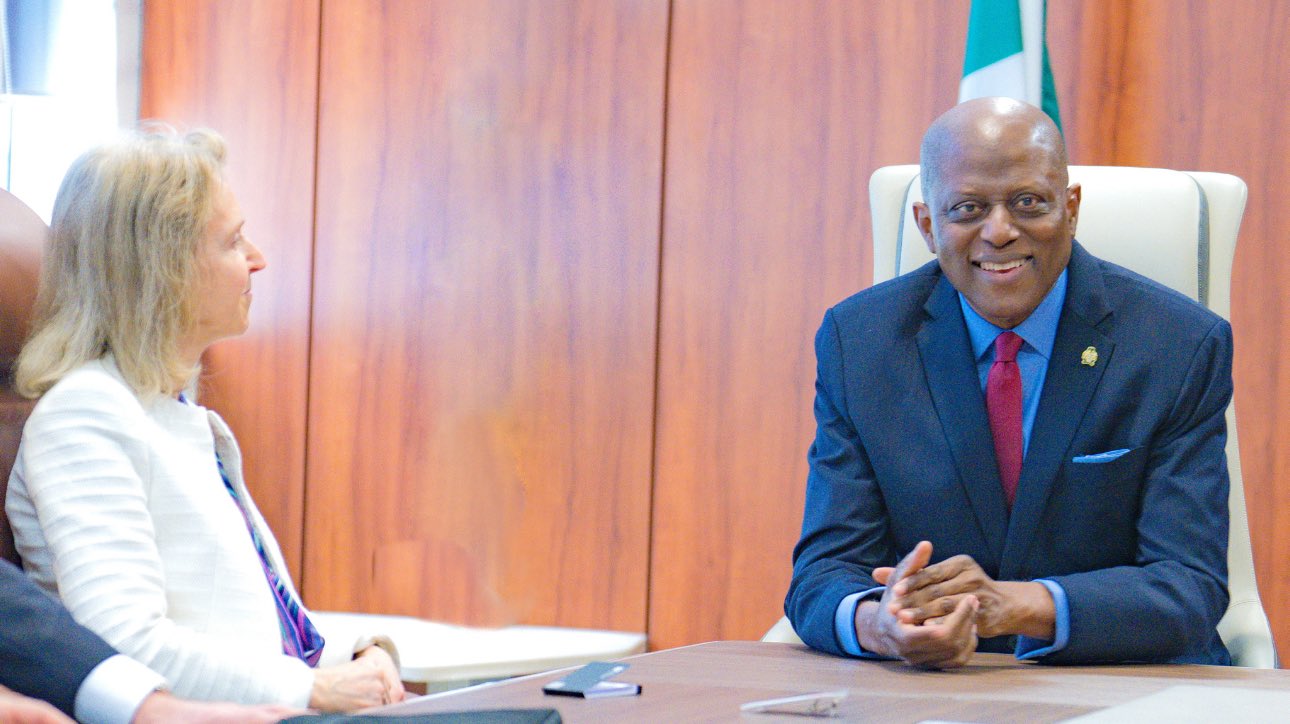
The Governor of the Central Bank of Nigeria, Mr Olayemi Cardoso, has said the success of Nigeria’s ongoing financial sector reforms depends largely on sustained access to long-term capital from development finance institutions.
Cardoso made the remark on Wednesday in Abuja while hosting a delegation from British International Investment, led by its Chair, Ms Diana Layfield, alongside the British High Commission to Nigeria, headed by Mr Richard Montgomery.
According to a statement issued by the apex bank on Wednesday, the meeting formed part of efforts to deepen financial sector reforms and attract patient, long-term investment into the Nigerian economy.
What the statement says
“The Governor noted that DFIs providing long-term capital and strong governance remain key partners in Nigeria’s reform agenda,” the statement read.
It noted that the CBN Governor reaffirmed the bank’s commitment to macroeconomic stability, credible monetary policy, and a transparent, data-driven regulatory framework aimed at strengthening the resilience of the banking system and improving financial intermediation.
“The Governor reaffirmed the CBN’s commitment to macroeconomic stability, credible monetary policy, and a transparent, data-driven regulatory framework aimed at strengthening the resilience of the banking system and improving financial intermediation,” the statement read.
It added that discussions focused on recent developments in the financial services sector, BII’s investment outlook, and opportunities to deploy long-term capital to support banking sector stability, financial inclusion, and sustainable private sector growth.
Cardoso was quoted as noting that DFIs providing long-term capital and operating under strong governance standards remain critical partners in Nigeria’s reform agenda.
BII reiterates investment interest
The statement also quoted Layfield as reaffirming BII’s continued interest in Nigeria’s financial services sector, stressing the importance of regulatory clarity and sustained engagement to support investment and inclusive economic growth.
Those present at the meeting included members of BII’s board and executive management, among them Mr Leslie Maarsdorp, Chief Executive Officer; Mr Andrew Alli, Non-Executive Director; Mr Simon Rowlands, Non-Executive Director; Mr Chris Chijiutomi, Managing Director and Head of Africa; and Mr Benson Adenuga, West Africa Regional Director and Head of the Nigeria Office. Senior officials of the British High Commission also attended.
British International Investment is the United Kingdom’s development finance institution and is wholly owned by the UK Government through the Foreign, Commonwealth and Development Office. The institution has total assets of £9.9 billion and supports more than 1,600 businesses across emerging markets.
What you should know
Nairametrics earlier reported that Foreign Direct Investment (FDI) into Nigeria declined by 70.06% quarter-on-quarter to $126.29 million in Q1 2025, down from $421.88 million in Q4 2024, according to the Capital Importation report released by the National Bureau of Statistics (NBS).
The plunge in FDI comes despite an overall increase in capital importation, signalling a growing preference among foreign investors for short-term, high-yield investments commonly referred to as “hot money” over long-term commitments in the Nigerian economy.
On a year-on-year basis, however, FDI recorded a marginal growth of 5.97% compared to $119.18 million in Q1 2024.
The share of FDI in total capital importation has dropped to just 2.24% in Q1 2025. This is a steep decline from 8.29% in the previous quarter and even lower than the 3.53% recorded in Q1 2024. In contrast, total capital importation rose to $5.64 billion in Q1 2025, from $5.09 billion in Q4 2024 and $3.38 billion in Q1 2024.
The data shows the growing disconnect between rising capital inflows and actual productive investment in the Nigerian economy.
While the surge in total capital importation may seem positive on the surface, a closer look reveals that over 90% of these inflows were channelled into short-term money market instruments—such as government bonds and treasury bills—rather than long-term equity or direct investment.