Follow Us on Google Discover
As I move from Morocco to the plenary halls of Davos 2026, the conversation shifts from football to the bedrock of African survival: agribusiness.
The global downturn has exposed the limits of inherited Western financing models—short-term, risk-averse, and misaligned with Africa’s structural realities.
Africa’s most urgent challenge is no longer access to capital, but accountability. What is needed now is not sympathy, but systems.
Davos 2026 marks the moment Africa demands adaptive financing.
The convergence of AFCON 2025 and Davos 2026 offers a revealing insight. In elite football, performance is no longer judged by reputation or effort, but by data—expected goals, distance covered, recovery rates.
Outcomes are measured, compared, and priced. Capital allocation follows performance.
The same logic must now apply to African development.
At Davos, my intervention is centred on food sovereignty.
Africa must move beyond the language of “food security”—often a euphemism for import dependence—towards owning the financing, processing, and distribution of what it consumes. This shift is not ideological; it is economic.
Africa’s renaissance will be built on the architecture of accountability. What cannot be measured cannot be financed at scale.
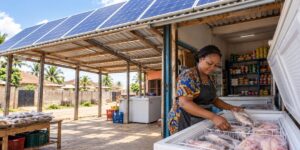
Nowhere is this clearer than in agriculture. As technology valuations deflate, investors are already gravitating towards food resilience as a durable investment thesis. The caloric demand of 1.4 billion Africans is not speculative—it is structural.
Capital will follow, but capital is disciplined. It will only remain where systems are bankable.
That requires transparent metrics: soil health, yield per hectare, logistics efficiency, loss ratios, and time-to-market. Hope is not a strategy. Measurement is.
The era of “potential” is over. Global capital providers are no longer persuaded by narratives alone. They demand evidence that investment translates into productivity gains, export capacity, and GDP growth. Spreadsheets, not slogans, now drive credibility.
Africa has already demonstrated its capacity for a high-performance data culture. During AFCON 2025, every sprint and heartbeat was tracked. Performance gaps were exposed in real time.
The question is why similar standards are not applied to public institutions and state-owned enterprises.
If a striker’s movement can be tracked by GPS, there is no technical barrier to tracking cargo flows through ports or operational efficiency in national carriers.
The Davos 2026 outlook points towards pragmatic Pan-Africanism.
Africa is no longer seeking inclusion on external terms; it is defining its own performance benchmarks. Morocco’s recent trajectory illustrates the soft power of disciplined ambition.
Large-scale, state-backed agriculture demonstrates the hard power of execution. What remains is institutional follow-through—by logistics operators, financial institutions, and regulators—to close the loop.
Africa does not lack vision. It lacks measurement and steady execution. The next phase of leadership will not be announced through summits or declarations, but revealed quietly in dashboards, ledgers, supply chains, and performance data.
History has taught us this simple truth: WHAT DOESN’T GET MEASURED, DOESN’T GET DONE.
This is the new diplomacy of movement. And only those who measure will move.
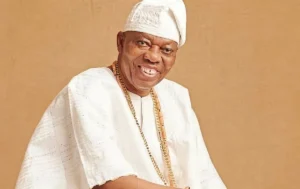
Ade Adefeko is a policy analyst with expertise in Trade, Agriculture, and Financial Services, and an Ex-Officio Member of NACCIMA.