

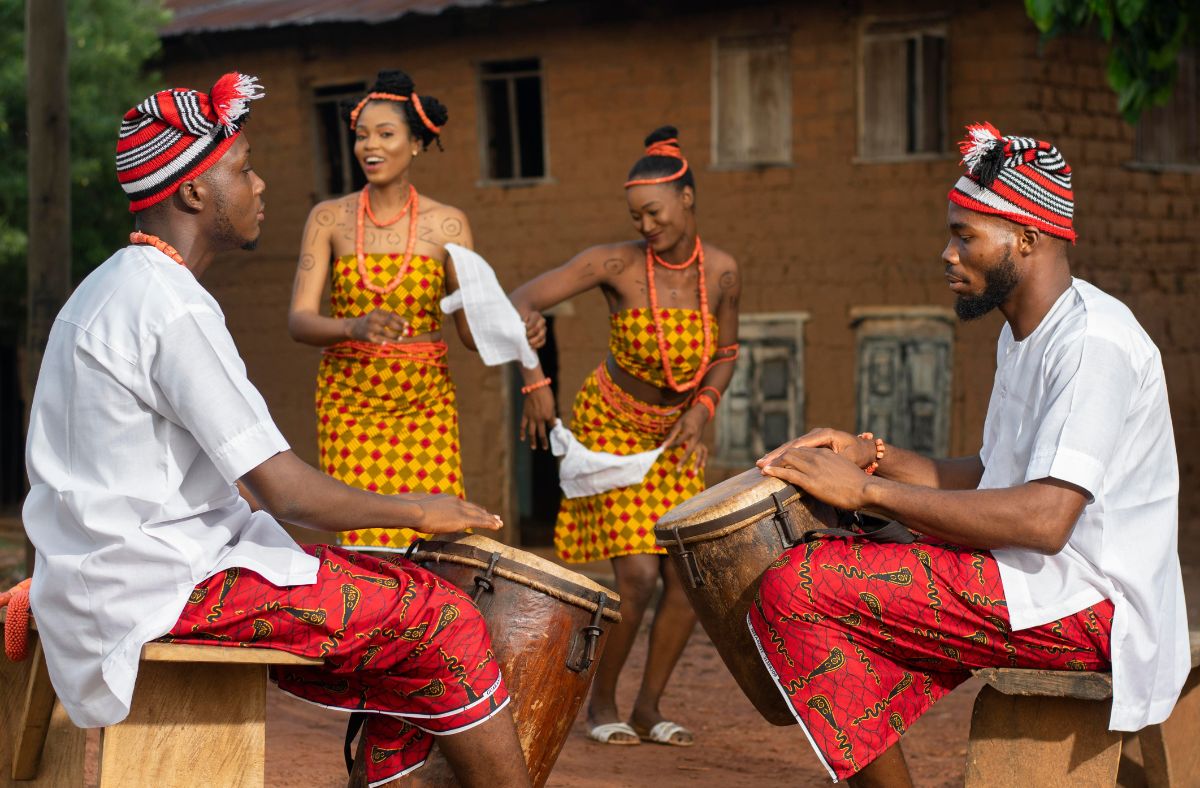
Every Christmas season, millions of Ndigbo from all over the world return to their homeland for the holiday festivities.
Roads leading to South East Nigeria and adjoining Igbo-speaking communities grind to a halt under the weight of heavy vehicular movement.
Flights to airports like Enugu, Owerri, Asaba, Anambra, and Port Harcourt are also fully booked during this period.


Many airlines even hike their airfares by as much as 300% to take advantage of the demand and maximise seasonal profits.
The Igbo homecoming is a phenomenon that is deeply rooted in culture and identity. Igbos are itinerant in nature, with a significant percentage of the population residing outside their hometowns due to their pursuit of broader economic and academic advancement.
Christmas gives them an opportunity to reconnect with their families, friends, and kinsmen and maintain their ancestral ties, as they wind down for the year. It is similar to the Chinese Lunar New Year’s Chunyun, where millions of Chinese workers and the global diaspora return home to reunite with their families.
During the festive season, Igbo communities become a beehive of social gatherings and economic activities. Events like weddings, housewarmings, and cultural festivals that serve as both celebrations and networking opportunities take center stage.
The economic injection is staggering. Billions of naira flow into local economies in a matter of weeks. Beyond the massive spending on events and logistics, it is also common to see affluent – or at least better-off – returnees distributing bags of rice, gallons of cooking oil, and small cash gifts to the less privileged.
However, the effects of this are, unfortunately, short-lived. By the second week of January, the lights dim, the mansions are locked, the returnees go back to their bases, and the towns and villages return to a state of quiet stagnation.
This annual flow of people and capital has not translated into long-term, sustainable progress for many Igbo communities.
The problem lies in the fact that the homecoming economy has not been optimized for transformative and sustainable growth. The homecoming economy is largely built on handouts and consumption that yield fleeting benefits.
For example, spending 20 million naira on a one-day ceremony may create a spike in income for local vendors, but it will not translate into repeatable revenue. Handing out bags of rice, gallons of vegetable oil, and other consumables may alleviate hunger for a month or two but leaves the root causes of poverty untouched.
While philanthropy and consumption are definitely better than doing nothing at all, they can be accompanied by lasting investments. A shift in mindset and strategy is required to achieve this.
Ndigbo should collectively and individually explore viable investment opportunities that can be sited in their hometowns.
Town unions can conduct research to identify local comparative advantages, be it fertile land and high-yield crops for agro-processing, proximity to major trade routes for logistics, or the presence of a higher institution for digital skills training and tech outsourcing.
If every town union or one or two prominent individuals from each community rallied to establish at least one agro-processing plant, cottage industry, or digital skills hub every festive season, the economic landscape of the South East would be unrecognizable within a decade.
Empirical evidence shows that spreading progress is a powerful and effective deterrent to underdevelopment. Nnewi is a prominent example of this. Nnewi’s development is purely indigenous, driven by the “Aku ruo uno” philosophy.
The foundation of Nnewi’s growth was laid by prominent sons and daughters like Sir Louis Odumegwu Ojukwu.
Through a private-sector-led effort, they were able to transform Nnewi from a sleepy village to a transportation and manufacturing hub, earning it the nickname, the “Japan of Africa.”
Making local investments creates a stickiness for capital – money circulates within the community longer instead of leaking out immediately to external markets.
This creates a multiplier effect that generates jobs, keeps youths gainfully employed, stems the mass migration of talent, and drastically reduces the desperation that leads to criminality. When a youth has a job at a local textile mill or palm oil processing plant, the incentive to migrate or engage in social vices loses currency.
On its part, the government must provide enabling infrastructure, like good road networks and stable electricity, to improve the ease of doing business in these areas.
Ultimately, the goal is to ensure that the seasonal wealth brought home by Ndigbo creates the superstructure for wealth to be generated all year round. Only then can the year-end homecoming evolve from just a celebration to a catalyst for sustainable regional growth and development.
- Chinedu George Nnawetanma is an international development professional with extensive experience that spans the nonprofit and private sectors.













The Igbo’s can actually leverage these seasonal movements to foster a sustainable development paradigm. In this way the inertia associated with years of fruitless appeals to think home would be broken. The perennial neglect by various tiers of government will be mitigated. The multiplier effect of reducing unemployment, rural urban migration and social vices are further benefits derivable from such a development strategy.