
In October 2025, the redesignation of Nigeria as a Country of Particular Concern (CPC) by the Trump administration sparked significant debate regarding its tone and intent.
Nigeria and the United States subsequently found common ground to collaborate on the airstrike, which took place on Christmas Day 2025.
This collaboration was a direct result of diplomatic engagement that followed significant Nigerian and international reservations about President Donald Trump’s initial communication, which many saw as threatening and misinformed.


Reservations about the CPC redesignation
The primary reservations regarding President Trump’s communication redesignating Nigeria as a “Country of Particular Concern” (CPC) on October 31, 2025, focused on its inappropriate tone, selective framing of the security crisis as purely religious persecution, and a perceived threat to Nigerian sovereignty.
In Nigeria:
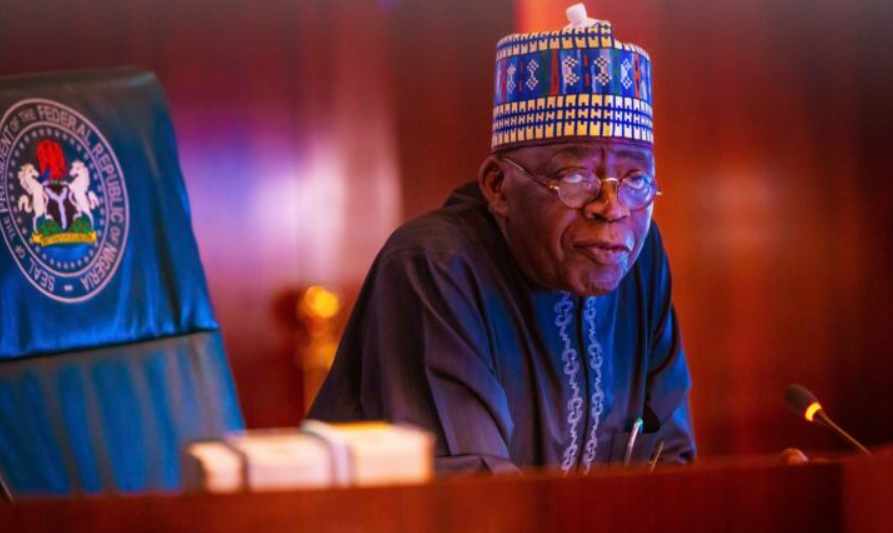
Rejection of Characterization: The Nigerian government, led by President Bola Tinubu, strongly refuted the U.S. characterization that Christianity faced an “existential threat,” stating it did not reflect the country’s reality or values. Officials stressed that violence affected citizens of all faiths, including Muslims, and was tied to broader issues like terrorism, resource conflicts, and governance challenges.
Sovereignty Concerns: Many Nigerians, including ethnic organizations and diplomats, viewed Trump’s subsequent threat of potential U.S. military intervention (“guns-a-blazing”) as an insult to national sovereignty and a dangerous oversimplification that could exacerbate sectarian tensions.
Internal Diplomatic Realignment: Nigeria’s initial, more assertive diplomatic response was soon replaced with a toned-down version to de-escalate tensions, highlighting internal government deliberation on how to manage the diplomatic friction.
Internationally:
Counterproductive Framing: Analysts and some U.S. lawmakers argued that framing Nigeria’s complex security landscape in narrow religious terms was counterproductive and distracted from the wider problem of tackling jihadist violence and widespread insecurity affecting everyone.
Aggressive Tone: Trump’s rhetoric, including threats to enter the country “guns-a-blazing” and instructions to the “Department of War” to prepare for action, was seen as inflammatory and a violation of diplomatic decorum.
Domestic Political Intent: Some observers viewed the move as an attempt to appeal to Trump’s domestic religious base in the U.S. rather than a nuanced foreign policy effort.
Focus on Dialogue over Force: A visiting bipartisan delegation of U.S. Congress members later clarified that the CPC designation was intended to foster reforms through dialogue and partnership, not military force, dismissing any plans for U.S. troops on the ground.
Call for Broader Engagement: Experts urged the U.S. to use its leverage to pursue a broader, more nuanced approach to religious freedom that acknowledged Nigeria’s complex, multi-layered crises rather than a single-issue focus.
Common ground and the Christmas Day airstrike
The two countries did find common ground, leading to a collaborative operation. The U.S. airstrikes on December 25, 2025, targeting ISIS in Sokoto State, were conducted in coordination with and with the approval of Nigerian authorities.
Official collaboration: Nigerian Foreign Minister Yusuf Tuggar confirmed that President Tinubu gave the “go-ahead” for the operation after discussions with U.S. Secretary of State Marco Rubio. U.S. Africa Command (AFRICOM) and the Nigerian government officially described it as a “collaborative effort” and “precision strike operation”. Nigeria provided intelligence and strategic coordination, while U.S. Africa Command (AFRICOM) carried out the kinetic action at the request of the Nigerian government.
Differing public Narratives: While collaboration was confirmed, a slight divergence remained in the public framing. President Trump’s statements emphasized targeting those “persecuting Christians”, while Nigerian officials stressed the operation was about general counterterrorism and ensuring the safety of all innocent civilians, irrespective of religion.
Have the Reservations Been Addressed? Yes, the initial reservations have been addressed to a reasonable extent through ongoing dialogue and practical security cooperation.
The shift from Trump’s initial threats of unilateral military action to a coordinated operation with Nigerian consent indicates successful diplomatic de-escalation.
- Following a high-level meeting in Washington, D.C., in November 2025, both nations agreed to a non-binding cooperation framework and the creation of a Joint Working Group to unify their approach to counter-terrorism and civilian protection.
- Since late November 2025, the U.S. has conducted daily intelligence-gathering flights over Nigeria using contractor-operated aircraft to monitor militant movements and support Nigerian tactical operations.
- Also, high-level engagement and bipartisan congressional visits have helped clarify the U.S. intent as partnership and capacity-building rather than “punishment” or “invasion”.
- The incident has spurred more concrete actions from the Nigerian government, including a declaration of a nationwide security emergency and planned recruitment of more police officers, demonstrating a commitment to addressing security concerns internally.
In November 2025, Nigeria unveiled its Strategic Plan 2025–2030, which prioritizes bilateral cooperation with the U.S. to enhance intelligence analysis and modernize Nigeria’s security architecture.
However, a few Nigerians still have sovereignty concerns despite the collaboration while the fundamental disagreement over whether the violence constitutes “religious persecution” or “regional insecurity” persists, with the U.S. administration and Nigerian government continuing to use different language to describe the same conflict.
Overall, both nations ultimately chose pragmatism, leveraging the moment of diplomatic tension to reinforce their shared interest in counterterrorism, ensuring the bilateral relationship remains a strong, albeit complicated, partnership.
Hafiz Bakare is a Consultant and Former Bank Chief Executive.