
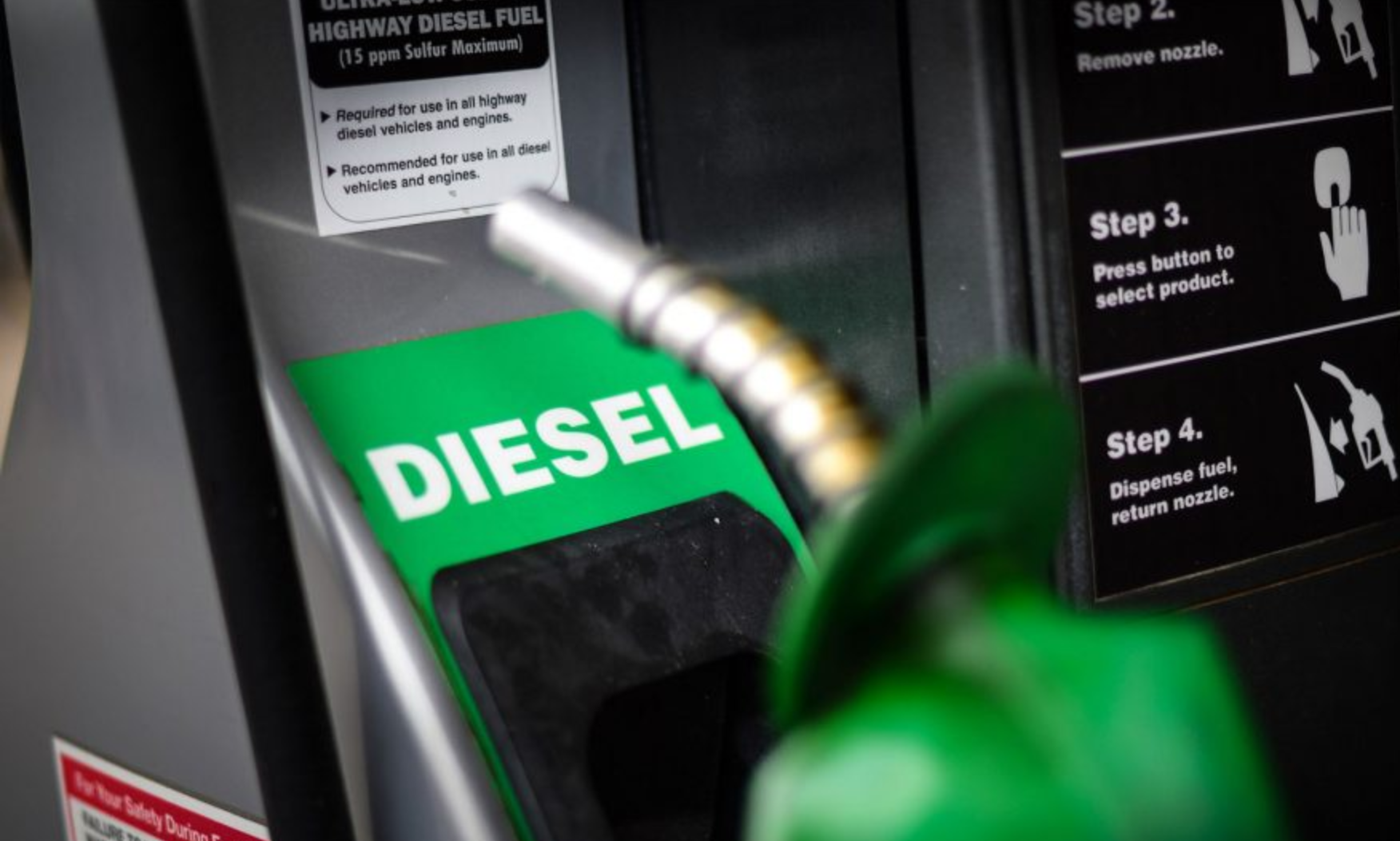
The average retail price of Automotive Gas Oil (Diesel) in Nigeria decreased by 2.57% year-on-year, falling from N1,446.83 per litre in November 2024 to N1,409.61 per liter in November 2025.
This is according to the latest Diesel Price Watch by the National Bureau of Statistics (NBS).
On a month-on-month basis, diesel prices increased slightly by 0.79%, rising from N1,398.57 in October 2025 to N1,409.61 in November 2025.


What the data is saying
State-level analysis shows notable price disparities across Nigeria. Niger State recorded the highest average diesel price at N1,477.57 per liter, followed closely by Jigawa (N1,477.31) and Enugu (N1,468.29). Conversely, Kebbi (N1,308.94), Katsina (N1,315.78), and Nasarawa (N1,325.29) had the lowest average prices.
Zonal data further reveal regional differences: the South East Zone recorded the highest average diesel price at N1,419.34, while the South South Zone had the lowest at N1,400.58, showing a smaller price gap across zones compared to states.
Context and experts’ insight
Analysts attribute these price differences to logistical challenges, regional supply constraints, and local demand pressures.
“Diesel costs are highly sensitive to global crude oil prices, foreign exchange fluctuations, and domestic distribution efficiency,” energy expert, Dare Awoyemi said.
“The slight month-on-month increase may reflect emerging supply pressures or heightened demand as economic activity expands,” he added.
Historically, Nigeria’s diesel market has faced challenges with refining capacity limitations and fuel import logistics, which often drive regional price variations.
What this means
The year-on-year decline provides relief to consumers and businesses dependent on diesel for transportation and power generation.
Diesel remains a critical energy source for transportation, manufacturing, and private power generation.
Changes in prices may have significant impacts on inflation for households.
However, the modest monthly rise highlights the ongoing volatility in fuel prices, emphasizing the need for policy and infrastructure measures to stabilize costs. Maintaining affordable diesel prices is critical for controlling inflation and supporting economic growth across the country.
The wide price gaps between states and regions show persistent structural issues in fuel distribution. States in the North bearing higher costs may experience deeper economic strain compared to zones where prices remain below average.
What you should know
In October, NBS reports that the average retail price of diesel rose to N1,398.57 per litre.
This marks a notable increase from the N1,277.81 per litre recorded in September 2025.
In October, President Bola Tinubu approved a 15 percent ad-valorem import duty on diesel and premium motor spirit (PMS), commonly known as petrol.
A few days later, Nairametrics reported that the federal government had suspended its implementation.