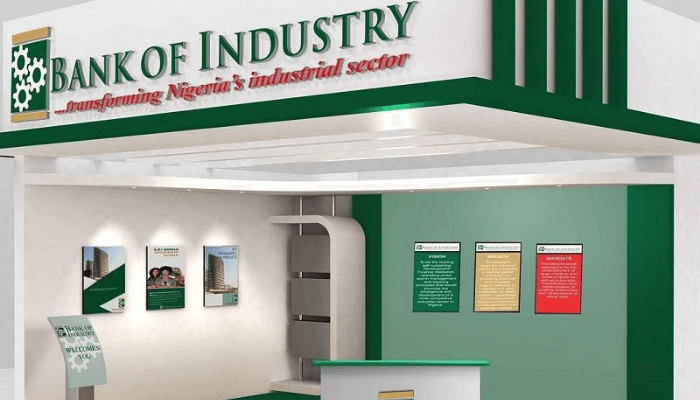
Nigeria’s development and merchant banks, FSDH Merchant Bank (FSDH) and the Bank of Industry (BOI) have outlined conditions women-led businesses seeking credit must meet to be able to access such facilities, cautioning that gender-focused status alone does not guarantee access to formal financing.
The institutions noted that the major barriers are not funding shortages, but the lack of proper business structure, clear operational plans, and credible financial records among many women-owned enterprises.
This was the dominant message at the 2025 Women in Business (WIBIZ) Summit hosted in Lagos by FSDH Merchant Bank, where both banks listed expectations for women seeking loans in respective sectors, especially the creative industry.


Speakers from both financial institutions explained that financing for women entrepreneurs is available, but only businesses with discipline, documentation and strategic planning can access and sustain it.
They added that with stronger financial habits and clearer business structures, women-led enterprises can scale significantly.
BOI: Passion is not a funding strategy
Speaking during the panel session, Jide Sipe, Group Head of Brand Transformation and Digital Marketing at BOI, said lenders are increasingly prioritising readiness over enthusiasm when assessing loan requests from female entrepreneurs. He stressed that the misconception that passion alone attracts funding remains one of the biggest barriers to women’s access to credit.
“Loan facilities are not free money. Funding isn’t just about access; it’s about readiness,” Sipe said, noting that banks now scrutinise founders’ understanding of their sectors, financial literacy and repayment strategies more closely than ever.
According to him, three factors determine whether a woman-led business is fundable: knowledge of the industry, mastery of the numbers, and clarity of the plan. “Vague plans are red flags,” he warned the audience, largely made up of reputable women from across sectors, especially the creative industry.
Entrepreneurs still seeking ‘free money’ instead of real credit
Sipe added that many entrepreneurs mistakenly approach banks seeking what is effectively sponsorship rather than credit. This, he said, signals a misunderstanding of how institutional lending works. Loans, he emphasised, cannot be treated like grants or personal support: “If you don’t understand your business, don’t come for a loan. First go and understand your craft or work with someone who does.”
To address gaps in business structure, he advised creatives who struggle with management to build partnerships or co-founder arrangements that can strengthen governance and reduce the risk of default. Poor cash planning, he noted, remains one of the leading causes of debt crises among small businesses.
Specialised loan products exist but only for prepared businesses
Despite these challenges, financial institutions say targeted products continue to expand. FSDH highlighted several specialised credit windows available to women, including guaranteed loans, Creative Industry Funds, the IDICE programme, state-backed matching funds and SME-focused products supported by development finance institutions such as International Finance Corporation (IFC), African Development Bank (AfDB) and the World Bank.
Highlighting several of the targeted financing windows available to women, FSDH Managing Director, Bukola Smith, added that the bank is removing structural barriers and strengthening concessionary financing options, including a new N1 billion BOI-backed loan pool.
However, she cautioned that entrepreneurs must research and request the right product for their needs, stressing that misaligned loan applications remain one of the top reasons for rejection.
“Accessing these funds,” Smith insisted, “requires research and alignment not random loan shopping.”
FSDH details impact: N3 billion disbursed, 500 SMEs trained
FSDH Merchant Bank also announced tangible progress in supporting women-owned businesses. Executive Director Stella-Marie Omogbai said the bank has deployed more than N3 billion in women-focused financing within five years, trained over 500 women-led SMEs and supported more than 2,000 women through coaching and accelerator programmes.
The FSDH boss added that the bank is implementing systemic reforms to dismantle structural barriers and deepen access to concessionary facilities, including N1 billion. According to her, a collaboration with the International Finance Corporation (IFC) and several other financing institutions has produced special grants and facilities for female-led technology ventures, emphasizing the bank’s commitment to innovation-driven women entrepreneurs.
She therefore urged women to take advantage of all gender-targeted loans issued under the WIMBIZ umbrella to scale up their businesses.