
For years, Nigeria’s wires and cables market was dominated by imports, brands that were cheap but often ill-equipped to survive the country’s heat, voltage fluctuations, and relentless load-shedding.
Every flicker of a light or sparking socket told a story of cables that couldn’t keep up.
Fast forward to today, and a different story is unfolding.


Indigenous manufacturers are no longer on the sidelines; they are at the heart of powering homes, offices, factories, and telecom networks across the country. From low-voltage wiring in apartments to medium-voltage lines energizing industrial clusters.
Their rise is more than a business success; it is a testament to resilience and innovation. Competing against imports, these entrepreneurs are producing ISO-certified, high-quality cables that meet international standards. They are supporting construction, real estate, and industrial growth while helping stabilize a grid that still struggles to keep up with rising energy demands.
Nigerian wires and cables market is projected to grow at a 5.2% annual rate between 2025 and 2031, reflecting rising demand across residential, industrial, and utility sectors.
As Nigeria’s population grows, so does the need for housing, infrastructure, and industrial power networks, making the role of these local manufacturers even more central to the country’s future.
This list focuses on Nigerian electricity wire and cable manufacturers whose founders are publicly documented. Many players in the sector operate with limited visibility, making it difficult to trace ownership or leadership history
Here are the entrepreneurs driving Nigeria’s wires and cables industry.
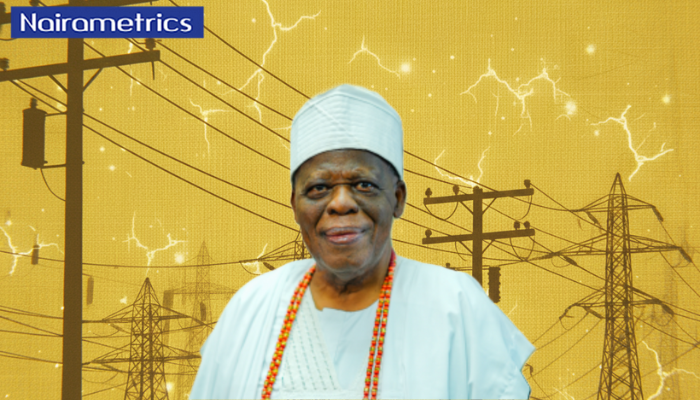
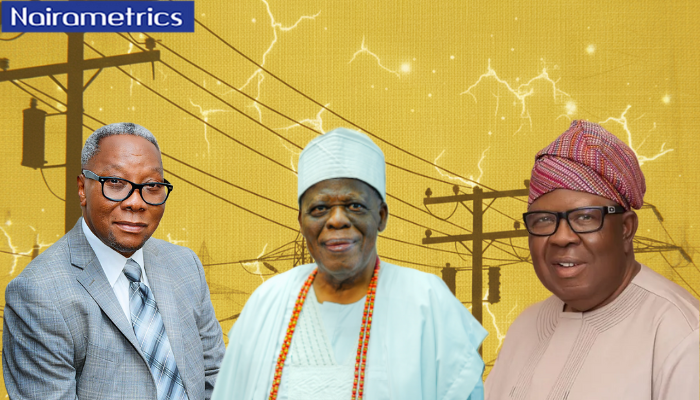
Coleman Technical Industries Limited, commonly known as Coleman Wires and Cables, was founded by Asiwaju Solomon Kayode Onafowokan, a Nigerian industrialist and entrepreneur. It is one of the country’s leading indigenous electricity wire and cable manufacturers.
Onafowokan is a seasoned administrator with over 50 years of corporate management experience. A former Deputy Chief Executive at Chellarams Plc, he currently chairs the Board of Coleman Technical Industries Limited. He is the immediate past President of the Lagos Chamber of Commerce and Industry (LCCI) and serves on the Boards of NACCIMA, NECA, and MAN.
He incorporated the company on 1 July 1975, initially starting with trading operations before moving into manufacturing. Full-scale production of wires and cables began in 1996, with the first factory in Ikotun, Lagos.
The principal headquarters is located in Lagos. Over time, the company expanded its manufacturing footprint to major manufacturing plants Arepo and Sagamu in Ogun State. The Sagamu complex, which sits on more than 350,000 square metres, also houses a smelting section with capacity for 3,000 tons of aluminium and 10,000 tons of copper per month. The new facility, said to be the largest of its kind in Africa, is designed to produce up to 9 million kilometres of fibre-optic cable annually
Coleman produces a wide range of electrical products, including residential wiring, medium- and high-voltage cables, communication lines, and fibre-optic cables. Its products serve sectors including construction, real estate, industrial power networks, and telecoms.
Coleman is ISO and SON/NIS certified, and it has grown into one of West Africa’s largest cable manufacturers. The company is known for producing high-quality cables that adhere to international standards, offering a locally made alternative to imported wires and supporting Nigeria’s power and infrastructure development.