Follow Us on Google Discover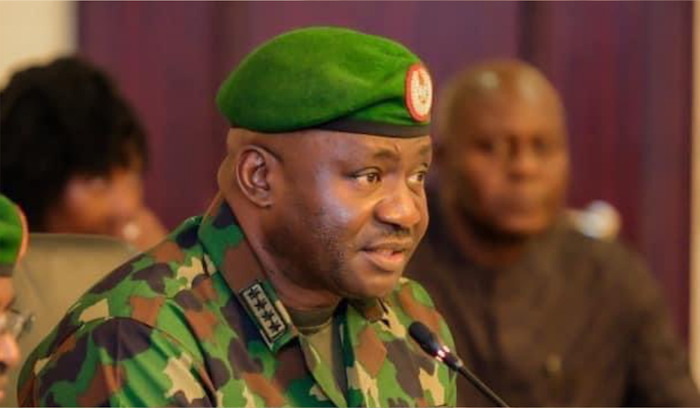
The Nigerian Senate has confirmed General Christopher Musa, the former Chief of Defence Staff, as the country’s new Minister of Defence.
The announcement was contained in a statement by Bayo Onanuga, Special Adviser on Information and Strategy to President Bola Tinubu.
Musa, who retired from the military just 40 days ago, was nominated by President Tinubu on Tuesday to succeed former Defence Minister Mohammed Badaru Abubakar, who stepped down on health grounds.
According to Onanuga’s statement, the Senate approved Musa’s appointment on Wednesday through a voice vote, following a thorough screening session during which lawmakers posed numerous questions.
“Senate confirms Gen. Christopher Musa as Minister of Defence The Senate has confirmed the former Chief of Defence Staff, Gen. Christopher Musa, as the Minister of Defence. The Senate confirmed Musa on Wednesday via a voice vote after a rigorous screening session in which lawmakers asked him many questions,” the statement read in part.
Before his confirmation, President Tinubu had expressed unwavering confidence in Musa’s ability to bolster Nigeria’s defence capabilities amid persistent national security challenges.
Musa’s illustrious military career includes service as Chief of Defence Staff from 2023 to October 2025 and recognition as the recipient of the Colin Powell Award for Soldiering in 2012.
What you should know
Musa was born in Sokoto in 1967, and his military career spans over three decades, including senior roles as Commander of Sector 3 of Operation Lafiya Dole, Commander of the Multinational Joint Task Force in the Lake Chad Basin, Theatre Commander of Operation Hadin Kai, and Commander of the Nigerian Army Infantry Corps before becoming Chief of Defence Staff in 2023.
His appointment as Defence Minister follows a broader security sector reshuffle aimed at enhancing coordination, professionalism, and vigilance across the Nigerian Armed Forces.
- It also comes amid President Tinubu’s declaration of a national security emergency, mandating intensified operations and expanded recruitment by the Armed Forces, Police, and DSS, as well as the redeployment of officers from VIP duties to field operations and deployment of trained forest guards to counter armed groups in volatile areas.
- Nigeria’s security challenges have drawn international scrutiny, including criticism from the United States over terrorism, human rights, and religious freedom. In November 2025, President Tinubu rejected the US designation of Nigeria as a “Country of Particular Concern,” describing it as inconsistent with the country’s counterterrorism efforts.
Northern governors have also proposed suspending mining in volatile regions and establishing a regional security trust fund to curb escalating attacks.
With his extensive military experience and recent leadership of the Armed Forces, Gen. Musa is expected to play a pivotal role in strengthening Nigeria’s defence strategy amid ongoing domestic and international security pressures.