

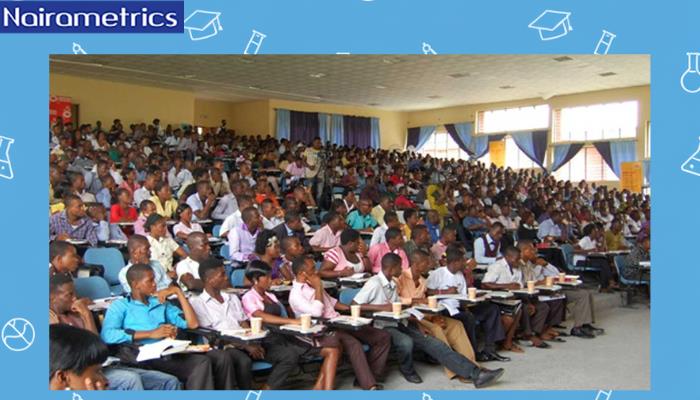
Nigeria’s new student loan programme has quickly become one of the most closely watched education support schemes in the country.
Since its rollout, the portal has recorded a sharp rise in applications, with a total interest-free successful loan application of 451,535 in October 2025.
This highlights how Nigerian students are responding to the opportunity for tuition and upkeep support.


The surge in applications is happening at a time when families are grappling with rising living costs, increased fees across public universities, and broader economic pressures. For many students, the loan scheme has become a crucial pathway to staying enrolled and managing day-to-day expenses.
The programme has already disbursed over N116 billion to support both tuition and upkeep allowances, less than two years after its launch on May 24, 2024.
These numbers offer a new way to understand the extent to which students rely on government-backed support to complete their studies. This report breaks down the top ten institutions with the highest number of applications as of October 23, 2025.
Below is a breakdown of the top 10 institutions by total applications from May 2024 to October 2025:
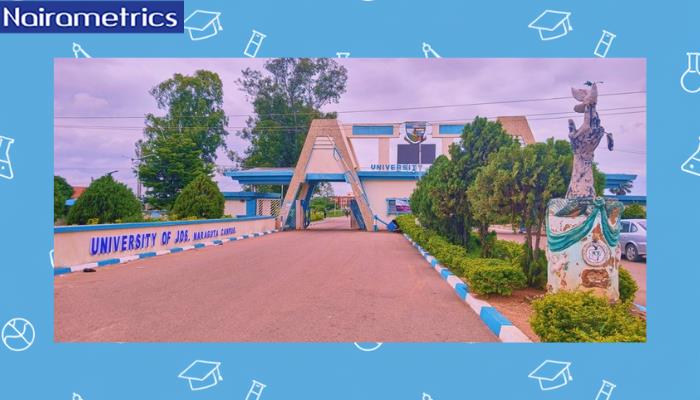
The University of Jos (UNIJOS) is a federal university based in Jos, Plateau State, founded in 1975.
It operates across multiple campuses and offers a broad range of programmes through its 12 faculties, including Agriculture, Engineering, Environmental Sciences, Law, Natural Sciences, Pharmaceutical Sciences, Social Sciences, and Health Sciences.
With a student population of roughly 40,000 students, UNIJOS recorded 35,913 total NELFUND loan applications, of which 17,606 were for upkeep support.
The institution is not featured in the Times Higher Education (THE) 2026 rankings of World University Rankings.
Jos University Teaching Hospital (JUTH), its affiliated teaching hospital, strengthens the university’s medical and clinical education capacity.












So in summary
The northern universities benefits more of this Nelfund than the East and south.. not even unilag or Unizik was mentioned
What has happened to the three geopolitical zones in the southeast, southwest and South-South of Nigeria. This zones which are educationally advanced failed to be captured in this narrative. I hope this is not another step to slow down the southern part of Nigeria.