
 Follow Us on Google Discover
There are few clubs in the world as exclusive as The Forbes 400, and in 2025, the cost of entry has climbed higher than ever.
To secure a place among the wealthiest individuals now requires a minimum net worth of $3.8 billion, an increase of $500 million from last year, reflecting buoyant equity markets and a surge in asset values.
Despite the steep threshold, more than 90% of last year’s billionaires successfully retained their positions.
Still, over 10 new names managed to muscle their way into the elite club, reflecting both entrepreneurial agility and the market’s shifting opportunities. Their fortunes span industries as varied as coffee retail, cancer diagnostics, and the rapidly expanding artificial intelligence sector.
Other News
For the sake of this article, we will look at only 10 of these individuals. Cumulatively, these newcomers are valued at $96 billion. About three of them command individual fortunes above $10 billion, a sign that new wealth creation is accelerating at the very top of the pyramid.
The data also highlights how innovation-led industries, particularly AI, are increasingly shaping global wealth dynamics. For perspective, the combined wealth of these new entrants alone surpasses the GDP of several African economies.
Travis Boersma

- Net worth: $3.9 billion
- Source of wealth: Coffee
Travis Boersma, 54, is the cofounder and executive chairman of Dutch Bros, the Oregon-based drive-through coffee chain that has become one of the fastest-growing players in the U.S. beverage market. Shares of Dutch Bros Coffee are piping hot, with thirsty customers and investors helping push the stock up more than 100% since last year’s Forbes list.
Boersma, who still owns nearly 60 million shares, retains significant control after taking the company public on the New York Stock Exchange in 2021, raising $484 million in one of that year’s standout restaurant IPOs.
He and his late brother, Dane, started the business in 1992 from a pushcart in Grants Pass, Oregon, after leaving the family dairy farm. By 1994, they opened their first drive-through stand, setting the model for what would become the brand’s defining feature. Today, Dutch Bros has more than 1,000 locations across 19 states, supported by a loyal customer base and a culture embodied by its energetic “broistas.”
Despite Dane’s death in 2009, Boersma continued to scale the company while keeping its community focus intact. Dutch Bros has evolved into a national competitor to Starbucks and Dunkin’, pairing rapid expansion with a quirky, culture-driven identity.
David Dean Halbert
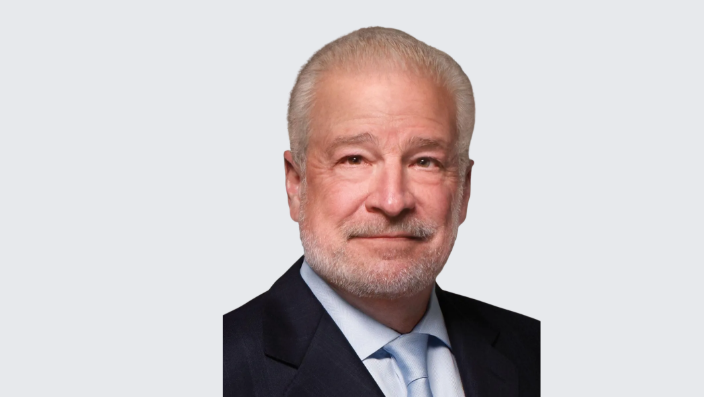
- Net worth: $4.9 billion
- Source of wealth: Biotech
David Dean Halbert, 69, has spent decades betting on healthcare, and his latest wager has made him a billionaire many times over. The longtime investor is the founder and executive chairman of Caris Life Sciences, a Texas-based cancer diagnostics company that went public on Nasdaq in 2025, raising about $494 million. By mid-afternoon trading, Caris was valued at $7.4 billion, giving Halbert, who owns nearly 44% of the company, a net worth of at least $3.3 billion, according to Forbes.
Halbert first acquired the business in 2008, when it was a small startup known as Molecular Profiling Institute. He transformed it into Caris Life Sciences, which now uses gene sequencing, artificial intelligence and machine learning to detect and monitor cancer. The company generated $412 million in revenue last year, though it posted a $282 million net loss.
A graduate of Abilene Christian University, Halbert is no stranger to healthcare ventures. In 1987, he founded AdvancePCS, a pharmacy benefit manager sold to CareMark for $7.5 billion in 2004. Through his firm Caris Capital, he has invested more than $1.2 billion across industries.
Andrew Karam

- Net worth: $5.3 billion
- Source of wealth: Advertising technology
Andrew Karam, 43, is the cofounder of AppLovin, the software company that has become one of the most powerful players in digital advertising. Since its 2021 IPO, the stock has soared more than sevenfold, lifting the company’s market value far beyond its debut valuation of $25 billion.
Karam owned about 4% of AppLovin as of late 2024, before stepping below the SEC’s disclosure threshold and eventually leaving the company in December that year to focus on philanthropy and investing.
AppLovin began in 2012 as a mobile game developer before pivoting to advertising technology, a bet that has paid off spectacularly. In 2020, nearly three-quarters of its revenue came from gaming, but the business was sold in mid-2025 for more than $700 million. Meanwhile, the company’s AI-driven adtech platform has grown by almost 15,000% in four years, generating $3.2 billion in revenue in 2024 alone.
A graduate of Tufts University with degrees in economics and engineering, Karam previously cofounded Social Hour and Style Page, a social platform for designers.
Stephen Cohen

- Net worth: $5.9 billion
- Source of wealth: Software
Stephen Cohen, 42, is one of the quiet cofounders behind Palantir Technologies, the data analytics firm best known for its work with U.S. intelligence agencies and Fortune 500 clients. Cohen, who helped start the company in 2003 shortly after graduating from Stanford, now serves as president and secretary. His estimated 1.5% stake in Palantir, which went public in a direct listing in 2020, forms the basis of his billionaire fortune.
Over the years, Cohen has taken on a range of roles inside the company, including a stint as vice president, where he personally interviewed dozens of job candidates each week, helping shape Palantir’s early culture. A protégé of billionaire investor Peter Thiel, Cohen first worked at Thiel’s hedge fund while still in college. He once recalled going without sleep from Tuesday through Thursday during his final quarter at Stanford to juggle coursework and fund responsibilities.
While fellow cofounder Alex Karp is the public face of Palantir, Cohen has remained largely behind the scenes. He’s sold more than $500 million worth of stock (pretax) since November.
Vlad Tenev
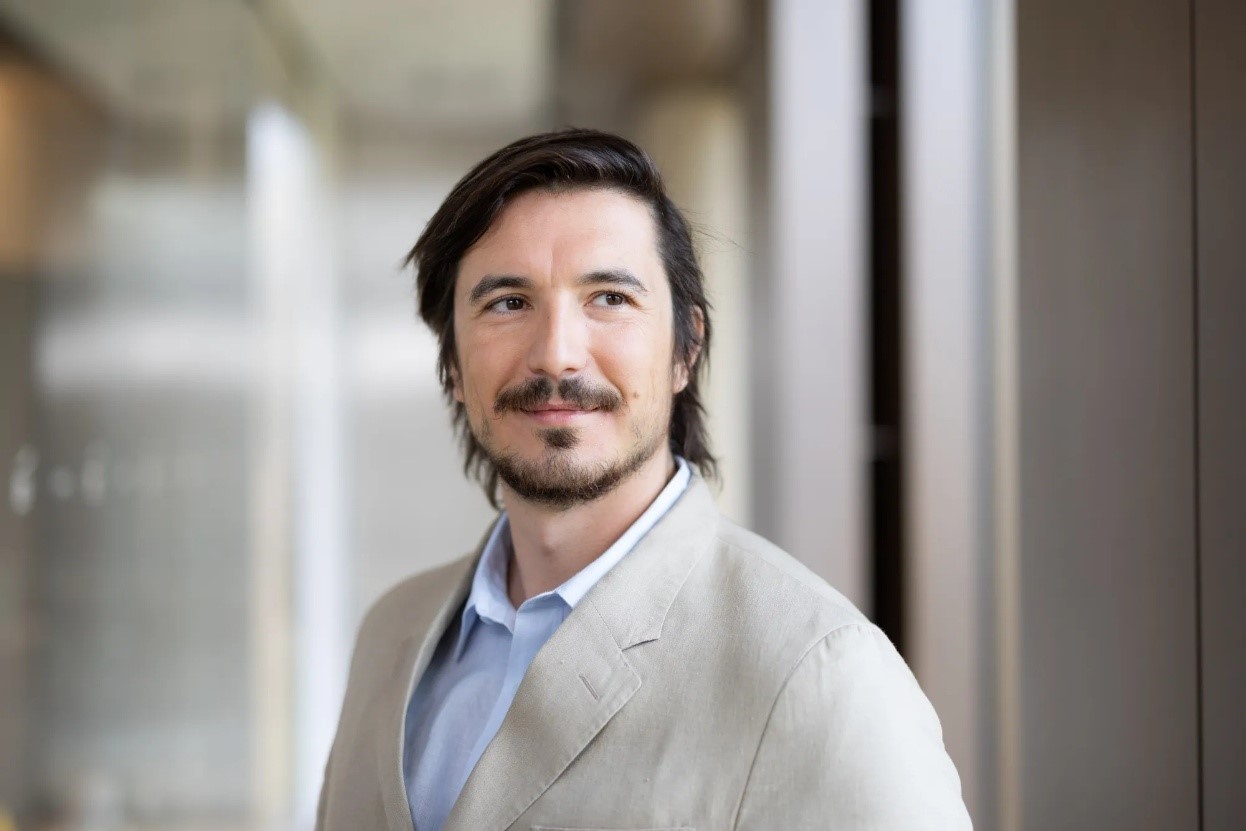
- Net worth: $6.5 billion
- Source of wealth: Stock trading app
Vlad Tenev, 38, is the cofounder and chief executive officer of Robinhood Markets, the trading app that reshaped the brokerage industry with its commission-free model. Since launching in 2013 with Stanford classmate Baiju Bhatt, Tenev has overseen Robinhood’s rise from a Silicon Valley startup to a public company that debuted on Nasdaq in 2021 with a $32 billion valuation. He owns more than 6% of the firm.
Robinhood’s stock climbed nearly 180% in the past six months and up 198% year-to-date as of 2025. The surge reflects renewed investor enthusiasm for retail trading and Robinhood’s growing influence in the brokerage industry.
Born in Bulgaria, Tenev immigrated to the U.S. at age five after his parents, both World Bank staffers, moved to Washington, D.C. He attended the prestigious Thomas Jefferson High School for Science and Technology before earning a mathematics degree from Stanford. He later pursued, but did not complete, a PhD in mathematics at UCLA.
Before Robinhood, Tenev and Bhatt launched two trading software firms, Celeris and Chronos Research, catering to Wall Street. But it was Robinhood’s app, introduced in 2015, that attracted millions of retail traders and transformed market participation.
Michael Intrator

- Net worth: $7.7 billion
- Source of wealth: Cloud computing
Michael Intrator is cofounder and CEO of cloud computing company CoreWeave (NASDAQ: CRWV), which sells computing power mostly to AI companies. Shares of CoreWeave skyrocketed, rising 196% year to date to $118.48. The company went public in March at an approximately $23 billion valuation; Intrator owns about 11%.
Along with Brannin McBee and Brian Venturo, he cofounded the company in 2017 originally as a crypto firm before pivoting to high-performance computing.
Now, CoreWeave counts Microsoft and OpenAI among its largest customers, signing a $12 billion deal with the latter in March. Before starting CoreWeave, Intrator was CEO of natural gas futures trading firm Hudson Ridge Asset Management.
Michael Dorrell

- Net worth: $8.5 billion
- Source of wealth: Investing
Michael Dorrell is the cofounder and CEO of Stonepeak, an infrastructure investment firm with $76 billion in assets under management. Shares of StoneCo Ltd., one of the key holdings tied to his business sphere, have surged 131% year to date, climbing to $18.72 .
Stonepeak invests across logistics, energy, and digital infrastructure businesses, with assets ranging from water desalination plants to gas pipelines and data center firms. In 2023, Blue Owl Capital invested $2 billion for a minority stake in Stonepeak, valuing the firm at around $15 billion.
Born and raised in Australia, Dorrell moved to New York in his mid-20s to help expand Macquarie’s U.S. infrastructure arm. After a decade at Macquarie and a stint at Blackstone during the Great Recession, he launched Stonepeak in 2011.
Michael Sabel
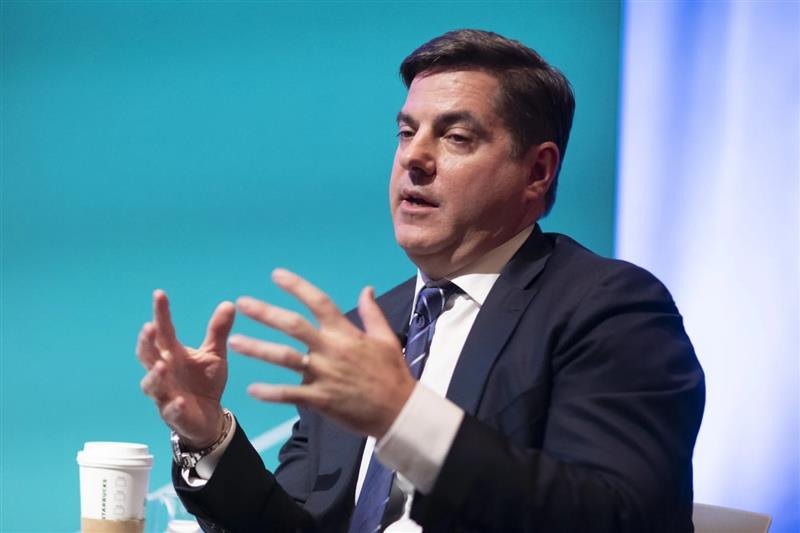
- Net worth: $13.8 billion
- Source of wealth: Oil & gas
Mike Sabel cofounded liquefied natural gas exporter Venture Global with former lawyer Bob Pender in 2013. The pair still own more than 80% of the company, which went public in January 2025 at a nearly $60 billion valuation.
Today, Sabel and Pender serve as Venture Global’s executive co-chairmen, though Sabel has taken on the role of sole chief executive since 2020, when Pender stepped down as co-CEO.
Venture Global has quickly emerged as one of the biggest names in the LNG export market, riding the global demand for U.S. natural gas shipments. Its IPO not only cemented its position in the energy sector but also secured Sabel’s place among America’s wealthiest. Prior to launching Venture Global, Sabel built his career as an investment banker experience which gave him the financial footing and deal-making acumen to scale one of the fastest-growing players in global energy infrastructure.
Edwin Chen
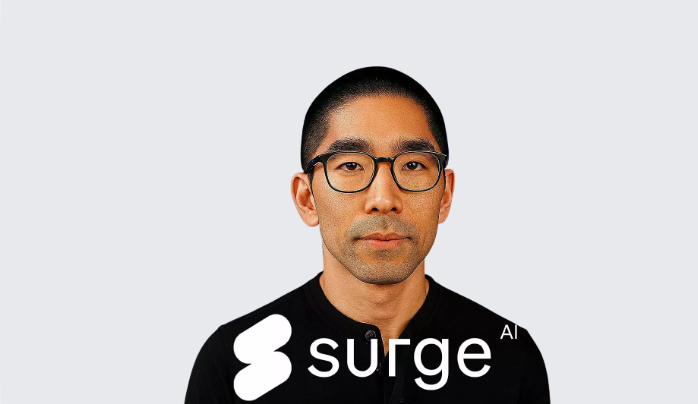
- Net worth: $18 billion
- Source of wealth: Artificial intelligence
Edwin Chen is the CEO of Surge AI, a data-labeling company he founded in 2020 to help firms train artificial intelligence systems. In just four years, Surge has become a quiet giant, pulling in $1.2 billion in revenue in 2024 from blue-chip clients like Google and AI research startup Anthropic.
In a rare feat for a billion-dollar AI business, Surge claims it has not raised any outside funding. That leaves Chen with an estimated 75% ownership stake, making him one of the wealthiest entrepreneurs in the fast-moving AI space. A Florida native, Chen cut his teeth at Twitter, Google, Facebook, and Peter Thiel’s hedge fund Clarium before striking out on his own.
He studied math, computer science, and linguistics at MIT, a mix of disciplines that now underpins Surge AI’s mission: bridging human expertise and machine learning at scale.
Adam Foroughi
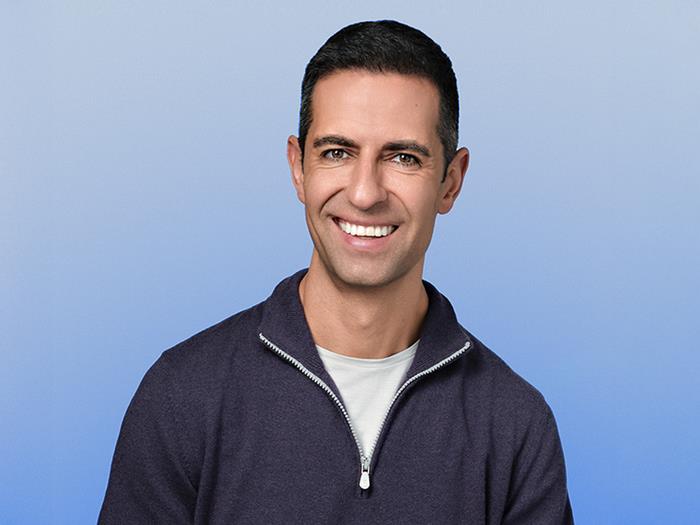
- Net worth: $21.7 billion
- Source of wealth: Advertising technology
Adam Foroughi is the cofounder and CEO of AppLovin, a Palo Alto–based company that makes mobile games and provides marketing services to app developers. Founded in 2011, AppLovin went public a decade later, and Foroughi now owns about 11% of its shares. The stock has surged in 2025, climbing 75.9% year to date to $601.09.
Foroughi bootstrapped AppLovin for years before attracting outside capital, with private equity giant KKR investing $400 million in 2018 to become its biggest backer. Born in Iran a year after the 1979 Revolution, he immigrated to California as a child.
After earning a degree from UC Berkeley, he worked as a derivatives trader and went on to start two marketing companies experience which laid the foundation for AppLovin’s rapid rise as a dominant force in mobile gaming and app monetization.



Technology and Trade. The two T’s that make billionaires.