
Nigeria’s cost of living varied widely across states in August 2025, with some regions offering significantly lower expenses for households and businesses.
The headline inflation for the nation slowed to 20.12% from 21.88% in July 2025.
According to the latest Consumer Price Index (CPI) data released by the National Bureau of Statistics (NBS), several states maintained a slower pace of price increases compared to the national average, making them more affordable destinations.


Persistent inflationary pressures have weighed on Nigerian consumers for much of 2025, particularly in urban centers where food, housing, and transportation costs remain elevated. Yet, pockets of relative stability continue to exist—mainly in states with strong agricultural output, lower population density, or less reliance on imported goods.
Food inflation remains the key cost driver for many Nigerian families, accounting for a large portion of household spending. States that manage to moderate food prices effectively tend to feel more affordable on the ground—even when headline inflation seems high.
The affordability ranking is based on headline inflation rates for August, which measure the year-on-year change in prices across essential goods and services. States with lower inflation rates tend to experience less upward pressure on household budgets, making them attractive for cost-conscious residents and potential investors.
Below are the 10 most affordable states in Nigeria for August 2025.
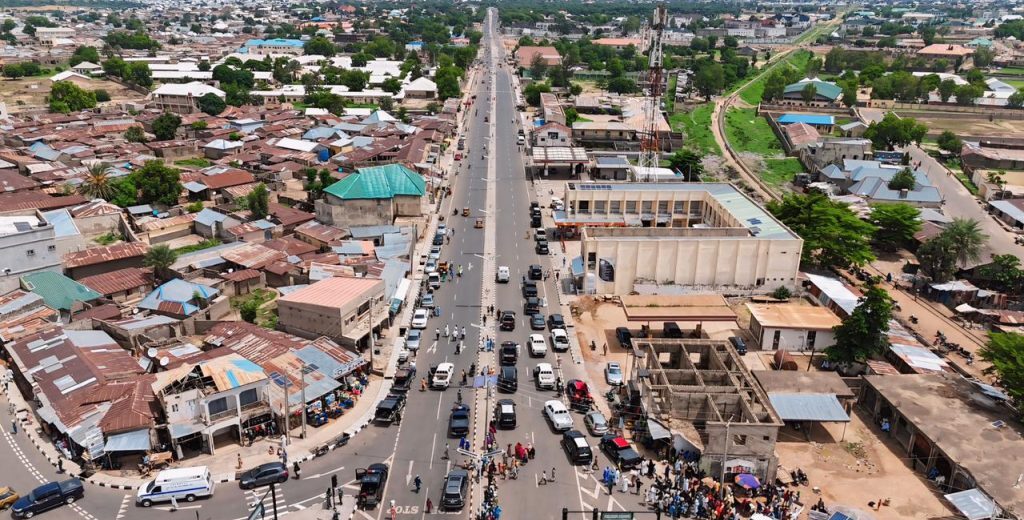
Bauchi State moved up from 8th position in July to 5th in August 2025 on the list of Nigeria’s most affordable states.
The state’s affordability improved as headline inflation dropped by 3.6 points, from 18.9% to 15.3%, while food inflation fell by 3.8 points, from 15.5% to 11.7%. These declines reflect stronger agricultural supply and lower transport costs. The timely release of state grain reserves in Bauchi city helped stabilize staple prices, while repairs on the Bauchi–Jos expressway eased freight delays. Additional support came from increased sales by community farming cooperatives and the distribution of subsidized fertilizer, both of which boosted affordability across food and non-food categories.
Earlier in June, Nairametrics reported that the Bauchi State Government approved a N45 billion upgrade of its state-owned fertilizer blending plant. The upgrade aims to expand production capacity to 45 tonnes per hour, ensuring greater availability of fertilizer for farmers ahead of the 2025 cropping season.
Alongside this, the government distributed 20 tractors across all 20 local government areas, with plans to provide an additional 40 tractors later this year under a loan scheme.
To further encourage agricultural participation, the state government has also introduced an incentive for civil servants. Workers on Grade Level 12 and below are now granted two days off per week during the farming season to engage in agricultural activities, a move designed to boost productivity and drive local economic growth.