

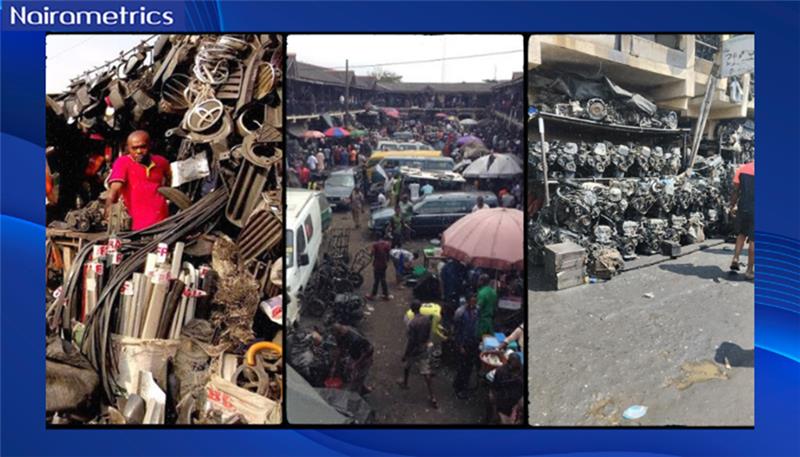
Lagos isn’t just Nigeria’s busiest city; it is the beating heart of the automobile spare-parts trade in West Africa. With more than 11 million registered vehicles on Nigerian roads, the country leans heavily on a vast aftermarket economy to keep cars and buses moving.
In this ecosystem, Lagos is the region’s largest hub for replacement parts, where every nut, bolt, and bumper finds a buyer.
For many car owners in the city, a breakdown is not the end of the road; it is the beginning of a familiar journey into a bustling market. From Ladipo to Trade Fair, clusters of traders offer everything from engines shipped in from Europe to wiper blades repackaged from Asia. These markets operate as both lifeline and last resort, supplying affordable alternatives to official dealerships.

Some are sprawling complexes large enough to rival shopping malls, while others are narrow rows of makeshift stalls where mechanics and traders squeeze in side by side. Their reach extends beyond the city’s borders, drawing buyers from across the country and even neighbouring West African states.
The demand for spare parts is driven by Nigeria’s vehicle import patterns. The latest foreign trade report by the National Bureau of Statistics (NBS) shows that the total value of passenger car imports stood at N1.26 trillion in 2024.
According to data from the official Website of the International Trade Administration, Japanese brands dominate the new and used vehicle market, controlling almost a third due to their perceived reliability among consumers. The United States accounts for 60% of the used vehicles, while the heavy vehicles are used units imported from the US, Germany, the Netherlands, and Belgium.
With every new import comes the certainty of future repairs, ensuring that Lagos’ spare-parts markets remain vital.
This article is based on field visits to major Lagos spare-parts markets and interviews with spare part traders and mechanics.
Their insights provide context for this piece. Each market has carved out a niche for itself, catering to either different vehicle needs or customer segments.
Here are the 7 major automobile spare parts markets in Lagos
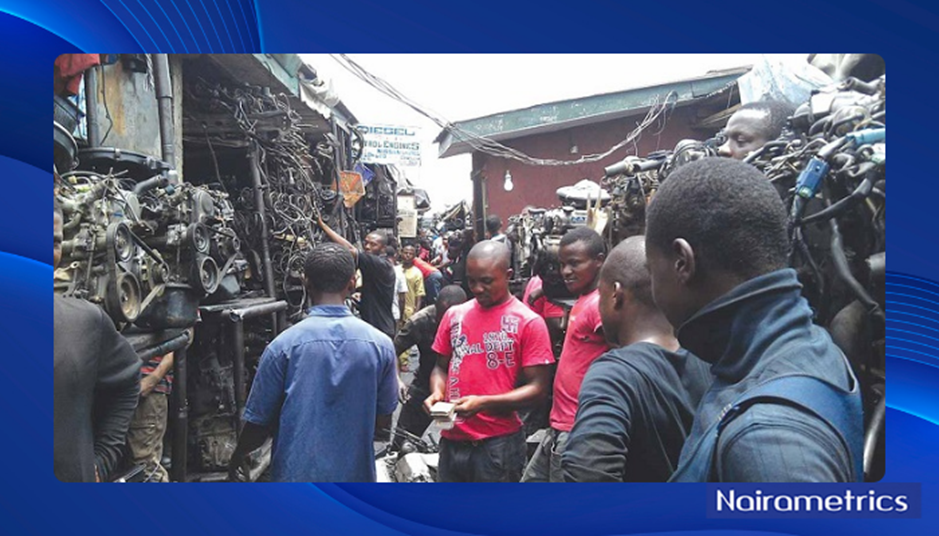
If Lagos had a capital for automobile spare parts, it would be Ladipo. This sprawling market in Mushin is a universe of its own, known primarily for Tokunbo parts sourced from dismantled vehicles abroad.
Ladipo Market started as a small cluster of mechanics and traders. It rapidly grew, fueled by the influx of used vehicles and Tokunbo parts from abroad.
The name “Tokunbo” itself is a Yoruba term that has become synonymous with imported second-hand goods. The market’s growth was largely driven by a demand for affordable parts for older vehicles, making it the preferred choice for many Nigerians.
Ladipo is arguably the largest spare parts market in Nigeria. Traders in the market told Nairametrics that the market serves as a hub for buyers across West Africa, who often come to purchase in bulk. In other cases, dealers ship parts directly to long-standing customers in neighboring countries.
Traders in Ladipo specialise in virtually every make and model. With rows of engines, gearboxes, bumpers, and lighting systems, Ladipo’s scale and variety make it a one-stop shop for both mechanics and vehicle owners. It is the go-to place when affordability and availability matter most.










Where do you put Owode Onirin along Mike 12 ikorodu axis? is it not also an auto spare parts market? Please include it in your write up except if you are now saying such is not qualify to be among those already mentioned by you.
Where do you put Owode Onirin auto spare parts market? Or is this not qualify to be among those listed by you? Please include it so as not to incur the wrath of those using the market.
Thank you