
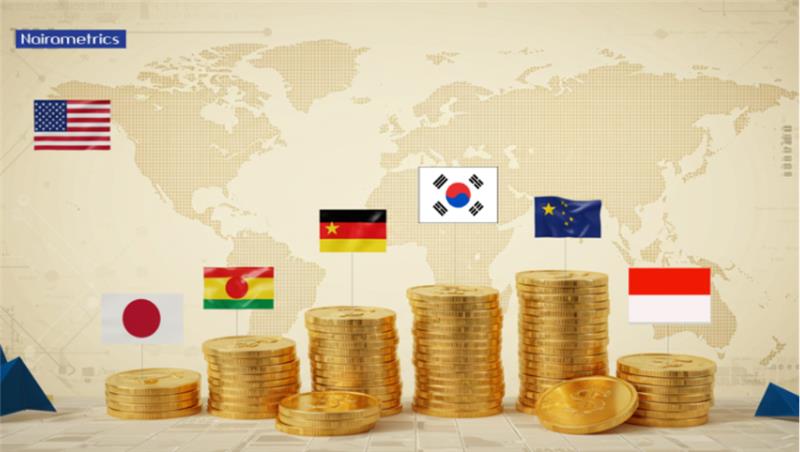
Global wealth is becoming increasingly concentrated, with a handful of countries dominating household assets in 2025.
From the United States to China and Europe, the world’s richest nations are not only economic powerhouses but also home to lifestyles and infrastructure that reflect their financial strength, whether in technology hubs, advanced transport systems, or cultural landmarks.
According to Forbes, which curated its ranking from UBS’s Global Wealth Report 2025 using data from the OECD, IMF, and World Bank, the U.S. and China together control more than half of global household wealth.


This concentration highlights the widening gap between advanced economies and developing markets. For investors and policymakers, the data reveals how global financial influence is consolidating in a few regions.
This article highlights the top 20 richest nations of the world based on total household wealth.

Total Wealth (USD Billion): 5,366
Home to more than 18 million people within just 41,850 square kilometers (16,160 square miles), the Netherlands is one of the most densely populated countries in the world, with 535 people per square kilometer (1,390 per square mile).
Despite its compact size, the country has become the globe’s second-largest exporter of food and agricultural products, a feat made possible by fertile soil, a temperate climate, and highly inventive farming practices. Its four largest cities—Amsterdam, Rotterdam, The Hague, and Utrecht serve as the cultural and economic pillars of this small but ambitious nation.
The Netherlands itself moves with a quiet rhythm. Iconic windmills turn slowly above tulip fields, while narrow canals lace through cities, mirrored by gabled houses and drifting houseboats.