
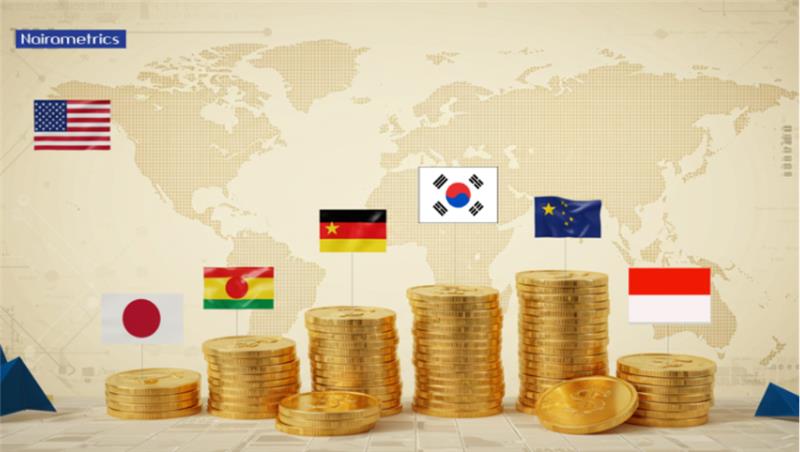
Global wealth is becoming increasingly concentrated, with a handful of countries dominating household assets in 2025.
From the United States to China and Europe, the world’s richest nations are not only economic powerhouses but also home to lifestyles and infrastructure that reflect their financial strength, whether in technology hubs, advanced transport systems, or cultural landmarks.
According to Forbes, which curated its ranking from UBS’s Global Wealth Report 2025 using data from the OECD, IMF, and World Bank, the U.S. and China together control more than half of global household wealth.


This concentration highlights the widening gap between advanced economies and developing markets. For investors and policymakers, the data reveals how global financial influence is consolidating in a few regions.
This article highlights the top 20 richest nations of the world based on total household wealth.

Total Wealth (USD Billion): 4,608
Russia, the world’s largest country, stretches across Eastern Europe and northern Asia, spanning eleven time zones and sharing borders with 14 nations. Home to more than 140 million people, it is Europe’s most populous country and the ninth-most populous worldwide.
Sixteen of its cities have populations exceeding one million, with Moscow standing as both the capital and Europe’s largest metropolitan area. St. Petersburg, the country’s second-largest city, remains its cultural heartbeat.
Russia’s vast geography encompasses 23 UNESCO World Heritage Sites, from the onion domes of Red Square to the icy expanse of Lake Baikal, the world’s deepest freshwater lake. The legendary Trans-Siberian Railway connects Moscow to Vladivostok, tracing a route through endless taiga, steppe, and mountain ranges.