
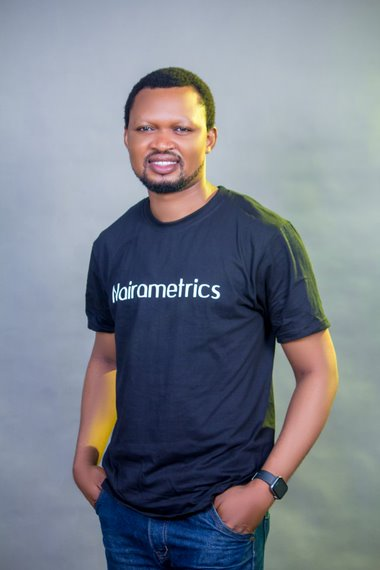

When Abdulhamid Hassan left Paystack to establish Mono in 2020, it was not just another startup born out of pandemic-era disruption; it was a bold bet on the future of Africa’s financial infrastructure.
Back then, open banking was not yet a buzzword in Nigeria, but Hassan saw what others didn’t: that data, not just payments, would power the next generation of fintech.
Today, five years later, Mono has processed over 150 billion transactions through its platform, served more than 7 million users, and expanded into Kenya and Ghana.


Yet, for Hassan, the real milestone is not just scale, it’s sustainability.
In this interview with Nairametrics, the Mono CEO speaks on the potential of open banking in Africa and the expectations as the Central Bank of Nigeria (CBN) plans to launch open banking in August.
Nairametrics: As a company powering open banking even before its official launch by the Central Bank of Nigeria, how open are Nigerian banks in terms of data sharing?
Abdulhamid Hassan: If you look at the US, Plaid is one of the biggest open banking providers in the world, and by the way, they’re also one of our investors. They started what open banking should look like, and I feel like in Nigeria, it would have been harder for us to do this if the banks were not receptive.
Mono is a consent-based data sharing platform. So, the customer must give consent that says, Okay, I want to give Renmoney my bank statement, so I can get a loan from them. And I think because of that, the banks have been very helpful.
They’ve been very open to that, and I think with the open banking that is coming up, it now makes it a much better relationship where we can now have revenue sharing. The banks can make money through this; the data provider can also make money through this.
Nairametrics: With the planned launch of open banking by the CBN in August, what are your expectations?
Abdulhamid Hassan: Our expectations are threefold. Number one, that more banks can then be open to allowing their customers to give their data easily. If you look at the fintechs, the majority of them have not been open as the banks. You would always think that the fintechs are always the ones that are open to a relationship. But it’s interesting to see that the banks are really more future-looking, more than some fintechs in Nigeria, and that’s why I really appreciate the banks in Nigeria.
So, for me, I think the approval by CBN will now make it mandatory for every financial institution to open up their system, and that is why it is exciting.
Number two, there will be stricter guidelines on who can access customer data, who can give data, because NIBSS will also have a registry of the licensed institutions that would be able to provide this data.
So, we are excited to see what the CBN and NIBSS will come up with in terms of the registry, to make sure that the people who are actually providing data are licensed and are regulated, and ensuring that there won’t be any funny play where people are able to access customer data without their consent.
Finally, we look forward to seeing the ecosystem more connected. So, those are the three things I am really excited to see.
Nairametrics: You said banks are open, but most fintechs are not. What do you think could be the reason for financial institutions now willing to share customers’ data?
Abdulhamid Hassan: Number one is because open banking levels the playing field. So, some may feel like if I share my customer data with these other businesses, they will know how many customers I have and how people are doing transactions.
But for me, I feel like if you are able to share your data, that means you are able to also see data coming from other financial institutions. So, it levels the playing field.
And I think the second one is security. But now with the regulation and with the guidelines that CBN already released for open banking, I think it will reduce that fear for banks because there is now a guideline on how to actually do this thing properly. And I think probably the third one is because you know, banks and financial institutions do not like doing anything that does not bring them money. So, it needs to make sense for them financially for them to put resources into it.
I think now that open banking is being regulated, it will make sense to them because now you can actually negotiate with the banks and say, Okay, for these API calls, we can share revenue.
Nairametrics: There have been talks about Mono pivoting from open banking, especially with the launch of your Owo API. What can you say about this?
Abdulhamid Hassan: We haven’t pivoted. If you look at Paystack when it launched its app, you wouldn’t say Paystack pivoted from providing card payment API to their consumer app. So, it’s more like the next phase of our plan.
When we started, we were majorly an API based company, but then we have seen that we have so many APIs that we have built that can actually make payments seamless for consumers in many ways.
If you look at WhatsApp, there are about 51 million Nigerian users on the app. How do we enable all these people who are having financial conversations?
A good example is you have people on your WhatsApp asking you for money; you have maybe like friends, family who talk about money on WhatsApp. Now, the way that works is that you have to leave WhatsApp and go outside WhatsApp to your bank app to do the transfer and then send them the receipt.
So, what we are saying is that look, there’s this new API that we have, which is powered by NIBSS Direct Debit, that allows us to be able to connect to your bank account and be able to debit it, such that you can link your bank account on WhatsApp. And then you can use your account to send money to people directly from WhatsApp.
So that is the idea. Basically, we are using our own APIs to build new experiences for consumers, and the good thing about this is that when people see that, oh, which API is powering this amazing solution, we will tell them that it is Mono. And then that can drive them to our business platform as well, where they can now use the same API to build solutions for their own business.
Nairametrics: Some believe Mono survived where others like Okra didn’t because of stronger financial backing. Is that true?
Abdulhamid Hassan: Not really, in fact, initially, Okra raised more than us. Stitch, another competitor from South Africa, raised about $100 million but had to exit the Nigerian market.
Mono and Okra have actually raised the same amount of money, which is $16 million. So, we have the same financial backing, but in terms of the product, we have a much larger product, we have a much larger API, and we are live in multiple countries.
One of the things I learned from Paystack was that you build a company by making sure that you are very close to your customers, listening to them, and building what they want.
Personally, I believe that the open banking market is going to be bigger than the card payments market. Open banking is going to be the biggest opportunity in Africa because of how it involves multiple things such as data, bank payment, and identity. All these three key things are what make online transactions safe, secure, and faster. And that’s why we are very, very bullish on this market.
Nairametrics: Are you saying it takes more than securing funding to survive in this market?
Abdulhamid Hassan: Yes, definitely, there are many companies that had raised millions of dollars and closed shop within two, three years, even less than that.
So, funding is just a minuscule part of it. The most important part is the founder, because building a company is very hard, it’s extremely hard. But what’s most important is that when it becomes really hard, can you keep pushing? Or you just raise your hand and say, Okay, I’m done?
You have to have that perseverance and say, Okay, this thing is hard, how do we solve it? And you have to be really excited about the product and what you’re building. I wake up every morning, I pick up my laptop, like, this is my life, basically. So that’s why it’s like, it’s a do or die thing.
Nairametrics: We’ve seen a lot of promising shutdowns due to no fault of the founders. Do you think the operating environment also has a role to play in all these?
Abdulhamid Hassan: I wouldn’t say so. I think the environment makes you. If you’re able to survive in African markets, you can survive anywhere. So, it’s not going to be easy, and that’s why you have to be able to pivot; you have to be able to listen to the market.
Imagine a world where you know that the market is terrible, but you’re opening up a new office; you’re embarking on a hiring spree. So, the market is bad, but you’re doing a lot of things that won’t contribute to your revenue, things that can kill your company.
I personally believe that when the market is tough, that’s when you actually see the companies that will survive, not when the market is thriving. When the market is thriving, everyone will feel like they know what they’re doing.
Nairametrics: Talking about markets, outside Nigeria, you currently operate in Kenya and in Ghana. How would you compare the three markets?
Abdulhamid Hassan: I think Nigeria is still the biggest and the best market for financial services, mostly because of the population and the eagerness of the environment.
For example, if you want to set up a fintech company in Nigeria, it’s much easier to do that in Nigeria than in Ghana or Kenya, right? I think Nigeria is open for market. I always tell people that look, Nigerian banks are one of the best financial institutions in the world, and that’s why you will see that for our solution, we don’t allow people to keep money with us. We don’t have a wallet. We don’t ask you to fund your wallet with us. We believe that the banks are the best place for you to keep your money.
We are only allowing you to use your bank accounts on messaging applications. So I think Nigeria is the best place for you to run a fintech company or to run a financial institution because of how the environment is open for business.
Although Kenya and Ghana are also good markets for us, the reason why we went to those markets is because we have customers in Nigeria that are launching in those markets, and they’re like, Oh, Mono, we already use you in Nigeria, can you help us provide financial data bank statements for the Kenya market? Can you help us access mobile money bank statements in those markets? And that’s why we go to those markets.
Every market that we enter, it’s not like, oh, let’s go and expand. And that’s one of the things that also kills companies, because they want to feel like they are big. You just keep expanding, expanding when there’s not really anything happening in those markets.
Nairametrics: Five years running, are you profitable, and what’s your revenue like?
Abdulhamid Hassan: So, last month, we actually got to a point where our revenue is covering all the payroll. So, we’re getting to the profitability, but we’ve already got into the first step, which is the fact that our revenue can sustain our operation. And that’s very key because that’s where you see companies fold up, because when they don’t get funding, they start looking for money to operate.
But now we are at a point where our revenues are covering our salaries and we are about 40 people.
We’re in different places, we have people in India, we have people in the UK we have a remote team, but we also have an office where people come into the office on Wednesday and every other day they work remotely.
So the business is going pretty well, but now we’re at a point of scale because this open banking regulation, like I mentioned, opens up the opportunity in a much bigger way. Now you won’t just connect to financial institutions, you can also connect to non-financial data. You think of insurance data, you think of mortgages and things like that.











You can’t handle mismanagement of funds and fraud without money laundering et al and you talk open banking… Why not just send us back to trade by barter… Please you people should be careful with the advice you give these fat men
With regards to the notion that if you can run a business in Nigeria, you can run it anywhere? That think that ideology is over exaggerated.
Well-done. Keep it up 👍