

Mass transit is the lifeline of Nigeria’s economy, connecting cities, enabling commerce, and transporting millions daily.
But behind the movement of people and goods across the country lies a powerful but often under-celebrated force: Nigeria’s locally owned transport companies.
While most of the sector is dominated by state-run bus services or operators working under local motor park licenses, a distinct category of transport companies has quietly scaled up across the country.

Built from scratch, these businesses started with humble beginnings: a few buses, a regional route, and a vision. Decades later, they’ve evolved into nationwide operations, boasting fleets of hundreds (even thousands) of vehicles that serve commuters, traders, and travelers across all 36 states and beyond.
From the busy terminals of Lagos to the far reaches of Sokoto and Calabar, these companies have turned inter-state transport into a structured, high-volume enterprise.
This report is not meant to set up a paradox or downplay the importance of state-run bus systems or informal motor park operators, which also play indispensable roles in Nigeria’s transport landscape. Rather, it highlights the specific contributions of private companies that have built scalable, formalized mass transit operations with verifiable footprints and significant economic impact.
It’s important to note that while there are many transport operators across the country, this story focuses on companies and founders for whom substantial and publicly verifiable data exists either through official websites, historical records, or independent points of contact within the industry.
These include companies with trackable operations, documented growth trajectories, and active engagement with customers and regulators alike.
Despite challenges like poor road infrastructure and rising fuel costs, these local transit giants have remained resilient, keeping the wheels turning for millions.
In this edition, we explore how Nigeria’s transport sector thrives on local ownership, innovation, and the drive to connect a nation on the move.

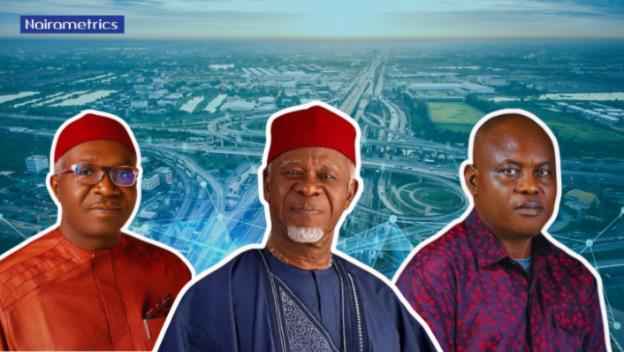
Founded in 1998 by Deacon Edwin Ajaere, God Is Good Motors (GIGM) set out to revolutionize road transport in Nigeria. Introducing practices such as online booking and luxury bus services, GIGM quickly distinguished itself as a leader in the sector. After Ajaere’s passing in 2009, his son Chidi Ajaere took over, modernizing the brand and launching GIG Mobility (GIGMOB), a distinct entity with its own assets and operations.
Under his leadership, GIGM expanded its reach and deepened its digital capabilities. Today, the company has a wide coverage area across Nigeria, operating in key cities including Lagos, Abuja, Benin City, Port Harcourt, Enugu, Owerri, Uyo, Warri, and more. It also runs cross-border routes to Ghana, offering intercity services to Accra and Kumasi, further cementing its status as a West African transport leader.
In 2012, the group launched GIG Logistics (GIGL) as a subsidiary focused on courier and delivery solutions. Headquartered in Lagos, GIGL offers real-time shipment tracking, e-commerce logistics, and on-demand delivery through its GIGGo app. With offices in Houston, Texas (established in 2017) and Ghana (2019), GIGL employs over 1,000 staff and continues to push the boundaries









Nigerian local business should be encouraged by all as a potential future hub that can help support the national economic challenges
Our government and citizens at large should support and give grant to any viable business striving to grow irrespective. That way. Nigeria economy will grow and GDP surge over time
Daniel
Perfect
This article is very one-sided, reporting only the Igbos in the business, representing Deborah’s allegiance and primary constituencies. What happens to other major operators, such as, Big Joe Motors operating from Benin City to other parts of Nigeria — Abuja, Lagos, Kano, Warri, etc.
Also the likes of Agofure was not mentioned.
I was to make the same observation, but I felt I didn’t know much about the transport business in Nigeria.