
 Follow Us on Google Discover
The passing of former Nigerian President Muhammadu Buhari sparked a wave of reflection across the nation.
As citizens weigh the impact of his eight-year administration (2015–2023), opinions vary widely on the economic legacy he left behind.
While many reports have chronicled the economic turbulence of two recessions, inflation spikes, and a volatile naira that defined much of the Buhari era, it is also important to examine how Nigeria’s wealthiest individuals navigated these stormy waters.
Despite widespread economic hardship, some billionaires not only stayed afloat but expanded their empires, while others faced setbacks due to shifting policies, regulatory crackdowns, and an uncertain investment climate.
In this piece, Nairametrics explores how Nigeria’s top billionaires (in dollar terms)performed during the Buhari administration. We examine their net worth trajectories, business growth (or decline), the industries they dominate, and how key government policies affected their standing in the country’s socio-economic landscape.
Aliko Dangote
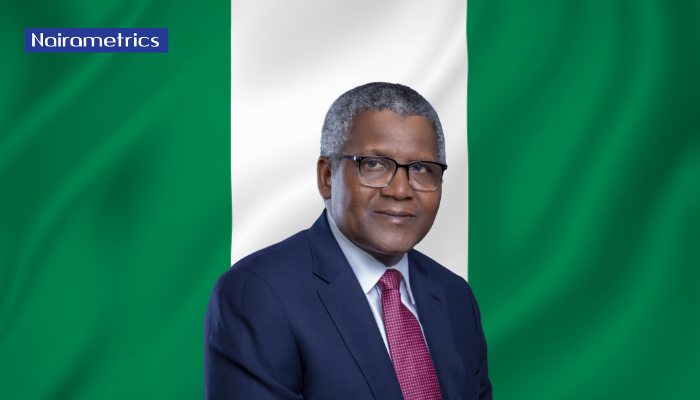
Net Worth Before Buhari: $22 billion
Net Worth After Buhari: $14.2 billion
Aliko Dangote, Africa’s richest man and founder of the Dangote Group, experienced a mix of significant business expansion, policy-related headwinds, and economic volatility, all of which shaped the trajectory of his vast empire.
Here’s a breakdown of how Dangote fared during Buhari’s administration:
Growth and Expansion
- Dangote Refinery Project
The highlight of Dangote’s ambitions, the Dangote Petroleum Refinery, was largely built under Buhari’s tenure. Though inaugurated just days before Buhari left office in May 2023, the massive $19 billion facility in Lagos became a centrepiece of Nigeria’s industrial narrative under his administration. It was hailed as a potential game-changer in reducing Nigeria’s reliance on imported refined petroleum products. - Manufacturing & Cement Boom:
Dangote Cement, the group’s flagship, expanded operations across Africa during this period. Despite foreign exchange restrictions and inflation, the company consistently posted strong revenues, driven by regional demand and strategic capacity expansions. - Diversification Strategy:
Dangote also broadened his footprint into fertilizer, with the commissioning of the Dangote Fertilizer Plant in 2022, one of Africa’s largest. This bolstered Nigeria’s local production capacity and earned Dangote significant praise from Buhari’s government as a national industrialist.
Challenges and Economic Pressures
- Forex Shortages & Naira Volatility:
Nigeria’s foreign exchange crisis worsened by falling oil prices, capital flight, and multiple exchange rate regimes created operational challenges. Import-dependent segments of Dangote’s business, especially in equipment and construction, faced cost pressures.
- Border Closures (2019–2020):
Buhari’s controversial land border closures aimed at curbing smuggling had mixed effects. While local manufacturers like Dangote’s flour and cement businesses benefited from reduced foreign competition, it also disrupted supply chains and trade across West Africa.
- Inflation and Purchasing Power:
Consumer-facing businesses within the Dangote Group had to adjust pricing models due to rising inflation, especially in 2020–2022. Still, the group’s dominance allowed it to maintain market share in key sectors.
- Networth Fluctuations
February 2015: Estimated at around $22 billion, according to Forbes. But closed at around $17 billion by Dec 2015.
2019-2020 Pandemic Dip: Fell to around $8 to 9 billion due to global market contractions and naira devaluation.
2022–2023 Recovery: Rebounded to $14.2 billion, supported by strong performance in cement and the nearing completion of the refinery.
Final analysis: Net loser
Mike Adenuga
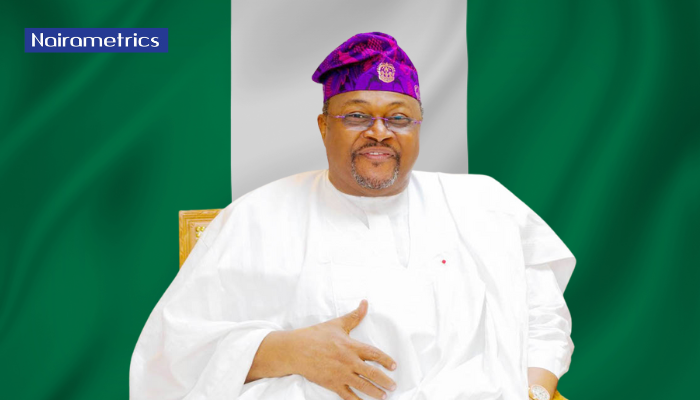
Net Worth Before Buhari: $10 billion
Net Worth After Buhari: $6.1 billion
Over eight years of economic volatility and policy experimentation, Adenuga kept a low profile, yet his business footprint deepened and consolidated across sectors central to Nigeria’s economic survival, telecommunications and petroleum.
Though less visible in public forums than his peers, Adenuga’s empire weathered the economic headwinds of Buhari’s presidency.
Performance
Under Buhari’s tenure, Glo grew into Nigeria’s second-largest mobile network provider by subscriber base, trailing only MTN. Despite intense competition, the company held on to over 55 million subscribers by 2023, supported by aggressive pricing strategies, expansive data infrastructure, and strong rural network penetration.
- The Buhari administration’s push for a digital economy, led by the Ministry of Communications and the National Digital Economy Policy launched in 2020, played to Adenuga’s advantage. With surging demand for internet services during the pandemic and a young, mobile-first population, Globacom saw record increases in data consumption, especially in Nigeria’s underserved areas.
Glo’s submarine cable system, Glo-1, one of the first privately owned trans-Atlantic cables in West Africa, became even more critical to regional connectivity, positioning Adenuga as a key enabler of Nigeria’s digital backbone.
- In 2021, Conoil Plc reported double-digit profit growth, boosted by rising crude prices and cost efficiencies, a rare bright spot in Nigeria’s downstream oil sector at the time.
Net worth fluctuations
- 2016: His net worth peaked at $10 billion, making him the second-richest man in Africa at the time.
- 2018: It plunged to $5.3 billion, driven by naira devaluation and oil sector instability.
- 2019: Rebounded to $9.2 billion as oil prices rose and Glo’s market share improved.
- 2020: Fell again to $5.6 billion amid COVID-19 disruptions and renewed naira pressure.
- 2022: Rose to $7.3 billion, reflecting improved oil revenues and renewed investor confidence in the digital economy.
- 2023: It dropped again to $6.1 billion at the end of the year.
Final analysis: Net loser
Abdulsamad Rabiu
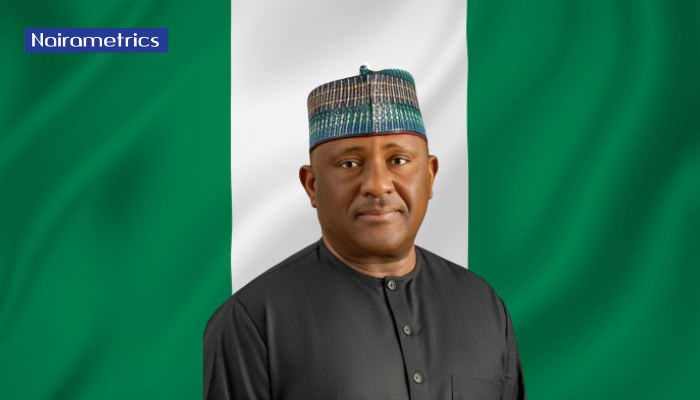
Net Worth Before Buhari: $1 billion
Net Worth After Buhari: $8.2 billion
In the shadows of Nigeria’s better-known industrial giants, Abdulsamad Rabiu, the Kano-born founder and chairman of BUA Group, spent the Buhari years methodically expanding his empire across cement, sugar, energy, and food processing.
The cement industry, which became a cornerstone of Rabiu’s fortune, saw major growth under Buhari’s administration, largely driven by the government’s heavy infrastructure push and border closure policies between 2019 and 2020.
BUA Cement, the group’s flagship unit, expanded production capacity aggressively, opening new plants in Edo and Sokoto states. By 2021, BUA Cement had become Nigeria’s second-largest cement producer, with a valuation of over N2.5 trillion on the Nigerian Exchange. The company’s stock became one of the strongest performers on the local bourse, helping to significantly boost Rabiu’s net worth.
The Buhari government’s Buy-Nigerian agenda and emphasis on infrastructure, including roads, bridges, and housing, created favourable market conditions. And while Dangote Cement remained dominant, BUA’s low-pricing strategy, regional footprint, and capacity expansions allowed it to thrive without direct confrontation.
Rabiu also scaled operations in BUA Foods, which combined the group’s sugar, flour, pasta, and rice units. The company debuted on the stock exchange in early 2022 and was well-received by investors seeking exposure to Nigeria’s food sector during a time of soaring inflation and heightened food insecurity.
In energy, BUA signed deals to build gas-powered plants and invested in refinery projects and renewable energy initiatives, including a solar-powered industrial cluster in Akwa Ibom. These expansions aligned with the Buhari government’s efforts to promote alternative energy and reduce reliance on imported fuels.
Net Worth: The Fastest Rise Among Nigeria’s Billionaires
Abdulsamad Rabiu’s wealth grew faster than any other Nigerian billionaire during the Buhari years. According to Forbes:
- 2015: Estimated at $1 billion
- 2020: Climbed to $3 billion, following the expansion of BUA Cement
- 2021: Reached $4.9 billion after BUA Cement’s IPO
- 2022: Soared to $7.0 billion, buoyed by BUA Foods’ listing and increased market share
- 2023: Peaked at $8.2 billion, making Rabiu the third-richest person in Africa and solidifying his place in the global billionaire class.
Final analysis: Net gainer
Femi Otedola
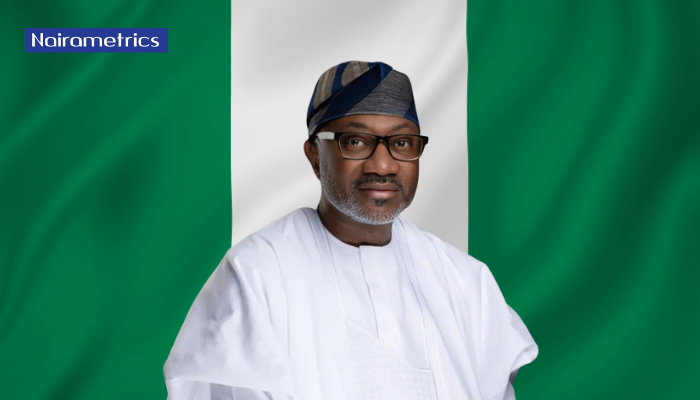
Net Worth Before Buhari: $1.8 billion
Net Worth After Buhari: $700 million (dropped out of Forbes)
During President Muhammadu Buhari’s eight years in office, many of Nigeria’s billionaires either appreciated or depreciated in their net worth. But Femi Otedola, the oil magnate turned investor, took a different route, one of the high-stakes divestments, major exits, and calculated re-entry into corporate influence.
Otedola, once the face of Nigeria’s downstream oil sector, used Buhari’s presidency to build, liquidate, pivot, and reinvent.
Forte Oil Sell-Off
In 2019, Otedola’s Forte Oil Plc sold a 17% equity stake to Mercuria Energy Group, a Swiss commodity trading giant. The strategic alliance was designed to give Forte Oil access to global crude and refined product markets, a key move as Nigeria’s petroleum sector grappled with subsidy reforms and supply chain disruptions.
At the time, analysts estimated the deal earned Otedola an additional $200 million, offering both capital liquidity and global credibility. The partnership placed Forte Oil in a stronger trading position just as Buhari’s government began restructuring the downstream sector and grappling with FX restrictions.
First Bank, Geregu, and the Public Markets
In 2021, Otedola staged a high-profile return not through oil or telecoms, but through finance. He quietly acquired a 7.57% stake in First Bank of Nigeria (FBN Holdings), triggering a corporate chess match that shook Nigeria’s oldest bank to its core.
The move initially through open-market acquisitions later saw Otedola emerge as the single largest shareholder in the 130-year-old institution. Though he did not hold a board seat, his presence was felt across the bank’s leadership and strategic direction.
In 2022, he took Geregu Power Plc, one of his few retained energy assets, public on the Nigerian Exchange, the first power-generation company to be listed.
Net Worth and Market Position
Femi Otedola’s wealth, unlike his counterparts in cement or telecoms, was shaped more by strategic exits and capital gains than by expanding industrial capacity. According to Forbes and local market estimates:
- 2015: Estimated net worth of $1.8 billion, largely tied to Forte Oil
- 2019: Fell to $1.1 billion following divestment and restructuring
- 2020: Dropped further to $700 million, amid economic disruption and portfolio adjustments
- 2022: Rose again to over $1.4 billion, buoyed by equity positions in FBN Holdings and Geregu Power
- 2023: His net worth dropped below the billionaire threshold to about $700 million and was not ranked on Forbes list of billionaires. He returned to the rankings in 2024 with a $1.2 billion net worth.
Final analysis: Net loser(dropped)
While most Nigerian billionaires saw declines in net worth terms driven by naira depreciation, inflation, and economic headwinds, Abdulsamad Rabiu bucked the trend, using strategic expansion and public listings to dramatically grow his wealth. No newcomers entered the billionaire ranks under Buhari, and Otedola notably fell off before partially recovering afterwards.
Using exchange rates N200/ dollar in 2015 and N 465/ dollar in 2023, the billionaires lost in dollar terms, but gained in Naira terms.
But the stock market gained both in Naira terms.
This means “poorer” billionaires and richer rest of the investors.
This implies better wealth spread, and probably an expansion of the wealth class and maybe the middle class.
This probably explains why aviation flights and vehicle registrations hit an all time high by 2022.
More people could afford this
Note: Buhari is dead. Let’s reduce the biases now and try and keep the analysis honest and facts based. No more political, ethnic or religious scores to gain.
Did you notice that the business that has made Dangote double his wealth in 2024 was built between 2017 and 2023? Under Buhari? With immense FG support in cash, policies etc?
That’s a true wealth building legacy