Follow Us on Google Discover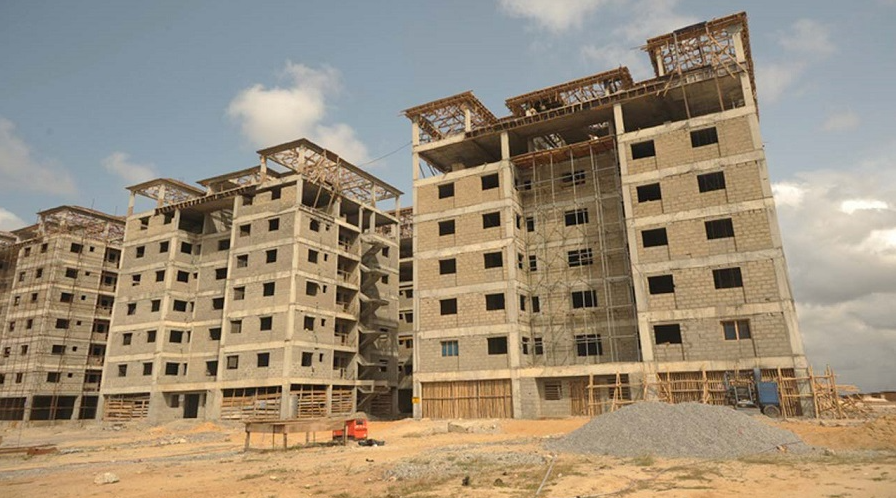
Nigeria’s housing deficit currently stands at 28 million units, according to data from the Federal Mortgage Bank of Nigeria (FMBN). According to the Central Bank of Nigeria, it will take an investment of about $46.7 billion over 20 years to meet the country’s housing demand.
As of today, Nigeria imports 90% of the materials used in construction across the country. This heavy reliance on imported inputs, along with the foreign currency crisis in the country, has widened Nigeria’s housing gap, making housing sufficiency dreams a daydream.
Considering this, it is crucial for developers to find more affordable yet durable local building materials to satisfy the growing population.
While materials like cement have been common in Nigeria, the constant rising costs of cement in the country pose a challenge to the demand for affordable houses.
In this article, we have highlighted some alternative building materials that are cheaper than cement and suitable for construction in Nigeria.
Recommended reading: Innovative Financing Pathways for Affordable Housing
Alternative building materials
-
Laterite
Laterite is a soil rich in iron and aluminum that forms in hot and wet tropical areas.
It is a cost-effective material, especially in Kano, Kaduna, Bauchi, Gombe, and Sokoto in the northern part of Nigeria, where it is readily available, reducing transportation and overall construction costs. Laterite is a very good alternative to cement in many ways. Environmentally, the extraction and use of laterite have a lower carbon footprint when compared to cement, making it a more sustainable choice for construction projects.
In Nigeria, laterite is used in various forms. The most common application is in the form of laterite bricks, which are made by cutting the soil into blocks and then sun-drying. These bricks can be used for walls without the need for plastering, offering a distinctive aesthetic and a naturally cool interior. It is ideal for Nigeria’s hot climate, and it can also be mixed with cement or lime to enhance its strength and durability.
Given the ongoing housing challenges in Nigeria, the use of laterite as an alternative building material is an affordable and sustainable solution.
-
Mud bricks
Mud bricks, made from a mixture of clay, sand, straw, and water, have been used for centuries in Nigeria. They are inexpensive, environmentally friendly, and offer good thermal insulation properties, making them suitable for the Nigerian climate. Mud bricks can be sun-dried or kiln-fired to enhance their strength and durability.
These bricks are a viable alternative for rural areas and low-cost housing, making those houses more affordable in those regions.
-
Bamboo
Bamboo, a fast-growing and renewable resource, offers a cheaper alternative to traditional building materials like wood and steel. In Nigeria, bamboo can be used for structural framing, flooring, and wall cladding. Its natural strength and flexibility make it a viable and cost-effective option for various construction applications.
Bamboo has recently been revolutionized into Cement Bamboo Frame Technology (CBFT). This frame system combines bamboo with metal connections and mortar-cement plaster, enabling the construction of stronger homes in less time. The technology has been gaining traction in Asia and, as such, can be incorporated in Nigeria as an alternative building material.
-
Rammed earth
Rammed earth construction involves compacting a mixture of clay, sand, and gravel between forms to create solid walls. This ancient building technique is durable, cost-effective, and well-suited to the Nigerian climate. Rammed earth structures offer excellent thermal mass properties, reducing the need for artificial cooling and heating, thus lowering energy costs.
In 2018, AsaDuru secured a contract in Nigeria to construct a 972m2 wall using stabilized rammed earth (SRE). This project was commissioned by the African Centre of Excellence for Genomics of Infectious Diseases (ACEGID) at Redeemer’s University.
This project shows the application of rammed earth construction in contemporary building projects within the country.
-
Recycled plastic bricks
Given the growing concern about plastic waste in Nigeria, recycling plastic into building materials has emerged as a viable solution. Recycled plastic bricks offer durability and insulation and are resistant to water and pests. Utilizing recycled plastic in construction not only reduces environmental pollution but also provides a cost-effective alternative to traditional building materials.
Brickify, a Nigerian company, specializes in recycling plastic waste to produce paving blocks and bricks. These products are utilized in the construction of roads and affordable housing, further promoting sustainable and innovative building practices in Nigeria.
-
Bamboo composite
Bamboo composite boards, made from bamboo fibres and resins, offer a lightweight and durable alternative to traditional plywood and timber. These boards are moisture-resistant, and termite-proof, and can be used for various construction applications, including flooring, roofing, and wall panels.
-
Straw bales
Straw bales are a sustainable and cost-effective alternative building material in Nigeria. They are made from agricultural byproducts, reduce waste, and offer excellent natural insulation, leading to energy savings. Their affordability and fire resistance make them a practical choice for eco-friendly construction projects in the country.
-
Fly ash bricks
Fly Ash Bricks are made from recycled fly ash, a byproduct of coal combustion. These bricks are lightweight, strong, and offer better thermal insulation properties compared to traditional clay bricks. In Nigeria, they serve as a suitable alternative building material by utilizing industrial byproducts, reducing waste. They offer durability, better insulation, and cost-effectiveness, aligning with sustainable building practices and potentially lowering construction costs nationwide.
-
Compressed earth blocks (CEB)
Like mud bricks but with a higher compression rate, CEBs are made from clay, and sand, and are a stabilizing agent, offering strength and durability.
-
Coconut coir
A natural fibre extracted from coconut husks, coconut coir can be used as a reinforcement material in concrete and as a substitute for traditional insulation materials.
While cement remains a popular choice for construction in Nigeria due to its availability and versatility, these alternative building materials offer cost-effective and sustainable alternatives.
Incorporating these affordable building materials into construction projects in Nigeria not only saves money but also fosters sustainable development and supports local communities. As Nigeria’s construction industry continues to grow, adopting these cost-effective alternatives to cement will play a crucial role in shaping a more affordable, sustainable, and resilient built environment.