

- Nigeria has the potential to become a global agricultural powerhouse, but factors like herder-farmer clashes and the presence of middlemen hinder its growth.
- Middlemen contribute to price fluctuations, artificial scarcity, limited access to quality produce, and unfair trade practices in the agricultural sector.
- Solutions include empowering farmers through favorable policies and farmer-consumer linkages, as well as leveraging technology to reduce wastage and improve the lifespan of perishable produce.
For years, Nigeria has been a leading player in the agriculture sector in Sub-Saharan Africa. This is despite the fact that agricultural products are not the country’s major export. Nigeria has an arable land area of 34 million hectares.
From the east to the West, North, and South, different kinds of agricultural produce are cultivated. With her vast agricultural resources, Nigeria has the potential to become a powerhouse in the global agriculture market.
However, the country has been plagued by several factors, including herder-farmer clashes in different parts of the country. This is inimical to the growth of agriculture, and it has led to rising food inflation.

It’s now common knowledge among the average Nigerian that the prices of foodstuffs change in the country; the possibility of buying a pan of Garri for the same price as the previous week is so slim that the tendency of a price increase is high.
One of the major factors, which is the main focus here, affecting agriculture in Nigeria is the presence of middlemen. Middlemen have long been involved in the agriculture chain. They mostly serve as a link between the farmers and the consumers.
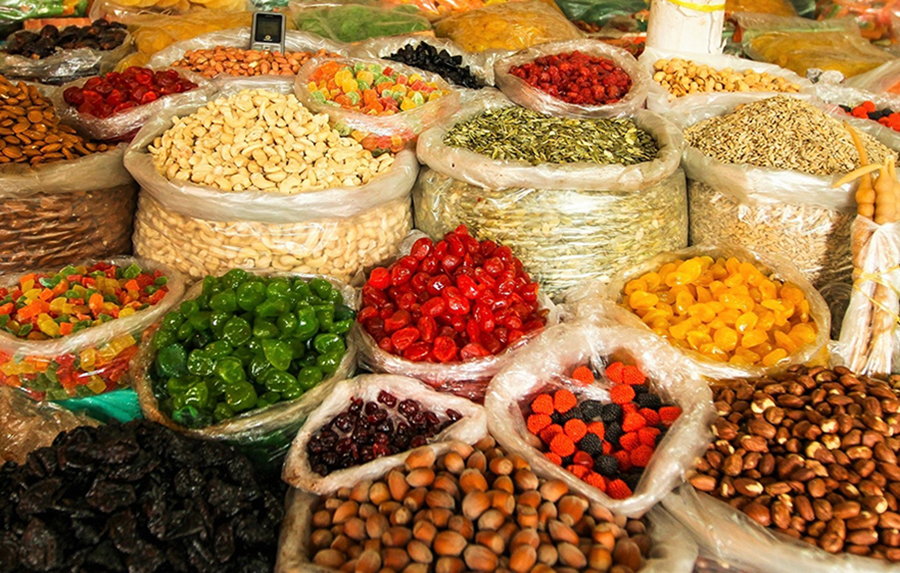
The nature of Nigeria has made it quite impossible for urban areas to produce sufficient food to feed the people. This has led to major food production in rural areas. Social and infrastructure problems, like transportation and access to markets, made the presence of middlemen a necessity.
Historically, middlemen have acted as intermediaries and helped bridge the gap between the other players in the chain. They also provide logistical support and sometimes financial support to help improve the agriculture sector. In the 1960s and 1980s, Nigeria was one of the leading exporters of products like palm oil and groundnut.
These periods saw the rise of middlemen as agricultural produce was not only consumed locally but exported to different parts of the world. Despite all this, their presence is currently affecting the agriculture system, and their actions affect the sector more negatively than positively.
Price fluctuation
As stated earlier, the prices of foodstuffs on the market are subject to change at any time. In the last year, the prices of some foodstuffs have risen by as much as 100%, leaving the average Nigerian unable to afford them. One of the privileges of middlemen is that they have access to information in the market.
With this advantage, they determine the price of any food on the market. The price fluctuation has led to debt on the part of some retailers, who sometimes buy at a high price only to later sell at a much lower price or sell at a lower price and have to buy from the market at a high price.
Artificial Scarcity
Scarcity is the unavailability of certain goods. With middlemen, there’s artificial scarcity, which is the hoarding of some foodstuffs for personal and selfish gain. Some middlemen will go ahead and buy farm produce from farmers to keep rather than sell. With this, there will be a high demand for that product, and that will automatically lead to a high price.
There’s a Yoruba aphorism that says, “Once good has been sorted from poverty, the poverty lessens.” This is the story of the average Nigerian, who has to spend as much as 50% of their income on food, coupled with other expenses, every month.
Access to quality and affordable produce
The actions of price fluctuation and artificial scarcity will lead to this. When the average person does not have the purchasing power to buy what’s on the market, he looks for alternatives. It explains the concept that when the desirable is not available, the available becomes desirable. When you do not have the financial capability to buy what you see on the market, you have to look for options to survive.
With agriculture, the options are lower in quality and often detrimental to the health of those who consume them. The average food market in the country is saturated with agricultural produce that is poorly produced or processed.
Unfair trade practices
There are unfair trade practices with middlemen. Due to certain factors, farmers sometimes have to sell their produce for little or no profit to avoid wastage and are often at the mercy of middlemen who sometimes pose as helping the farmers. Also, there’s a monopolistic tendency where farmers who try to fight the system are backlisted and have to devise means to get their produce to the market.
The way out
Nigeria has to urgently address this issue. Aside from the economic effect, many farmers are forced to look for alternatives.
One of the solutions is for the government to create policies that empower farmers. Policies that favour the farmer, such as empowerment and farmer-consumer linkages, should be created. This will greatly improve the output of agriculture. Also, the importance of technology in a sector like agriculture is crucial. Nigeria is home to perishable foods, which means the lifespan of these produce is limited and can lead to wastage within a couple of days. With technology deployed in the sector, wastage will be eliminated, the products will have a longer lifespan, and farmers will have nothing to worry about.










Am an Agricultural Extension Officer by Profession and quite agree with you about the actions of middle men and also I think Goverment should revive and empower Agricultural pricing commodity board’s to regulate and control the prices of Agricultural products to make it a wi win for both farmers and consumers
Thank you for the post, Opeoluwa!
So much needs to be done in Nigeria’s agriculture. One area the government needs to play is policy formulation. Over the years, it has become clear that the government cannot stand aloof on this subject.
Also, technology will.help.achieve progress faster. Farmers will need to embrace technologies that are relevant to them.