Follow Us on Google Discover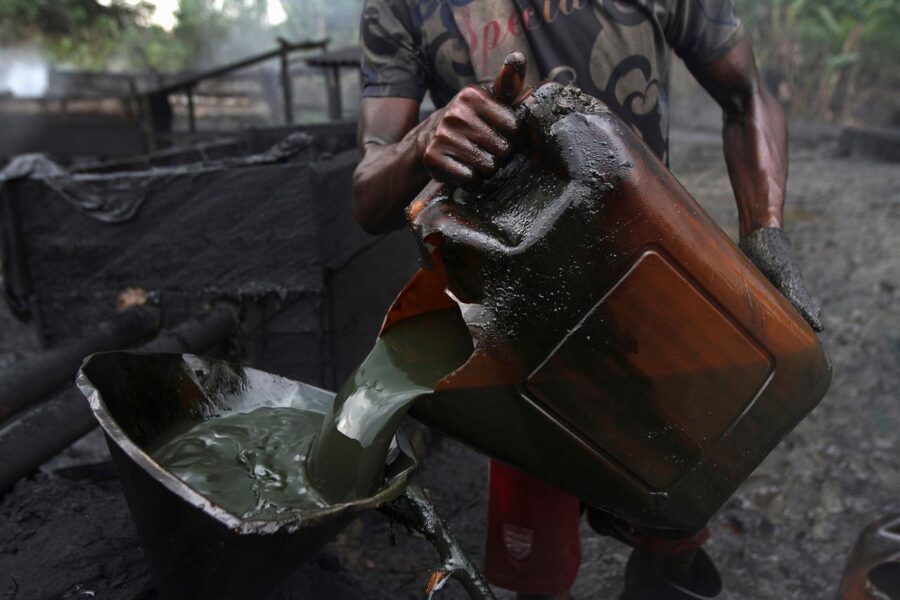
Africa’s largest economy is already been dogged by corruption claims, lack of transparency, and environmental damage associated with its oil industry. Oil theft is taking the problem to a whole new level.
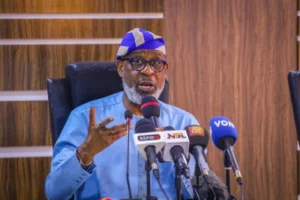
Pastor Enoch Adeboye, the General Overseer of the Redeemed Christian Church of God, had a rare outburst during Sunday’s sermon when he spoke about the massive theft of crude in Nigeria’s Niger Delta.
About 150,000 barrels of oil a day were stolen last year, costing the government $5 billion.
Why do we lose 95% of oil production to oil theft? On social media recently, Nigerian billionaire, Tony Elumelu, whose investment firm owns Heirs Holdings with exposure to the Nigerian oil industry, said, “There is no doubt that Nigeria will not reach its OPEC production quota unless it stops the stealing.
“Who is stealing crude oil?”? They are not everyday people. They are the elite of society, and we must fight them together.
Mele Kyari, NNPC boss, said, “When we fight them, it’s for the survival of us all.”
With organized criminal gangs making off with billions in stolen crude, Africa’s richest economy faces its worst oil crisis in years.
Criminal gangs steal billions in stolen crude oil, causing the country’s worst oil crisis in years. For a country whose oil industry generates about two-thirds of its revenue, theft is no small matter.
Oil stolen from Nigeria and the money generated from it pollute markets and financial institutions overseas, posing reputational, political, and legal hazards. Parts of the legitimate oil industry are also being compromised.
Chatham House, an independent think-tank, says the money is even being laundered through international banks.
The movement of Nigeria’s stolen black liquid gold
Once it leaves Nigerian waters, crude oil can move in complex ways. Oil is loaded onto ships in multiple parcels or transferred between ships by buyers. Many buyers blend different grades of oil together and store large quantities. The use of any of these methods is not suspicious per se, but stolen oil can be laundered this way into the legal market.
- As potential destinations, the report suggested the United States, several West African nations, Brazil, China, Singapore, Thailand, Indonesia, and the Balkans.
- In addition to stolen oil, sold to Asia, Latin America and the United States, the process is marked by dirty profits for criminals as well as corrupt government and industry figures.
- There is awareness of the problem outside Nigeria and occasional interest at the highest levels of government.
- Despite this, Nigeria’s trading and diplomatic partners have not taken meaningful action, and no stakeholder group inside the country has demonstrated sustained and serious engagement with the issue.
The result is that international actors cannot fully assess whether Nigerian oil theft harms their interests due to the lack of intelligence
- Before committing major resources to combating Nigerian oil theft, governments must learn more about the problem.
- For Nigerian oil to be curtailed significantly, it is likely that outside governments will have to join forces.
- Neither Nigeria nor other countries can stop trade alone, and going it alone is of limited value. In theory, a multi-state campaign could reduce the number of economies and financial centres, and raise the price of stealing.
Tracking the money
Foreign banks and other channels are used by oil theft networks in Nigeria to store and launder their earnings. Thieves can conceal their funds in many ways.
- The various methods include bulk cash smuggling, delayed deposits, the use of middlemen, shell companies and tax havens, bribery of bank officials, and the use of cash to buy luxury goods.
- Several East, West, and Southern African countries were mentioned in interviews as possible money-laundering hot spots, as well as Dubai, Indonesia, India, Singapore, the United States, the United Kingdom, and Switzerland. Most of the money appears to end up in Nigeria; some escape the financial system completely.
Risks associated with security
Oil theft has historically been both a symptom and a cause of violent conflict in the Niger Delta. Law enforcement agencies going after the wrong people, rival theft networks setting up turf wars, or politicians using stolen oil to finance elections could destabilize the region once again.
- By strengthening other types of organized crime that tend to undermine governments, Nigerian oil theft could harm wider strategic interests in the Gulf of Guinea in the long run. The top concerns are piracy, drug trafficking, and terrorism
- Since due diligence practices vary with size, capacity, nationality, budget, and location, there is a good chance that at least some refiners are buying stolen crude without knowing it.
- Refining and shipping companies could sanitize markets if a multi-stakeholder scheme forced them to vet Nigerian oil.
- But if it were poorly designed or insufficiently complemented by other measures, such a program could be costly and encumbered by red tape.
Possible solutions
Litigation against oil thieves and their buyers.
In addition to criminal and civil punishments, foreign governments could prosecute oil thieves for piracy, pillage and other violations of law.
- Indications suggest government knows some of the oil thieves but are hesitant to prosecute. However, as things degenerate, it is inevitable that a scapegoat will be singled out.
- It is possible for Nigeria to go after oil thieves in foreign courts for violating its law, as some have done with the oil companies.
- If the cases are to produce more than headlines, officials should follow a few best practices for prosecuting organized criminals.
Keep an eye on the money
- Controlling oil theft begins with following the money trail.
- Through cooperation with international law enforcement agencies like the Interpol, the flow of money between buyers and sellers of stolen oil can be traced forcing oil thieves to either abandon the practice or pressured into making even bigger mistakes that will lead to them being caught.
- In sub-Saharan Africa and beyond, tax law enforcement allows the business to thrive on profits. Tax authorities also have a role to play tracking illicit financial flows through the banking system.
Asset forfeitures and anti-money laundering actions.
In nearly any cross-border strategy, we should convict oil thieves of money laundering and seize their assets.
- It would be difficult to build strong cases, and ideally, Nigeria’s anti-corruption police could assist other governments in tracking down the money.
- While Nigeria is paralysed, that shouldn’t preclude other jurisdictions from acting when they have adequate financial intelligence.
Increasing coastal security in Nigeria
Despite President Muhammadu Buhari’s deployment of NNPC’s Group Managing Director, Mallam Mele Kyari, in the Niger Delta to assess the situation and put a stop to it, more needs to be done.
- In order to stop this menace, the Nigerian navy and the security agencies must receive adequate funding, utilize them properly in protecting Nigeria’s costal areas from oil smugglers
- In addition, the oil operators and oil-producing communities must also play a vital role in supporting security along the oil infrastructure.