Around the World
Reports: China may defer loans owed by Nigeria and others
The Chinese have always done their lending on the idea that individual projects contribute to structural transformation and economic development.
Published
5 months agoon
Africa has been the delight of most foreign investors and they have been taken advantage of several opportunities especially foreign portfolio investments. But when it comes to debt one country ranks top in Africa.
China is at the fore of Africa’s debt drive, making the Asian nation Africa’s largest bilateral creditor, as it has given the continent loan worth $152 billion in 18 years (between 2000 and 2018.)
With such huge loan, a lot of critics are concerned over how feasible it would be for African nations to refund the credit with the advent of Coronavirus, which has eaten deep into the fabrics of the nations.
READ MORE: COVID-19: Could Africa’s Awakening be the Silver Lining?
Head, China Africa Research Initiative, Johns Hopkins University, Deborah Brautigam, explained that in a Bloomberg article that it is likely for China to agree to delay but not forgive its $152 billion of loans, an approach at odds with prior forbearance plans from groups including the Paris Club. Her reason:
“The Chinese have always done their lending on the idea that individual projects contribute to structural transformation and economic development. Those projects might be good projects and viable projects to get countries to a new stage where they might be in a position to repay the loans.”
The $152 billion loans: The loans include facilities made between 2000 and 2018. While many have been repaid on schedule, she explained that it shows how much China’s lending has grown in Africa amid a push for political and economic clout through an overseas infrastructure investment plan, which was started by President Xi Jinping in 2013.
READ ALSO: Nigeria needs a bailout
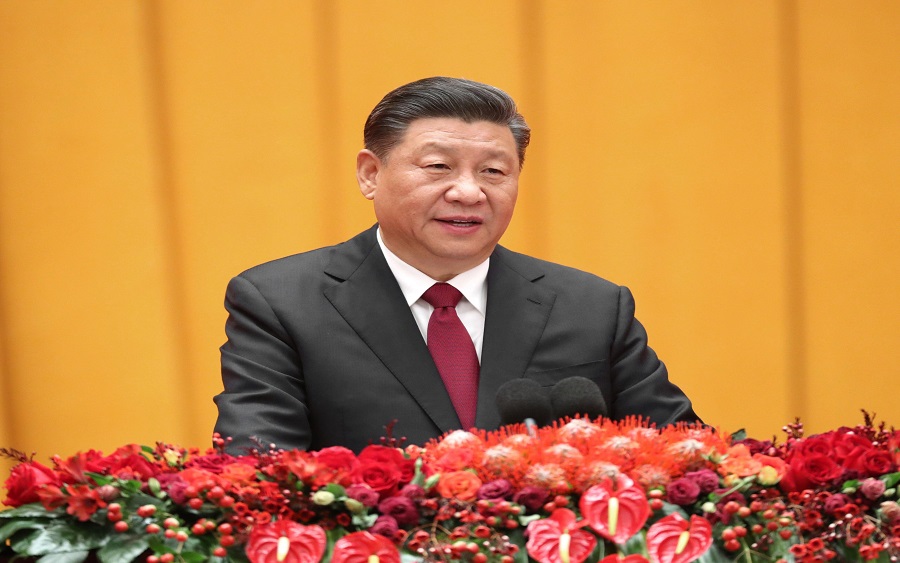
China will also provide $2 billion over two years to support the fight against the pandemic, especially in developing countries, Xi said in a speech to the World Health Assembly.
“The good news is that China is typically willing to negotiate payment extensions. Usually, it’s not that difficult to lengthen the payment period or lengthen the maturity of loans. China has backed the G-20 plan, although it hasn’t participated in previous global debt relief initiatives. All told, according to IIF data, China’s outstanding debt claims reached $5.5 trillion last year,” she added.
Nigeria owes China about $3.1 billion more than 10% of the $27.6 billion external debt stock. Minister of Finance, Zainab Ahmed, disclosed in February that the Federal Government decided to go for a $17 billion loans from China as the World Bank and the African Development Bank’s (AfDB) failed to show much interest in Nigeria during the recession.
READ ALSO: Opera refutes Hindenburg Research’s allegation that it violated Google’s policy
The minister explained that the global lender, AfDB, and other lending institutions failed to show much interest in the nation during the recession period, which lasted for a year, as this made it requested the loan from the China-Exim Bank.
She disclosed to the Senate Committee on Local and Foreign Loans that 70% of the loan, which is about $17 billion, would come from the China-Exim Bank as Nigeria is in need of $22.8 billion to balance the $29.96 billion loan request. Meanwhile, the remaining loan would be sourced from other lending institutions such as the Islamic Development Bank.

Abiola has spent about 14 years in journalism. His career has covered some top local print media like TELL Magazine, Broad Street Journal, The Point Newspaper. The Bloomberg MEI alumni has interviewed some of the most influential figures of the IMF, G-20 Summit, Pre-G20 Central Bank Governors and Finance Ministers, Critical Communication World Conference. The multiple award winner is variously trained in business and markets journalism at Lagos Business School, and Pan-Atlantic University. You may contact him via email - [email protected]
1 Comment
Leave a Reply
Cancel reply
This site uses Akismet to reduce spam. Learn how your comment data is processed.
Around the World
U.S. budget suffers a deficit of $3.1 trillion in 2020, as pandemic slams the economy
The U.S. budget deficit eclipsed $3.1 trillion in the fiscal year that ended Sept. 30.
Published
2 weeks agoon
October 17, 2020By
Johnson Uche
The new White House data released evidently shows that the huge surge in spending to confront the economic fallout of the coronavirus pandemic fueled a historic increase in national debt; thereby, creating an unprecedented budget deficit.
According to the exclusive government data released on Friday, the U.S. budget deficit eclipsed $3.1 trillion in the fiscal year that ended Sept. 30. This is adjudged to be by far the biggest one-year gap in U.S history.
READ: Key highlights of the 2021 FGN budget
The data is a stark reflection of the staggering blow that the COVID-19 pandemic has dealt to the U.S. economy. The deficit – which is the gap between government spending and tax revenue – shows the dramatic surge in spending that the U.S. government approved, in order to contain the pandemic’s fallout earlier this year.
According to the data jointly released by the White House and the Treasury Department, the deficit last year was about $1 trillion, which represented an elevated level but pales in comparison to the 2020 tally. For 2020, the government spent $6.552 trillion, up from $4.447 trillion a year ago. The government brought in $3.420 trillion in tax revenue in 2020, a slight decrease from 2019.
READ: Nigeria generates N1.29 trillion from taxes in Q2 2020, surpasses target
Backstory
Trump fell far short of his pledge to curb the national debt from the 2016 presidential campaign when he argued “We’ve got to get rid of the $19 trillion in debt.” He spearheaded a Republican effort to approve $2 trillion in tax cuts in 2017 and also worked with Congress to approve large spending increases in 2018.
What they are saying
According to Marc Goldwein, a Budget Expert at the Committee for a Responsible Federal Budget, which advocates for reducing the deficit, “Most of the increase in the deficit relative to last year is higher spending as a result of covid relief.”
According to Angela Hanks, Deputy Executive Director of the Groundwork Collaborative, a left-leaning group,
“America’s failure to adequately stimulate the economy led to a tepid recovery from the Great Recession, and lawmakers should avoid making the same mistake again. Congress must still pass more spending to prevent people from going hungry or losing their homes.”
Brian Riedl, a Budget Analyst at the conservative-leaning Manhattan Institute, warned that America’s jobs recovery has already picked up the “low-hanging fruit” positions that were easy to bring back.
READ: Nigeria’s worsening current account deficit piles pressure on exchange rate
Other jobs in sectors such as the hospitality, airline, and restaurant industry will be harder to bring back, particularly as the U.S. braces for an increase in coronavirus cases during the cold winter months. She added that “The growth is leveling off. The economic recovery is leveling off, which means the deficit numbers will continue to be pretty bad.”
Why this matters
The new figures come as the White House and House Speaker, Nancy Pelosi, (D-Calif.), are locked in negotiations about another round of economic relief, which could include another $2 trillion in aid. Spending like this could further add to the government’s budget deficit.
READ: 2021 Budget: FG projects spending plan of N11.86 trillion and deficit of N5.16 trillion
A range of Economic Experts across the political spectrum, including Federal Reserve Chairman, JH Powell, have said the assistance is necessary to prevent the economic recovery from flagging and keep millions from falling into poverty. Businesses have picked up the pace of layoffs in recent weeks, particularly at travel-related companies.
The optics
- Numerous Republican lawmakers have bristled at the federal spending spree in response to the pandemic, and the surging deficit may fuel their reluctance to authorize additional relief.
- Conservatives alarmed by the deficit may also push hard for its reduction, should Democratic Presidential nominee – Joe Biden, win the election. This will set the stage for a revival of the fierce budget battles that characterized much of the Obama administration.
- Despite the increase of the deficit, economists and lawmakers from both sides of the political aisle have clamored for more government spending.
- The bipartisan consensus that approved the big jump in spending earlier this year appears to have waned, and some Senate Republicans have signaled they are not comfortable with the big-spending package that the White House is now negotiating with Pelosi.
READ: ECOWAS: Single currency regime not kicking off in 2020
What you should know
- The government traditionally runs some sort of budget deficit, and it finances the gap between taxes and spending by issuing debt. Interest rates are low, which has made it relatively inexpensive to issue debt. But the debt totals have risen markedly during the Trump administration, even before the pandemic, upending his 2016 campaign vow to completely eliminate the debt over eight years.
- The debt when Trump entered office was about $14.4 trillion. It now stands at around $21 trillion. The previous highest deficit recorded was in 2009, when it came in at $1.4 trillion. That is less than half of the 2020′s tally.
- In March and April, Congress approved close to $3 trillion in spending programs, in response to the pandemic. This included hundreds of billion of dollars in aid for the unemployed and small businesses, as well as $1,200 stimulus checks for millions of Americans.
- The economy fell into a steep recession earlier this year as many businesses shut down and sent workers home because of the virus outbreak.
- The government’s spending imbalance skyrocketed in April and June as the government’s coronavirus relief efforts were implemented and the economy cratered. This is because the gap between federal spending and collected tax revenue grew to unprecedented levels. The monthly deficit jumped to $738billion for April alone, which was a record until the monthly deficit for June came in at $864 billion. The June deficit was bigger than the entire 12-month deficit in 2018.
- Spending soared across government agencies this year. The Department of Education, for instance, spent 96 percent more than it had last fiscal year, while the Small Business Administration spent close to $600 billion more than prior years, due to its implementation of the Paycheck Protection Program for small businesses hurt by the virus.
- Monthly deficits have since subsided somewhat, both as the pace of new government spending slowed and the U.S. economy began to bounce back and the unemployment rate fell, resulting in greater tax revenues. In August, the monthly federal deficit came in at $200 billion as the amount of federal spending was halved from June. But this decrease in spending has come amid signs that the economic recovery is slowing, which has prompted the White House and some lawmakers to consider more aid.
READ: Partey Deal: Arsenal records a whopping £67 million deficit in summer of 2020 transfer window
What to expect
On Wednesday, Trump told the New York Economic Club that reducing the federal debt would be a priority of his second administration, even as he urged Congress to spend more than $1.8 trillion on an additional relief package.
Trump also said faster economic growth would erase the U.S. debt burden. Although, budget experts say spending cuts or tax hikes would be necessary to do so.
Explore Data on the Nairametrics Research Website
Explore Some Advanced Financial Calculators On Nairametrics
Around the World
Debt burden of the least developed nations rises to $744 billion – World Bank
Total external debt of the least developed countries under the DSSI increased to $744 billion in 2019.
Published
2 weeks agoon
October 13, 2020
The total external debt of the least developed countries under the Debt Service Suspension Initiative (DSSI) has increased by 9.55% to $744 billion in 2019.
This was disclosed in the World Bank’s International Debt Statistics 2021 released in Washington D.C. on Monday.
According to the report, the figure was equivalent on average to one-third of the countries’ combined gross national income.
READ: Nigeria total public debt hits N31 trillion as debt service gulp over N1.2 trillion in H1 2020
It stated, “Lending from private creditors was the fastest-growing component of the external debt of DSSI-eligible borrowers, up five-fold since 2010. Obligations to private creditors totaled $102 billion at the end of 2019. The debt stock of DSSI-eligible countries to official bilateral creditors composed mostly of Group of 20 (G-20) countries, reached $178 billion in 2019 and accounted for 27% of the long-term debt stock of low-income countries.”
According to the report, this highlights an urgent need for creditors and borrowers alike to collaborate and stave off the growing risk of sovereign-debt crises triggered by the COVID-19 pandemic.
READ: Nigeria’s total public debt stock increased by N2.381 trillion in 3 months
It added that the pace of debt accumulation for these countries was near twice the rate of other low- and middle-income countries in 2019.
The report said that in response to an urgent need for greater debt transparency, this edition provided more detailed and disaggregated data on external debt than ever before in its nearly 70-year history.
READ: First Bank is cutting inefficiencies and focusing on its strengths
According to the report, details include breakdowns of what each borrowing country owes to official and private creditors in each creditor country and the expected month-by-month debt-service payments owed to them through 2021.
Pre-COVID
The World Bank said that before the onset of the COVID-19 pandemic, rising public debt levels were already a cause for concern, particularly in many of the world’s poorest countries as discussed in its Four Waves of Debt report published in December 2019.
READ: Nigeria’s debt rises to $79.5 billion, as debt to revenue ratio worsens
“Responding to a call from the World Bank and the International Monetary Fund, the G20 endorsed the DSSI in April 2020 to help up to 73 of the poorest countries manage the impact of the COVID-19 pandemic. The debt stock of DSSI-eligible countries to official bilateral creditors, composed by mostly G-20 countries, reached 178 billion dollars in 2019 and accounted for 17% of long-term net debt flows to low and middle-income countries. Within the G-20 creditor group, there have been some important shifts characterized by a marked increase in lending by G-20 member countries that are themselves middle-income countries,” it added.
READ: Nigeria records lowest remittances from abroad since 2008
Citing China as an example, though by far the largest creditor, it had seen its share of the combined debt owed to G-20 countries rise from 45% in 2013 to 63% at the end of 2019.
It said that over the same period, the share for Japan, the second-largest G-20 creditor, had remained broadly the same at 15%.
READ: LCCI condemns Senate over Buhari’s $22.7 billion loan approval
Around the World
My COVID- 19 illness, a blessing from God – Trump
US President, Donald Trump has described his COVID-19 crisis as a blessing from God.
Published
3 weeks agoon
October 8, 2020By
Johnson Uche
The US President, Mr. Donald Trump on resumption to his Oval Office recently, described his COVID-19 illness as a blessing from God.
His personal doctor, Sean Conley, has said that the president had no COVID-19 symptoms for more than 24 hours and has been fever-free for more than four days.
In a video message to all Americans, Mr. Trump said all Americans should have access to the treatments he was given. He also promised to provide the drugs produced by Regeneron Pharmaceuticals free of charge.
He went further to say that the experimental antibody cocktail he was given was a cure rather than a therapeutic measure, adding that hundreds of thousands of doses were nearly ready, but sadly the Regeneron’s drugs have not been approved by federal regulators.
(READ MORE: President Trump leaves Walter Reed Hospital)
According to Mr. Trump, “This was a blessing in disguise – I caught it, I heard about this drug, I said let me take it and it was incredible.”
President Trump renewed his attacks on China, telling Americans, “You’re not going to pay for it. It wasn’t your fault that this happened. It was China’s fault. And China is going to pay a big price. This was China’s fault.”
Many of his political supporters have described Mr. Trump as having shown good and exemplary leadership since his release from the hospital. But his opponents say his behavior has become increasingly erratic.
The White House rolled out new safety measures after President Trump returned from the hospital and the news that another aide had COVID-19.
NFF receives $1 million from FIFA as COVID-19 palliative
Trans-Nationwide Express Plc suffers N79 million loss in Q3 2020
FG approves N2.9 billion contracts to print examination materials
October PMI reveals rebound in economic activities
Nigerian stocks on steroids, investors on hat trick
COVID-19 Update in Nigeria
Daily Parallel Market Exchange Rate – ₦460/$1
Buhari approves free business name registration for 250,000 SMEs
Federal Government declares Thursday October 29 public holiday, to mark Eidl-Mawlid
Nigeria’s Ngozi Okonjo-Iweala close to being announced as new DG of WTO
-
Get the scoops and market intelligence that can help
you make better investment decisions right in your
mailbox.


geronimo rodriguez
May 20, 2020 at 4:26 am
excellent article. what is the breakdown in credit extended by the year in the $152 billion ?