Follow Us on Google Discover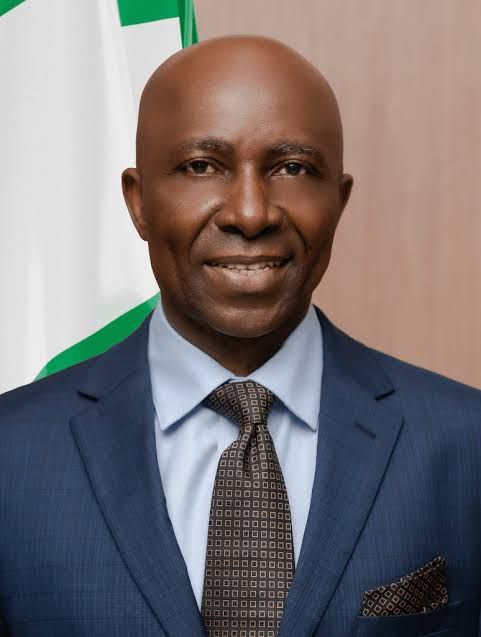
Nigeria’s Tax Ombud has warned against a revenue-first approach to the country’s tax reforms, arguing that pursuing collection targets without building taxpayer trust risks undermining the sustainability of the entire system.
The warning was contained in a speech by Dr. John Nwabueze, Nigeria’s first Tax Ombudsman, delivered on his behalf by his Chief of Staff, Dr. Peter Iwegbu, at the 36th anniversary conference of the Finance Correspondents Association of Nigeria (FICAN) in Lagos at the weekend.
The conference, themed “Building on the Gains of Recapitalisation, Tax Reforms, and Fintech Revolution,” brought together industry players across the financial sector. Nwabueze’s presentation focused on taxpayer confidence and trust in Nigeria’s tax reform agenda, stressing that revenue growth and taxpayer confidence can reinforce each other when the system is properly administered.
What they are saying: Taxpayer trust key to reforms
Nwabueze said Nigeria cannot build a sustainable tax system by focusing only on what citizens and businesses are required to pay, arguing that taxpayers must also understand why they should trust the system through which they pay.
Also Read
He identified the trust deficit as a more urgent challenge behind Nigeria’s low tax-to-GDP ratio, cautioning that legislation and enforcement alone cannot deliver sustainable revenue growth.
- “Nigerians cannot build a sustainable revenue and tax system by focussing only on what the citizens and business must pay. We must also focus on why they should trust the system through which they pay.”
- “Revenue growth and taxpayers’ confidence should not be viewed as an opposing objective… Properly administered, they can reinforce one another.”
- “Taxpayers are entitled to an administration that is also fair, transparent, accountable, and consistent with the law… They have to understand what they are being asked to pay, why they are being asked to pay for it, what avenues are available for them, if they believe that they have been unfairly treated.”
- “Trust is not treated by promise alone. It is built through institutional conduct and demonstrable efforts,” Nwabueze concluded.
He also said the Tax Ombud was established neither to encourage tax resistance nor to undermine lawful tax administration, but to provide a credible avenue for legitimate grievances to be considered and resolved.
More insights: Digital tax reforms need trust
Nwabueze said technology alone cannot resolve the trust problem, despite the transformation brought to Nigeria’s financial landscape by the FinTech revolution. He argued that digital reforms must make the tax system simpler, more accessible, and responsive rather than create additional barriers for taxpayers.
- He pointed to the growing digital identity base as an area where collaboration will be important in ensuring that technology produces fairer tax administration.
- With roughly 67 million BVN holders already captured in the formal tax net, he said collaboration among banks, fintechs and regulators remains essential to ensuring that expanded digital identity translates into fairer, not merely more efficient tax administration.
- He urged financial journalists to explain the practical difference between lawful tax planning and tax evasion, investigate how administrative complaints are handled and report on how tax revenue translates into visible public services.
- FICAN Chairman Mr. Chima Nwokoji said Nigerian banks raised a combined N4.65 trillion over a 24-month recapitalisation exercise, with about 73% of the capital coming from domestic investors.
- Nwokoji also contrasted this with the Dangote Refinery IPO, which is expected to raise approximately N2.15 trillion if fully subscribed, and questioned whether newly raised banking capital is translating into lending, job creation and foreign exchange generation.
Nwabueze’s remarks therefore place transparency, accountability and the taxpayer experience at the centre of how digital and revenue reforms should be assessed.
What you should know:
Nigeria’s tax-to-GDP ratio stood at 8.2% in 2023, according to Nwabueze, compared with roughly 16% across some 38 comparable African economies. He used the gap to illustrate the limits of revenue-focused reforms when taxpayers do not see corresponding improvements in their experience of the tax system.
- He cited the experience of a market trader in Ilorin who questioned how tax reform benefits her when she faces multiple informal levies from different officials despite having already paid.
- The Office reported receiving more than 20 genuine complaints within its first three months of operation, with most involving disputes over state-level revenue services rather than federal taxes.
- Finance Minister Taiwo Oyedele formally unveiled the Office’s digital case management portal, website and toll-free call centre earlier in 2026 to provide accessible channels for taxpayers to raise disputes.
- The Joint Revenue Board disclosed in July 2026 that 16 of Nigeria’s 36 states had adopted a harmonised Taxes and Levies framework aimed at eliminating multiple taxation.
- Dr. John Nwabueze was appointed Nigeria’s first Tax Ombudsman by President Bola Tinubu in November 2025 under the Joint Revenue Board of Nigeria (Establishment) Act, 2025.
Nwabueze urged journalists to measure the success of the reform agenda not only by revenue collected, but also by whether taxpayers understand their obligations, legitimate complaints are resolved fairly and public confidence in tax institutions improves.