Follow Us on Google Discover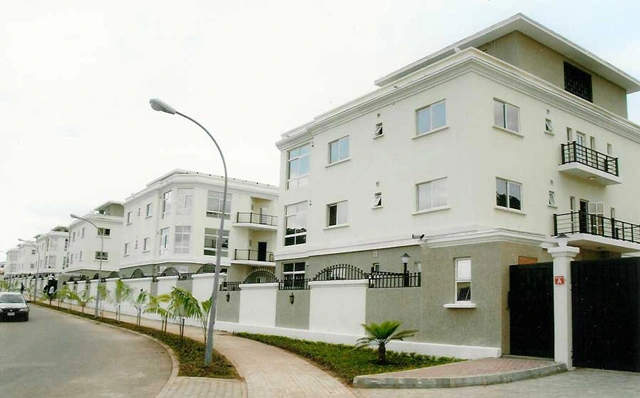
Nigeria’s rent inflation rose sharply to 33.8% in July 2026 from 14.79% in June, according to data from the National Bureau of Statistics (NBS).
The latest figures are contained in the NBS Consumer Price Index (CPI) data, which showed annual rent inflation accelerating significantly in July.
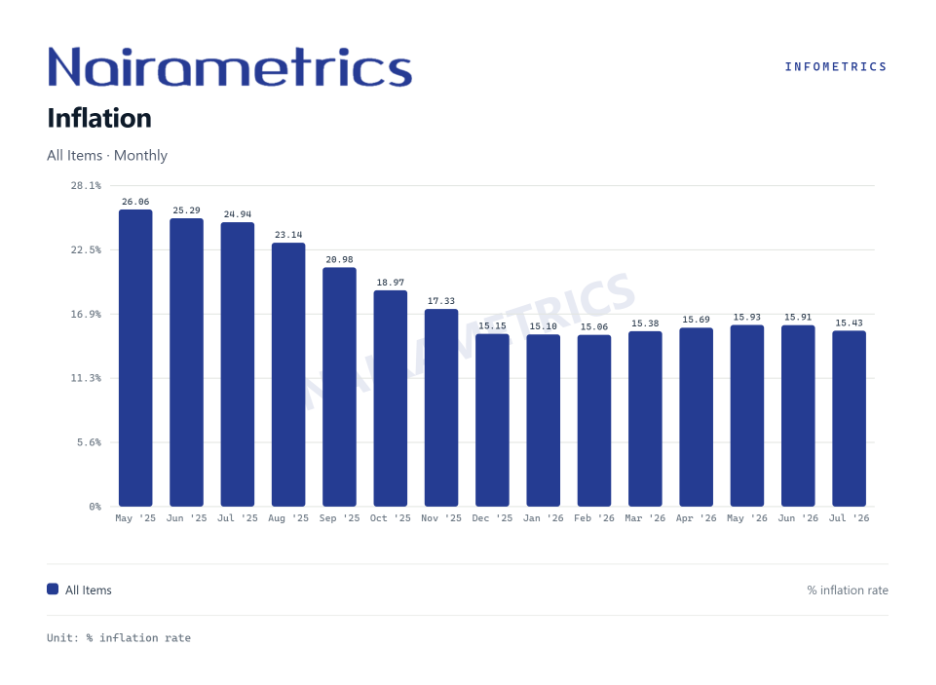
The increase came even as Nigeria’s headline inflation rate declined to 15.43% in July from 15.91% in June, indicating that housing costs continued to move differently from the broader inflation trend.
What the data is saying
The NBS data show that rent inflation accelerated sharply in July, rising by 18.95 percentage points from 14.79% in June to 33.74%.
Also Read
- Also, rent inflation stood at 24.15% in January 2026, based on the CPI figures provided by the NBS.
- The rate increased to 24.18% in February before falling to 13.47% in March.
- Rent inflation rose again to 17.52% in April and declined to 12.07% in May.
- The rate then increased to 14.79% in June before jumping to 33.74% in July.
The July figure represents an increase of about 18.95 percentage points from June, making it the highest rent inflation rate in the figures provided for 2026.
Nairametrics reported earlier that Nigeria’s headline inflation eased to 15.43% in July from 15.91% in June, according to the latest data.
The rate stood at 15.93% in May, up from 15.69% in April.
In March, headline inflation rose to 15.38% from 15.06% in February.
Get up to speed
The sharp increase in rent inflation comes against the backdrop of Nigeria’s longstanding housing shortage and rising demand for affordable accommodation.
- Nairametrics previously reported that rents across Lagos have continued to rise sharply in major residential areas, including Lekki, Ikeja, Surulere, Ayobo and the Ikorodu axis, placing increasing financial pressure on tenants as household incomes struggle to keep pace with inflation.
- Nigeria faces a housing challenge involving 15.2 million structurally inadequate housing units, alongside a separate deficit of more than 15 million homes, according to the Federal Government.
- The Federal Government is implementing the Renewed Hope Estates and Cities programme to help address the housing shortage.
Renewed Hope Cities are public-private partnership projects across the six geopolitical zones and the Federal Capital Territory, with one-bedroom units priced at about N22 million.
Renewed Hope Estates are smaller government-funded clusters of about 250 units, with units priced between N8 million and N9 million.
Despite these interventions, the housing shortage continues to put pressure on the cost and availability of accommodation.
What you should know
The Federal Government has said Nigeria needs about 550,000 new housing units annually over the next decade to address the housing shortage, with the required investment estimated at roughly N5.5 trillion each year.
- The housing challenge has also prompted calls for reforms aimed at improving access to housing finance and reducing the cost of home ownership.
- The Housing Development Advocacy Network (HDAN) had called for stronger mortgage laws and housing finance guarantees.
- The group also advocated tax incentives and VAT reliefs to support housing development.
HDAN called for expanded housing finance institutions and wider adoption of rent-to-own and cooperative housing models.
Earlier, Nairametrics reported that Nigeria’s food inflation rate rose to 20.31% year-on-year in July 2026, marking its highest level since September 2025 despite a further decline in the country’s headline inflation rate.